
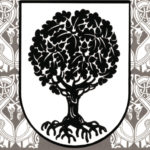
The O’Connor name, with its varied spellings, doesn’t spring from a common source. The name arose in five areas of Ireland: Connacht, Kerry, Derry, Offaly, and Clare and split into six distinct septs, five of which are still in existence. The most prominent sept is that of the Connacht O’Connors who gave us the last two High-Kings of Ireland: Turlough O’Connor (1088-1156) and … [Read more...] about Roots: O’Connor
Roots
Roots: The McCarthy Clan
By Liam Moriarty, Contributor
April / May 2006 Originally published in the March/April 1997 Issue of Irish America
April / May 2006 Originally published in the March/April 1997 Issue of Irish America
The McCarthy clan traces its ancestry through an illustrious line of individuals and events reaching far back into ancient Celtic history and myth. The McCarthys claim descendants from the Eoghanachta, the rulers of the fifth province of Ireland, or Munster. The Eoghanachta were a people believed to have descended from Heber, the son of the mythical King Milesius of Spain. It … [Read more...] about Roots: The McCarthy Clan
Roots: The Lynch Family
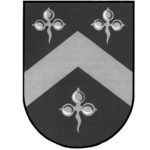
The Lynch family derives from several independent clans. One of these is the Norman family De Lench who came to Ireland in the 12th century and were the most prominent of the "Tribes of Galway." These were the 14 Norman families who controlled this important medieval trading city and made it one of the few outposts in the West of Ireland that was loyal to the British crown. An … [Read more...] about Roots: The Lynch Family
Roots: Dunne and Duffy
By James G. Ryan
April / May 2000
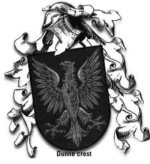
he names Dunne and Duffy have nothing in common except that they are derived from colors, the Dunnes from donn, the Gaelic word for brown and Duffy from dubh, the Gaelic for black. This is relatively unusual since the vast majority of Gaelic names are based on relationships i.e. "Son of," or "Follower of." The Dunne family name is derived from the Gaelic O'Duinn or O'Doinn, … [Read more...] about Roots: Dunne and Duffy
Roots: O’Malley and Molloys
By James G. Ryan
February / March 2000
These two families, although unrelated, share the same origin of their names, i.e. both are thought to derive from the Gaelic word for chieftain. The O'Malley family (from the Gaelic O'Maille) are very closely associated with the area of North Connaught and were, in ancient times, the Lords of the Mayo baronies of Murrisk and Burrishoole. The name is rarely found without the O, … [Read more...] about Roots: O’Malley and Molloys