• Skip to main content
  • Skip to secondary menu
  • Skip to primary sidebar
  • Skip to footer
Irish America

Irish America

Irish America

  • HOME
  • WHO WE ARE
    • ABOUT US
    • IRISH AMERICA TEAM
  • IN THIS ISSUE
  • HALL OF FAME
  • THE LISTS
    • BUSINESS 100
    • HALL OF FAME
    • HEALTH AND LIFE SCIENCES 50
    • WALL STREET 50
  • LIBRARY
  • TRAVEL
  • EVENTS

Genealogy

Roots: The McCooey Clan

By Mary Egan

Fall 2025
November 1, 2025 by Leave a Comment

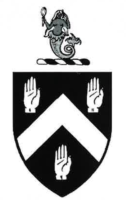
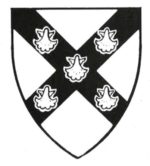
The McCooey surname has Armagh roots, deriving from the Gaelic name Mac Cumhaigh, meaning “son of Cú Mhaighe,” which translates to “hound of the plain.” This surname is an Anglicized form of a patronymic, where the “Mac” signifies “son of,” and the personal name Cú Mhaighe was common in the region of Armagh. Famous individuals with the surname McCooey include the Gaelic poet … [Read more...] about Roots: The McCooey Clan

Irish Roots: O’Connell, Connolly, Conlon and Connellan

James G Ryan

July 23, 2025 by 1 Comment

The name Connolly is derived from several different roots. In Connaught and Monaghan it derives from the Gaelic O'Coingeallaigh. Both are anglicized to Connolly although the spelling form Connelly is often found in Galway. There have been several famous bearers of the name. In the early 18th century William Connolly (1660-1729) was an eminent lawyer and politician. His family … [Read more...] about Irish Roots: O’Connell, Connolly, Conlon and Connellan

Roots: Byrnes and O’Beirnes

By James G. Ryan

September / October 1997

March 7, 2025 by Leave a Comment

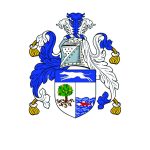
The names O'Byrne and O'Beirne (or Byrne and Beirne) are often regarded as variants of the same name, much to the annoyance of the less-common Beirnes. In fact, the names spring from totally different sources. O'Byrne is derived from the Gaelic O'Broin, meaning "descended from Bran," an 11th century King of Leinster. The O'Byrnes were chieftains of what is now County Kildare … [Read more...] about Roots: Byrnes and O’Beirnes

Roots: The Burkes

By James G. Ryan

July/August 1997

February 14, 2025 by Leave a Comment

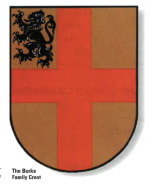
Burke (or Bourke) is one of the most popular Irish names of Norman origin. The name was introduced to Ireland through the person (and presumably extended family) of William Fitzadelm de Burgo, who came to Ireland in 1169 with the Norman invasion forces. William was granted large estates of O'Connor land in Connacht but the family did not effectively gain possession of this … [Read more...] about Roots: The Burkes

Roots: The O’Reillys

By James G. Ryan

May/June 1997

February 8, 2025 by Leave a Comment

The O'Reilly family name is derived from the Gaelic "O'Raghailligh," which means descendants of Raghaillach. The O'Reillys were the most powerful sept of the old Gaelic Kingdom of Breffny, and the family is still very numerous in the area which made up this kingdom, i.e., Cavan and the surrounding counties. The name is frequently shortened to Reilly or Riley. Members of the … [Read more...] about Roots: The O’Reillys

« Previous Page
Next Page »

Primary Sidebar

Featured Video

Featured Podcast

News from the Irish Post

  • Sisk appointed to lead £38m redevelopment of London Irish Centre

    SISK has been appointed as main contractor on a planned redevelopment of the London Irish Centre ...

  • Minister on two-day visit to Britain to engage with Irish community on diaspora strategy

    DIASPORA Minister Neale Richmond is in Britain this week to engage with members of the Irish comm...

  • President Zelenskyy thanks people of Ireland for ‘caring about Ukraine’

    UKRAINIAN President Volodymyr Zelenskyy has thanked the people of Ireland for “caring" about his ...

  • New bilingual traffic signs and road markings installed in Belfast

    NEW bilingual road and traffic signs have been installed in Belfast’s Gaeltacht Quarter. The sign...

July 26, 1856

George Bernard Shaw was born in Dublin on this day in 1856. Shaw, Ireland’s famous playwright and most well known for his works like “Pygmalion,” is amongst the four Irishmen who have received the Nobel Peace Prize for literature. In 1925, he was awarded the prize, just two years after William Butler Yeats won the award. Shaw was also well known for being a Socialist, writing essays such as “How to Settle the Irish Question” (1917).

Footer

Follow Us

  • Facebook
  • Instagram
  • LinkedIn
  • Twitter
  • YouTube

Subscribe

  • Subscribe
  • Give a Gift
  • Newsletter

Additional

  • Advertise
  • Contact
  • Terms of Use & Privacy Policy

Copyright © 2026 · IrishAmerica Child Theme on Genesis Framework · WordPress · Log in