

• Skip to main content
  • Skip to secondary menu
  • Skip to primary sidebar
  • Skip to footer
Irish America

Irish America

Irish America

  • HOME
  • WHO WE ARE
    • ABOUT US
    • OUR CONTRIBUTORS
  • IN THIS ISSUE
  • HALL OF FAME
  • THE LISTS
    • BUSINESS 100
    • HALL OF FAME
    • HEALTH AND LIFE SCIENCES 50
    • WALL STREET 50
  • LIBRARY
  • TRAVEL
  • EVENTS

In This Issue 1994

The First Word: Where’s Our Famine Movie? 

By Patricia Harty, Editor-in-Chief
March/April 1994

March 9, 1994 by Leave a Comment

There is a curious irony surrounding Schindler's List and the part that the Irish have played in bringing the movie to fruition. Thomas Keneally, an Australian of Irish Catholic background, wrote the book, and Liam Neeson, from the North of Ireland, was nominated for an Academy Award for his portrayal of the man who saved some 1,100 Jews. As Keneally wrote in a recent … [Read more...] about The First Word: Where’s Our Famine Movie? 

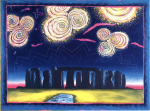
Spiral, Spiral Night & Other Paintings

By Robert F. Manning

March/April 1994
March 9, 1994 by Leave a Comment

Robert Manning lives in Vermont. His many trips to Ireland resulted in an exhibit of his paintings: "Stone Walls of Ireland", which ran at the Arts Work Gallery in Hartford, Connecticut. Proleek Dolmen "This spectacular dolmen just out of Dundalk sits in a potato field behind a hotel now and it looks like some giant mushroom. The stones on top are there because of a … [Read more...] about Spiral, Spiral Night & Other Paintings

Plunging Into Irish Studies

By Peter Monaghan

March/April 1994
March 9, 1994 by Leave a Comment

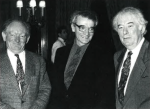
 Seamus Deane, A Renowned Literary Scholar, Fills A Void At Notre Dame  The University of Notre Dame, the home of the Fighting Irish, is the sentimental alma mater of many more actual and would-be Irish-Americans than ever have studied here.  Yet until now, the most identifiably Catholic institution in the country--one where 14 of 16 presidents have been priests of Irish … [Read more...] about Plunging Into Irish Studies

Sláinte! Brigid: Goddess and Saint

By Edythe Preet

January / February 1994
January 28, 1994 by Leave a Comment

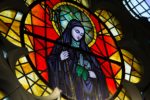
For over a thousand years, February 1 has been celebrated as St. Brigid's Day. Legend holds it was then that the saint placed her foot in a spring outside the village of Liscannor by the Cliffs of Moher in County Clare. Waters warmed; weather improved. Cows filled with milk; butter production expanded. To this day, pilgrims gather at Liscannor's well on Brigid's feast to … [Read more...] about Sláinte! Brigid: Goddess and Saint
March / April 1994

… [Read more...] about March / April 1994

« Previous Page
Next Page »

Primary Sidebar

Featured Video

Featured Podcast

News from the Irish Post

  • Funeral details confirmed for architect and tv presenter Hugh Wallace

    TRIBUTES have been paid to the architect and television presenter Hugh Wallace who has died at th...

  • Man extradited to Lithuania for child human trafficking offences

    A MAN has been extradited from Northern Ireland to Lithuania over child human trafficking offence...

  • Anniversary appeal 25 years after murdered Sandra Collins disappeared from Mayo

    AN ANNIVERSARY appeal has been issued today for information on the murder of Mayo woman Sandra Co...

  • Witness appeal after driver dies following collision in Cork

    GARDAÍ have appealed for witnesses to come forward after a driver died in a collision in Cork cit...

December 5, 1921

Following the conclusion of negotiations between Irish government representatives and British government representatives, the British give the Irish a deadline to either accept of reject the Anglo-Irish Treaty. The treaty established the self-governing Irish Free State but still made Ireland a dominion under the British Crown. The treaty also gave the six counties of Northern Ireland, which had been acknowledged in the 1920 Government of Ireland Act, the option to opt out of the Irish Free State and remain part of England, which they opted for. The Anglo-Irish treaty split many and on this day in 1921 Prime Minister David LLoyd-George said that rejection by the Irish would result in “immediate and terrible war.”

Footer

Follow Us

  • Facebook
  • Instagram
  • LinkedIn
  • Twitter
  • YouTube

Subscribe

  • Subscribe
  • Give a Gift
  • Newsletter

Additional

  • Advertise
  • Contact
  • Terms of Use & Privacy Policy

Copyright © 2025 · IrishAmerica Child Theme on Genesis Framework · WordPress · Log in