• Skip to main content
  • Skip to secondary menu
  • Skip to primary sidebar
  • Skip to footer
Irish America

Irish America

Irish America

  • HOME
  • WHO WE ARE
    • ABOUT US
    • OUR CONTRIBUTORS
  • IN THIS ISSUE
  • HALL OF FAME
  • THE LISTS
    • BUSINESS 100
    • HALL OF FAME
    • HEALTH AND LIFE SCIENCES 50
    • WALL STREET 50
  • LIBRARY
  • TRAVEL
  • EVENTS

In This Issue 1995

Roots: Doherty or O’Doherty

By James G. Ryan

May/June 1995
June 24, 1995 by Leave a Comment

The Doherty or O'Doherty name has many variations, including (O) Dougherty, Daugherty, Docherty and Doharty. The name, derived from the Gaelic O'Dochartaigh, means (descended) from Dochartach. Dochartach was a descendant of the infamous "Niall of the Nine Hostages," who was king of Ireland in the fourth century. Tradition has it that Niall was responsible for bringing Saint … [Read more...] about Roots: Doherty or O’Doherty

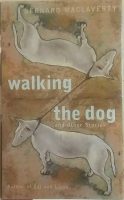
MacLaverty Returns

By Colin Lacey

May/June 1995

June 22, 1995 by Leave a Comment

Colin Lacey interviews Bernard MacLaverty (photo right) the Belfast writer who penned Cal and Lamb and who has just published a book of short stories. "Some journalists in the North of Ireland are fond of asking me what I'll write about after the Troubles are over. But although peace is absolutely necessary -- and I wish them all success -- pain and suffering and human … [Read more...] about MacLaverty Returns

Derry: The Town I Love So Well

By Mary Pat Kelly

May/June 1995

June 20, 1995 by Leave a Comment

Mary Pat Kelly talks to Phil Coulter, one of Derry's most famous sons. Often during the years of the "Troubles" in Northern Ireland, when the"end of the day" brought political conversation, someone would sing PhilCoulter's "The Town I Loved So Well." And if the singer was from Derry they knew, too, "the gas yard wall" where soldiers had replaced school boys playing ball. … [Read more...] about Derry: The Town I Love So Well

The Brontës of Drumballyroney

By Kristen Cotter and Marc-Yves Tumin

May/June 1995

June 18, 1995 by Leave a Comment

The legacy of Patrick, Charlotte, Emily, Anne, and Branwell Brontë, perhaps the most extraordinary family in the history of English literature, lives on in a quiet corner of County Down in Northern Ireland, where Carol Brontë has become curator of the Brontë Homeland Interpretive Centre at the former Drumballyroney Church and School House in Drumballyroney. Carol's husband is … [Read more...] about The Brontës of Drumballyroney

McGuinness v. Maginnis

By Emer Mullins

May/June 1995

June 18, 1995 by Leave a Comment

He has been named the second most powerful man in Britain after Rupert Murdoch by Esquire magazine. He has been named Britain's number one terrorist. And a U.S. report identified him as a leader of the Provisional IRA. It doesn't bother him at all. Martin McGuinness, urbane, charismatic, self-assured, has the unadorned adulation of most of the Republican community in the … [Read more...] about McGuinness v. Maginnis

« Previous Page
Next Page »

Primary Sidebar

Featured Video

Featured Podcast

News from the Irish Post

  • Funeral details confirmed for architect and tv presenter Hugh Wallace

    TRIBUTES have been paid to the architect and television presenter Hugh Wallace who has died at th...

  • Man extradited to Lithuania for child human trafficking offences

    A MAN has been extradited from Northern Ireland to Lithuania over child human trafficking offence...

  • Anniversary appeal 25 years after murdered Sandra Collins disappeared from Mayo

    AN ANNIVERSARY appeal has been issued today for information on the murder of Mayo woman Sandra Co...

  • Witness appeal after driver dies following collision in Cork

    GARDAÍ have appealed for witnesses to come forward after a driver died in a collision in Cork cit...

December 5, 1921

Following the conclusion of negotiations between Irish government representatives and British government representatives, the British give the Irish a deadline to either accept of reject the Anglo-Irish Treaty. The treaty established the self-governing Irish Free State but still made Ireland a dominion under the British Crown. The treaty also gave the six counties of Northern Ireland, which had been acknowledged in the 1920 Government of Ireland Act, the option to opt out of the Irish Free State and remain part of England, which they opted for. The Anglo-Irish treaty split many and on this day in 1921 Prime Minister David LLoyd-George said that rejection by the Irish would result in “immediate and terrible war.”

Footer

Follow Us

  • Facebook
  • Instagram
  • LinkedIn
  • Twitter
  • YouTube

Subscribe

  • Subscribe
  • Give a Gift
  • Newsletter

Additional

  • Advertise
  • Contact
  • Terms of Use & Privacy Policy

Copyright © 2025 · IrishAmerica Child Theme on Genesis Framework · WordPress · Log in