• Skip to main content
  • Skip to secondary menu
  • Skip to primary sidebar
  • Skip to footer
Irish America

Irish America

Irish America

  • HOME
  • WHO WE ARE
    • ABOUT US
    • OUR CONTRIBUTORS
  • IN THIS ISSUE
  • HALL OF FAME
  • THE LISTS
    • BUSINESS 100
    • HALL OF FAME
    • HEALTH AND LIFE SCIENCES 50
    • WALL STREET 50
  • LIBRARY
  • TRAVEL
  • EVENTS

July August 1998 Issue

Roots: The Burkes

By James G. Ryan

July/August 1997
February 14, 2025 by Leave a Comment

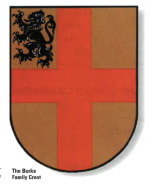
Burke (or Bourke) is one of the most popular Irish names of Norman origin. The name was introduced to Ireland through the person (and presumably extended family) of William Fitzadelm de Burgo, who came to Ireland in 1169 with the Norman invasion forces. William was granted large estates of O'Connor land in Connacht but the family did not effectively gain possession of this … [Read more...] about Roots: The Burkes

Yankee Doodle with a Brogue:
The Irish in the American Revolution

By Thomas Fleming

May / June 1998

July 1, 2020 by 1 Comment

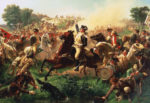
Washington Rallying the Troops at Monmouth; depicts George Washington at the 1778 Battle of Monmouth. Painting by Emanuel Leutze. Source: Wikipedia

In Virginia's Shenandoah Valley there is a gravestone that reads: Here lies the remains of John Lewis, who slew the Irish lord, settled in Augusta County, located the town of Staunton and furnished five sons to fight the battles of the American Revolution. Those words are an apt summary of the Irish role in the Revolution. They responded en masse to the call for resistance to … [Read more...] about Yankee Doodle with a Brogue:
The Irish in the American Revolution

Broadway’s Queening Glory

By Patricia O'Haire

May / June 1998

July 1, 1999 by Leave a Comment

All in all, it was a great day for the Irish. That was the consensus of most of the news media gathered at Sardi's restaurant one cold May morning earlier this year to hear the list of this year's Tony nominees announced. In just about every category for a straight play, the name of the Irish entry, The Beauty Queen of Leenane, was read. Six nominations it had, the most of … [Read more...] about Broadway’s Queening Glory

July / August 1998

… [Read more...] about July / August 1998

Roots: The Kavanaghs

By James G. Ryan

May / June 1998

July 1, 1998 by Leave a Comment

Unlike most of the families covered in this column, the origin of the Kavanaghs or Cavanaghs can be traced back to one specific person. This was Donal, the son of Dermot McMorrough, a twelfth-century king of Leinster. This Dermot has an infamous place in Irish history since it was through his invitation that the Normans first came to Ireland, in 1169 AD. Dermot's son, Donal, … [Read more...] about Roots: The Kavanaghs

Next Page »

Primary Sidebar

Featured Video

Featured Podcast

News from the Irish Post

  • Funeral details confirmed for architect and tv presenter Hugh Wallace

    TRIBUTES have been paid to the architect and television presenter Hugh Wallace who has died at th...

  • Man extradited to Lithuania for child human trafficking offences

    A MAN has been extradited from Northern Ireland to Lithuania over child human trafficking offence...

  • Anniversary appeal 25 years after murdered Sandra Collins disappeared from Mayo

    AN ANNIVERSARY appeal has been issued today for information on the murder of Mayo woman Sandra Co...

  • Witness appeal after driver dies following collision in Cork

    GARDAÍ have appealed for witnesses to come forward after a driver died in a collision in Cork cit...

December 5, 1921

Following the conclusion of negotiations between Irish government representatives and British government representatives, the British give the Irish a deadline to either accept of reject the Anglo-Irish Treaty. The treaty established the self-governing Irish Free State but still made Ireland a dominion under the British Crown. The treaty also gave the six counties of Northern Ireland, which had been acknowledged in the 1920 Government of Ireland Act, the option to opt out of the Irish Free State and remain part of England, which they opted for. The Anglo-Irish treaty split many and on this day in 1921 Prime Minister David LLoyd-George said that rejection by the Irish would result in “immediate and terrible war.”

Footer

Follow Us

  • Facebook
  • Instagram
  • LinkedIn
  • Twitter
  • YouTube

Subscribe

  • Subscribe
  • Give a Gift
  • Newsletter

Additional

  • Advertise
  • Contact
  • Terms of Use & Privacy Policy

Copyright © 2025 · IrishAmerica Child Theme on Genesis Framework · WordPress · Log in