
• Skip to main content
  • Skip to secondary menu
  • Skip to primary sidebar
  • Skip to footer
Irish America

Irish America

Irish America

  • HOME
  • WHO WE ARE
    • ABOUT US
    • IRISH AMERICA TEAM
  • IN THIS ISSUE
  • HALL OF FAME
  • THE LISTS
    • BUSINESS 100
    • HALL OF FAME
    • HEALTH AND LIFE SCIENCES 50
    • WALL STREET 50
  • LIBRARY
  • TRAVEL
  • EVENTS

Today In History

May 30, 1971

May 30, 1971 by 1 Comment

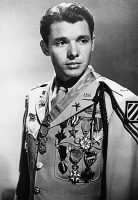
Murphy wearing the U.S. Army khaki "Class A" uniform with full-size medals, 1948.

Audie Murphy, the most decorated combat soldier of World War II, died tragically on this day in a plane crash. He was 46. Audie, one of 9 children, was born on June 20, 1924, near the town of Kingston, Texas. “We were share-crop farmers,” he wrote. “And to say that the family was poor would be an understatement. Poverty dogged our every step.” When he was 18, Audie enlisted in … [Read more...] about May 30, 1971

May 28, 1939

May 28, 1971 by Leave a Comment

Anne Maeve Binchy was born in Dalkey, County Dublin. Known to the world as Maeve Binchy, she would go on to become a revered novelist, playwright, short story writer, columnist and speaker. Binchy was beloved for her descriptive characters and charmingly humorous portrayals of life in Ireland. Her novels sold more than 40 million copies worldwide. She died in 2012 at the age of … [Read more...] about May 28, 1939

April 30, 1971

April 30, 1971 by Leave a Comment

On this day in 1971, popular Irish novelist John Boyne was born in Dublin. Boyne is best known for his 2006 release The Boy in Striped Pyjamas, which is narrated by a 6-year-old German boy whose father is a Nazi Commandant at Auschwitz during WWII. The book held the number one spot on the New York Times bestseller list, has sold more than 5 million copies around the world, and … [Read more...] about April 30, 1971

April 11, 1971

April 11, 1971 by Leave a Comment

The Gaelic Athletic Association (GAA) ended its long-held ban on members playing or attending "foreign" sports games such as soccer and rugby on April 11, 1971. The most notable controversy surrounding the ban took place in 1938, when Douglas Hyde, then President of Ireland, was suspended as a Patron of the Association after he attended an international soccer match in … [Read more...] about April 11, 1971

September 26, 1960
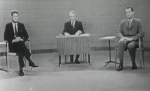
September 26, 1970 by 1 Comment

Irish American presidential candidate John F. Kennedy clashed with republican candidate Richard Nixon in the first-ever televised presidential debate. This debate, which more than 60 million Americans tuned in for, vastly changed American politics. Kennedy was regarded as the outright winner of the debate, not because of his politics and opinions, but because Kennedy appeared … [Read more...] about September 26, 1960

« Previous Page
Next Page »

Primary Sidebar

Featured Video

Featured Podcast

News from the Irish Post

  • Ireland remembering itself with help from people who left

    AN INITIATIVE by the National Museum of Ireland is helping people across the country to preserve ...

  • Brenda Fricker set to be awarded Freedom of the City of Dublin

    BRENDA FRICKER will receive the Freedom of the City of Dublin this year. The actor, who hails fro...

  • Dog groomers and hair salon among stores targeted in spate of burglaries

    THERE will be an increased police presence in Belfast this week after a spate of burglaries were ...

  • Historic records relating to Charles Haughey and Éamon De Valera now available online

    HISTORIC records relating to some of Ireland’s most significant political figures are now availab...

February 11, 1926

A riot erupted at the Abbey Theater during the fourth performance of Sean O’Casey’s play The Plough and the Stars on February 11, 1926. O’Casey, an Irish dramatist best known for his Dublin Trilogy which featured The Shadow of a Gunman (1923), Juno and the Paycock (1924) and The Plough and the Stars (1926). The Plough and the Stars was considered a racy, contentious show by many.  According to witnesses, the riot began after the appearance of a prostitute in Act II. After the riot, W.B. Yeats famously said, “You have disgraced yourself again; is this to be the recurring celebration of the arrival of Irish genius?” Irish-American filmmaker John Ford later directed an adaptation of The Plough and the Stars in 1936.

Footer

Follow Us

  • Facebook
  • Instagram
  • LinkedIn
  • Twitter
  • YouTube

Subscribe

  • Subscribe
  • Give a Gift
  • Newsletter

Additional

  • Advertise
  • Contact
  • Terms of Use & Privacy Policy

Copyright © 2026 · IrishAmerica Child Theme on Genesis Framework · WordPress · Log in