Barack Hussein Obama was elected the 44th President of the United States on Tuesday, November 4, after he defeated Republican candidate John McCain. On a night of high emotion across the country and around the world, Obama became the first African-American to attain to the office of President. He also joins a long list of commanders-in-chief who claim Irish heritage. So where … [Read more...] about A New Dawn in America
Ancestry
Roots: The Mighty Mahers
The Irish surname Maher, appearing also as O’Meagher, Meagher, O’Maher and Mahir, originated in County Tipperary. The name stems from the surname O’Meachair, a derivation of the word “meachar” meaning hospitable. Over fifty percent of Mahers can trace their family history back to County Tipperary, where the ancient clan held control of the territory near Roscrea at the foot of … [Read more...] about Roots: The Mighty Mahers
The Marvelous McDonaghs
By Maeve Molloy, Editorial Assistant
McDonagh is one of the rarer surnames of Ireland, but exists also as MacDonagh, MacDonough, Donogh, and Donagh. The modern forms of the name are derived from Mac Donnchadha, which originates from the first name Donnchadh, a compound of "donn" meaning brown, plus "cath," a battle. Often translated as "brown one," Donnchadh was a common first name in ancient times. Given its … [Read more...] about The Marvelous McDonaghs
Roots: The Proud History of the Reidy Clan
By Maeve Molly, Contributor
December / January 2008
December / January 2008
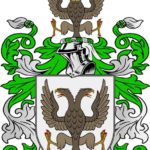
The Reidy family surname (also Reedy, Riedy, Reid, and O’Reidy) is an Anglicized version of the Gaelic name Ó Riada. The family was part of the Dalcassian sept and in early Gaelic times lived in the southwest of Ireland, in the Munster counties of Clare and Kerry. The Ó Riadas can claim lineage to the legendary King Oiloill Olum, who was Monarch of Munster in the third … [Read more...] about Roots: The Proud History of the Reidy Clan
Roots: The O’Malley Clan
By Liam Murphy, Editorial Assistant
August / September 2007
August / September 2007
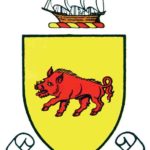
The ancient O’Maille or O’Malley name is said to be derived from the Gaelic words “maille” meaning gentle or smooth, and “maglios” meaning chieftain, which is fitting as the O’Malleys were once the chieftains of the baronies of Murrisk and Burrishoole in County Mayo. On today’s political scene, Martin O’Malley (D.), subject of our cover story, served as the hugely popular Mayor … [Read more...] about Roots: The O’Malley Clan