• Skip to main content
  • Skip to secondary menu
  • Skip to primary sidebar
  • Skip to footer
Irish America

Irish America

Irish America

  • HOME
  • WHO WE ARE
    • ABOUT US
    • IRISH AMERICA TEAM
  • IN THIS ISSUE
  • HALL OF FAME
  • THE LISTS
    • BUSINESS 100
    • HALL OF FAME
    • HEALTH AND LIFE SCIENCES 50
    • WALL STREET 50
  • LIBRARY
  • TRAVEL
  • EVENTS

Irish roots

Roots: Walsh, Welsh (or Brannagh)

By James G. Ryan

November/December 1996
November 14, 1996 by Leave a Comment

The name Walsh or Welsh is one of the most numerous of Norman associated names found in Ireland. It seems to have been the name used independently by the many different groups of Welsh people who arrived in Ireland with the Normans during the 12th century. The name simply means Welshman and its early Norman form was "Le Waleys" but this became gradually anglicized to Walsh. The … [Read more...] about Roots: Walsh, Welsh (or Brannagh)

Roots: The Stout-Hearted Murphys

By Irish America Staff
July / August 1996

July 1, 1996 by 1 Comment

One of the most common names in Ireland, the Murphy Clan has distinguished itself in every field. Among them were an Army chaplain, poet, war hero, police commissioner, and mistress. ℘℘℘ The name Murphy, the most common and widespread name in Ireland, is a derivation of the Gaelic personal name of Murchadh or Murragh, which gave rise to the different versions MacMurchadh … [Read more...] about Roots: The Stout-Hearted Murphys

Roots: Land Records in Irish Family History

By James G. Ryan

January/February 1995

January 11, 1995 by Leave a Comment

In a previous article, we discussed the use of church records in researching family history. However, to access church records you will usually need to know where in Ireland an ancestor lived. Making this connection is often the main problem faced by Irish-Americans attempting to trace their roots back to Ireland. Whereas many root-seekers will know that their ancestor was from … [Read more...] about Roots: Land Records in Irish Family History

Irish Roots: Quinn, Quinlan and Quigley

By James G. Ryan

March/April 1994

March 17, 1994 by Leave a Comment

Although the Irish language, or Gaelic, does not have a letter "Q," the distinctive sound of the accented "C" in some Gaelic names has caused them to be anglicized phonetically with this sound. Examples include Quinn, Quinlan, and Quigley, none of which are connected other than by their initial letter. Quinn is perhaps the most common of these names. It is derived from the … [Read more...] about Irish Roots: Quinn, Quinlan and Quigley

Irish Roots: Barry, Berry and Beirn 

By James G. Ryan

January / February 1994

January 7, 1994 by Leave a Comment

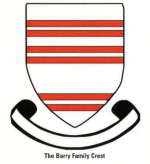
The Barry name is mainly of Norman origin and is very closely associated with County Cork. There is also a less common Gaelic origin from the Irish family O'Beargha, which was Anglicized as O'Barry or Barry. This family was also of Munster origin. Even today around 50 percent of the Barrys in Ireland are in Cork or other parts of Munster. A current prominent member of the … [Read more...] about Irish Roots: Barry, Berry and Beirn 

« Previous Page

Primary Sidebar

Featured Video

Featured Podcast

News from the Irish Post

  • Public opinion sought on upgrade of site of one of Ireland’s bloodiest battles

    THE Irish public is being asked for their opinions on plans to upgrade an historic site where one...

  • IN PICTURES: President Connolly brings new Council of State together for first time

    PRESIDENT Catherine Connolly has brought her newly formed Council of State together for the first...

  • 'It's fantastic': Ireland celebrates breakthrough success in curlew breeding scheme

    A SCHEME designed to protect the curlew population in Ireland has proven successful as a chick re...

  • Situation in Middle East ‘deeply concerning’ says Ireland’s Foreign Affairs Minister

    FOREIGN Affairs Minister Helen McEntee has described the ongoing US-Israel-Iran conflict as “deep...

April 22, 1834

On this day in 1834, Daniel O’Connell, the Irish political leader often referred to as “The Liberator” or “The Emancipator,” sparked a debate in the British House of Commons by calling for a repeal to the 1801 Act of Union. During a five-hour speech, O’Connell questioned the 2/17 tax that Britain had levied on Ireland, calling it a “fraction purposely introduced in order that Ireland might be robbed with greater facility.” Previously, O’Connell had successfully campaigned for the right for Catholics to sit in the Westminster Parliament. A critic of violent insurrection and a staunch abolitionist, he would serve as an inspiration to Frederick Douglass, and later to Mahatma Gandhi and Martin Luther King Jr.

Footer

Follow Us

  • Facebook
  • Instagram
  • LinkedIn
  • Twitter
  • YouTube

Subscribe

  • Subscribe
  • Give a Gift
  • Newsletter

Additional

  • Advertise
  • Contact
  • Terms of Use & Privacy Policy

Copyright © 2026 · IrishAmerica Child Theme on Genesis Framework · WordPress · Log in