
• Skip to main content
  • Skip to secondary menu
  • Skip to primary sidebar
  • Skip to footer
Irish America

Irish America

Irish America

  • HOME
  • WHO WE ARE
    • ABOUT US
    • IRISH AMERICA TEAM
  • IN THIS ISSUE
  • HALL OF FAME
  • THE LISTS
    • BUSINESS 100
    • HALL OF FAME
    • HEALTH AND LIFE SCIENCES 50
    • WALL STREET 50
  • LIBRARY
  • TRAVEL
  • EVENTS

Irish Studies

Roots: the history of the Ruane, Rowan and Ó Ruadain families

By Sheila Langan, Deputy Editor
October / November 2011

October 1, 2011 by 82 Comments

The surname Ruane comes from the old Gaelic Ó Ruadain, meaning the descendant of the red one, originally derived from the Gaelic ruadh. The pre-medieval clan stems from Ui Maine, an ancient territory that was made up of mid-Galway and South Roscommon, and Ui FIachrach, an ancient area of Mayo, Sligo, and Southern Galway. The name, variously recorded as Rowan, Ruan, O’Rowan, … [Read more...] about Roots: the history of the Ruane, Rowan and Ó Ruadain families

Roots: The Gleeson Clan

By Dawn Darby, Editorial Assistant
August / September 2011

August 1, 2011 by 49 Comments

The surnames Gleeson and Gleason developed from the Irish name O Glasain, which originated in East County Cork. The Gaelic prefix “O” means male descendant of, and Glasain derives from “glas,” literally meaning “green” in the sense of inexperience as opposed to the color. There are many variations of the name, including Gleason, Glisane, Glison, Glyssane, O’Gleasane and … [Read more...] about Roots: The Gleeson Clan

“Green Georgette”

June / July 2011

July 1, 2011 by Leave a Comment

A short story by Edna O'Brien from her collection Saints and Sinners. Thursday Mama and I have been invited to the Coughlans’. It is to be Sunday evening at seven o’clock. I imagine us setting out in good time, even though it is a short walk to the village where they live and Mama calling out to me to lift my shoes so that the high wet grass won’t stain the white patent. I … [Read more...] about “Green Georgette”

Roots: The Mighty Meaghers
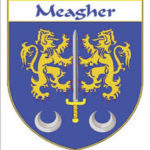
By Katie McFadden, Editorial Assistant
June / July 2011

July 1, 2011 by 11 Comments

A Look at the Meaghers and Mahers The Meagher name stems from the medieval Gaelic O’ Meachair, derived from meachar, meaning hospitable or kind, but the kindness of the Meaghers certainly hasn’t taken away from their strength and power. The name, also recorded as O’Meagher, Maher, Meagar, O’Maher, Mahar and Mahir, still holds prominence in Ireland. Over fifty percent of those … [Read more...] about Roots: The Mighty Meaghers

Roots: A Look at the Laheys and the Leahys

By Kristin Romano, Editorial Assistant
April / May 2011

April 17, 2011 by 69 Comments

Have you always thought the surnames Lahey and Leahy were variations of the same name? Think again! Lahey and Leahy originate from two different Gaelic surnames. Lahey, Lahy, Lahiff, Lahiffe, Laffey, and Lahive all originate from the Gaelic surname O Laithimh, which itself is a variant of O Flaithimh. O Flaithimh derives from the Irish word flaitheamh, which means lord or … [Read more...] about Roots: A Look at the Laheys and the Leahys

« Previous Page
Next Page »

Primary Sidebar

Featured Video

Featured Podcast

News from the Irish Post

  • Tributes paid to DRS founder Fiona Recker

    TRIBUTES have been paid following the death of Fiona Recker, the founder and Group Chief Executiv...

  • Jail for domestic abuser whose victim required emergency brain surgery after ‘horrific attack’

    A DOMESTIC abuser who severely beat his partner and locked her in his house overnight has been ja...

  • Cyclist dies in hospital following Mayo collision

    A CYCLIST has died in hospital after being involved in a collision in Co. Mayo. The man, aged in ...

  • Murder investigation underway after woman's body found in Killarney

    A MURDER investigation is underway after a woman’s body was discovered at a home in Co. Kerry. Th...

July 12, 1690

Protestant William of Orange and his forces defeated Catholic James II on this day in 1690 at Battle of the Boyne. William’s victory rendered James II’s attempt to regain the British throne unsuccessful and allowed for a continuation of Protestant ascendancy in Ireland. The battle was fought across the River Boyne near Drogheda. July 12 is also known as “The Twelfth” or “Orange Day” in Belfast.

Footer

Follow Us

  • Facebook
  • Instagram
  • LinkedIn
  • Twitter
  • YouTube

Subscribe

  • Subscribe
  • Give a Gift
  • Newsletter

Additional

  • Advertise
  • Contact
  • Terms of Use & Privacy Policy

Copyright © 2026 · IrishAmerica Child Theme on Genesis Framework · WordPress · Log in