

• Skip to main content
  • Skip to secondary menu
  • Skip to primary sidebar
  • Skip to footer
Irish America

Irish America

Irish America

  • HOME
  • WHO WE ARE
    • ABOUT US
    • IRISH AMERICA TEAM
  • IN THIS ISSUE
  • HALL OF FAME
  • THE LISTS
    • BUSINESS 100
    • HALL OF FAME
    • HEALTH AND LIFE SCIENCES 50
    • WALL STREET 50
  • LIBRARY
  • TRAVEL
  • EVENTS

Roger Casement

John Quinn: The Forgotten Irish American Nationalist

By Peter Quinn, Contributor
December / January 2017

December 2, 2016 by 5 Comments

John Quinn, the lawyer who funded the Irish literary renaissance by supporting Ireland’s leading writers of the day (including W.B. Yeats and James Joyce), is less well-remembered for his involvement with Irish nationalism and his friendship with Roger Casement, the Irish-born diplomat who was knighted by King George V in 1911 and executed for his role in Ireland’s Easter … [Read more...] about John Quinn: The Forgotten Irish American Nationalist

Sir Roger Casement:
Irish Nationalist & Humanitarian

By Rosemary Rogers, Contributor
February 11, 2016 by 1 Comment

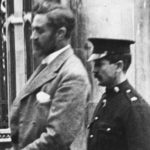
Sir Roger Casement under arrest. He was sentenced to be hanged on June 29, 1916. (Photo. Getty images).

Hanged by the British in 1916, he was deemed first among traitors to the  Empire for his role in the Easter Rising of 1916.  Today he is honored as the “Father of Human Rights Activism.” I saw that Roger CasementDid what he had to do.He died upon the gallowsBut that is nothing … [Read more...] about Sir Roger Casement:
Irish Nationalist & Humanitarian

Roger Casement: The Last Martyr

By Rosemary Rogers, Contributor

February 11, 2016 by 3 Comments

Sir Roger Casement under arrest. He was sentenced to be hanged on June 29, 1916. (Photo. Getty images).

Hanged by the British in 1916 for working with Germany and Irish nationalists in planning the Easter Rising of 1916, Sir Roger Casement is remembered as the “father of twentieth-century human rights investigations.” Standing in the gallows of Britain’s Pentonville Prison, Casement was asked by the governor if he had any final words. He did, but only one: “Ireland.” The … [Read more...] about Roger Casement: The Last Martyr

The German Connection

By Tom Deignan, Contributor
February / March 2016

February 11, 2016 by Leave a Comment

As World War I loomed, the U.S. was wracked by political, ethnic, and religious tension. Most Americans hoped to remain neutral, but the Irish in the U.S. were not shy about whom to root for. “The German guns will be the call of Ireland to her scattered sons,” Roger Casement wrote in his tract, “The Crime Against Ireland and How the War May Right It.” “Let Irishmen in America … [Read more...] about The German Connection

Primary Sidebar

Featured Video

Featured Podcast

News from the Irish Post

  • New stamp marks 100 years of broadcasting in Ireland

    A NEW stamp has been issued this month marking 100 years of broadcasting in Ireland. The first is...

  • Work set to begin on redevelopment of Casement Park GAA grounds in Belfast

    WORK is set to begin next week to regenerate the Casement Park GAA grounds in west Belfast. In a ...

  • New child maintenance calculator will help parents make arrangements outside of court

    THE Irish government is set to launch a child maintenance calculator to help parents make payment...

  • The Irish House Party hits the road in its first major British tour

    AFTER more than 15 years, The Irish House Party are preparing to bring their show to Britain. Fou...

January 21, 1919

The Irish War of Independence begins. On January 21st, 1919, a group of IRA members acting independently shot and killed two Royal Irish Constabulary officers traveling with explosives through Soloheadbeg, Co. Tipperary. In response to the attack, the British Government declared the area a Special Military Area under its Defense of the Realm Act. Though the 21st is commonly acknowledged as the start of the war, the newly organized Irish Dail (which had also held its first session on the same day as the attack) and President Éamon de Valera did not formally recognize the war with the British until over two years later, on March 11th 1921.

Footer

Follow Us

  • Facebook
  • Instagram
  • LinkedIn
  • Twitter
  • YouTube

Subscribe

  • Subscribe
  • Give a Gift
  • Newsletter

Additional

  • Advertise
  • Contact
  • Terms of Use & Privacy Policy

Copyright © 2026 · IrishAmerica Child Theme on Genesis Framework · WordPress · Log in