
• Skip to main content
  • Skip to secondary menu
  • Skip to primary sidebar
  • Skip to footer
Irish America

Irish America

Irish America

  • HOME
  • WHO WE ARE
    • ABOUT US
    • IRISH AMERICA TEAM
  • IN THIS ISSUE
  • HALL OF FAME
  • THE LISTS
    • BUSINESS 100
    • HALL OF FAME
    • HEALTH AND LIFE SCIENCES 50
    • WALL STREET 50
  • LIBRARY
  • TRAVEL
  • EVENTS

Roots

Roots: O’Flaherty

By Laura Capuano, Contributor
June / July 2005

June 1, 2005 by 2 Comments

O'Flaherty (also Flaherty) ancestors have been documented since the time of Christ. One of the first Irish historians, Roderick O'Flaherty, recorded their history in Ogyia, published in London in 1685, in which he said they originated from Scythia and came to Ireland with a traveler called Milesius. Descendants of Milesius founded the tribe Ui Briuin who were thought to witness … [Read more...] about Roots: O’Flaherty

Roots: O’Muimhneachain, Moynihan, Moynahan, Minihan

By Michael Sihksnel, Contributor
December / January 2005

December 1, 2004 by 1 Comment

O'Muimhneachain is the old Irish form of the name Moynihan. The name originally came from the province of Munster and actually means "Munster man." Today different branches of the clan are still to be found in Munster, mainly in West Cork and Kerry, where the name is among the most popular in the county, and has been that way since the 17(th) century. The first record of a … [Read more...] about Roots: O’Muimhneachain, Moynihan, Moynahan, Minihan

Roots: The Quinn Clan – Descendants of Conn
By Brendán Cummings, Contributor
October / November 2004

October 1, 2004 by 26 Comments

The surname Quinn is derived from the Irish word O'Cuinn meaning "descending from Conn." Conn comes from the Irish word ceann, meaning "head," and denotes a person of high intelligence. Since Conn was a common name, there are five separate septs of this family. They came from different parts of counties Tyrone, Longford, Clare, and Antrim. Niall O'Cuinn was one of those killed … [Read more...] about Roots: The Quinn Clan – Descendants of Conn

Joyce, Joce, Joass, Jorse, & Joyes
By Julia McAvoy Gottlieb, Contributor
August / September 2004

August 1, 2004 by 2 Comments

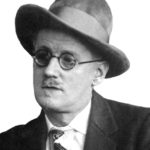
Although the surname Joyce may automatically be associated with author James Joyce, the name has an ancient past, with both Irish and Norman antecedents. Derived from the Brehon personal name Iodoc, which is a diminutive of iudh meaning lord, the name was adopted by the Normans in the form Josse. While some scholars believe that the name developed from the French Joie, which … [Read more...] about Joyce, Joce, Joass, Jorse, & Joyes

Roots: Cummins (Cummings, Commons, Comyns, Hurley)

By Brendan Cummings, Contributor
February / March 2004

February 1, 2004 by Leave a Comment

The original Irish name is ÓCoimín and its variations are numerous in every part of Ireland. The name lends itself to many interpretations. Some say it comes from the Irish word cam, meaning crooked, while others incorrectly believed the name derived from the word camán, which means a hurling stick. This interpretation gave rise to the anglicized name Hurley. Other anglicized … [Read more...] about Roots: Cummins (Cummings, Commons, Comyns, Hurley)

« Previous Page
Next Page »

Primary Sidebar

Featured Video

Featured Podcast

News from the Irish Post

  • Pressure grows on Nancy after abysmal Celtic fall to third straight defeat as St Mirren lift League Cup

    CELTIC'S abysmal run under new boss Wilfried Nancy continued today after his side deservedly lost...

  • Funeral held for second victim of Co. Offaly arson attack

    THE FUNERAL has been held for Mary Holt, one of two people who died in an arson attack on a house...

  • Taoiseach 'shocked and appalled' at fatal Bondi Beach mass shooting during Hanukkah event

    TAOISEACH Micheál Martin has said he is 'shocked and appalled' at a fatal shooting at Bondi Beach...

  • Man and woman extradited from Malta as part of investigation into rape and child cruelty

    A MAN and woman have been extradited from Malta to Northern Ireland as part of an investigation i...

December 16, 1653

Oliver Cromwell was made Lord Protector of Ireland on this date in 1653. Following the English Civil War, his victory in overthrowing the Stuart monarchy and the execution of King James I, English Parliament declared Cromwell “Lord Protector” in England’s first attempt at a state ruled government. He held this position for five years (1653-58) of the eleven years in which England remained a republican Commonwealth government. Cromwell had a detrimental effect on Ireland in these years. He led an invasion of Ireland from 1649-1650. The public practice of Catholicism was banned and all Catholic owned land was confiscated.

Footer

Follow Us

  • Facebook
  • Instagram
  • LinkedIn
  • Twitter
  • YouTube

Subscribe

  • Subscribe
  • Give a Gift
  • Newsletter

Additional

  • Advertise
  • Contact
  • Terms of Use & Privacy Policy

Copyright © 2025 · IrishAmerica Child Theme on Genesis Framework · WordPress · Log in