
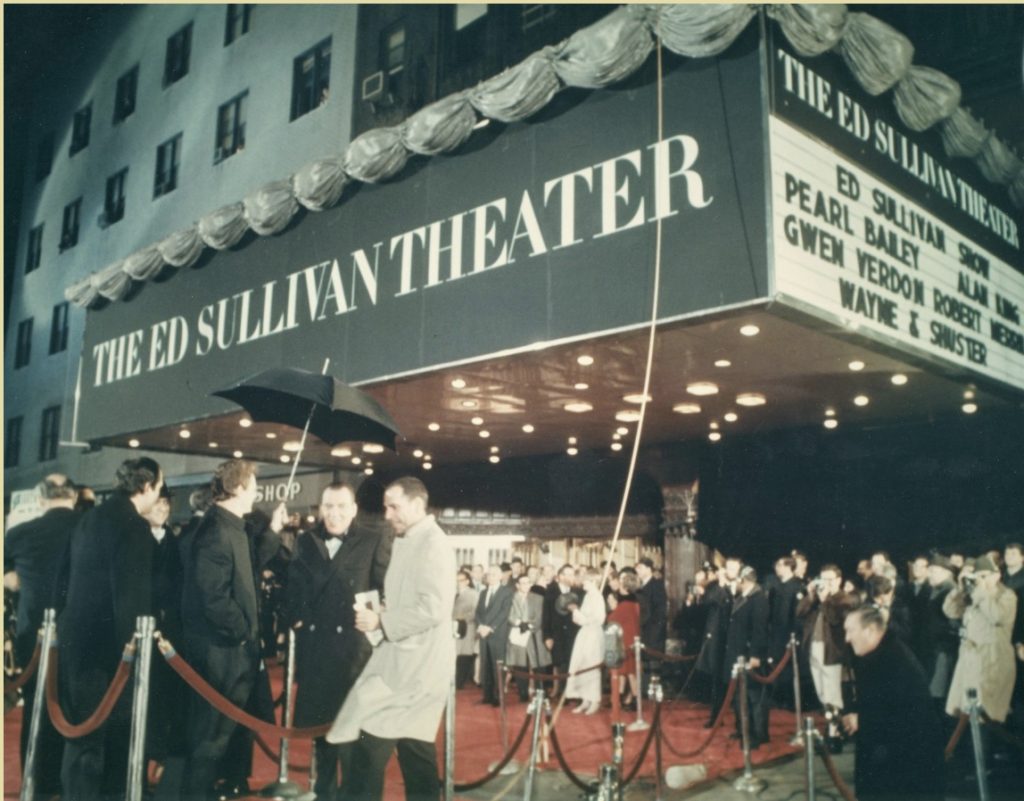
“It’s gonna be a really big shoo…”
Ed Sullivan was important for bringing diverse talent, especially African American artists and rock and roll pioneers, to a massive national audience through his influential television show, helping to shape American culture and music history. He was a trendsetter who launched the careers of major stars like Elvis Presley and The Beatles and championed civil rights by challenging segregationist sponsors to feature Black talent, and providing essential national exposure for Black performers, including Motown artists such as The Temptations, Stevie Wonder, The Supremes and Mahalia Jackson.
Sullivan’s show was also a critical platform for new and emerging artists.
Beyond his groundbreaking work with Black artists and rock and roll, Sullivan booked a vast array of talent, from opera to comedy to Broadway shows.
His iconic, somewhat awkward television presence made him a household name and a significant cultural influencer.
He had his own unique way of pronouncing the word, “show” as “shoo,” as in “a really big shoo,” but every Sunday at 8 p.m., over 30 million Americans turned their TV dials to The Ed Sullivan Show and watched him become part of history.
From 1948 to 1971, Sullivan hand-picked the greatest names — known and unknown alike — in music, comedy, stage and screen to perform live. Showcasing over 10,000 performers in 23 years, The Ed Sullivan Show became the nation’s premier television variety series and an American institution.
Born Edward Vincent Sullivan in Harlem, New York City on September 23, 1901, he was one of seven children. His parents, Peter Arthur Sullivan and Elizabeth Smith, were both of Irish descent.
Sullivan worked as a newspaper reporter after graduating high school, starting with coverage of sporting events but eventually moving over to report on show business. His column “Little Old New York” began appearing in the New York Daily News in 1931. From there it was an easy rise to stardom, and Sullivan was soon appearing on TV screens.
In 1942, CBS introduced Ed Sullivan Entertains, and Sullivan’s talent led to a spot hosting a weekly variety show called Toast of the Town in 1948. That show officially became The Ed Sullivan Show in 1955. Sullivan also continued writing his newspaper column. In 1957, he co-founded the National Academy of Television Arts and Sciences.
Sullivan was raised with a strong appreciation for Irish culture, music, and heritage. In the early 1960s, at the height of the show’s popularity, The Ed Sullivan Show welcomed a lineup of Irish performers to its stage, including Peter O’Toole, Carmel Quinn, the beloved folk group The Clancy Brothers, The Dubliners and The McNiff Dancers. These appearances not only brought Irish music and culture into the living rooms of millions of Americans but also helped create a sense of pride and connection among the Irish diaspora in major cities across America.
He celebrated St. Patrick’s Day often dedicating entire broadcasts to the holiday with Irish-themed entertainment. As an Irish American with family roots in the country, he took personal pride in the yearly tradition on his television show.
Maureen O’Hara was a guest on The Ed Sullivan Show for a St. Patrick’s Day-themed episode on March 11, 1962. During this appearance, she sang Irish songs, including a medley of “Oh Danny Boy,” “Dear Old Donegal,” and the traditional song “Come Back to Erin”.
Other Irish or Irish-American guests over the years included Rosemary Clooney, Pat O’Brien, and harpist Mary O’Hara.
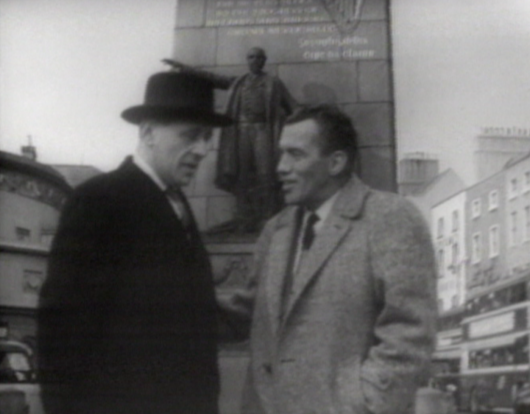
One of the most memorable moments in the history of The Ed Sullivan Show occurred on March 15, 1959, when the show decided to celebrate St. Patrick’s Day in Ireland, with Sullivan sharing stories of his family’s Irish roots and taking viewers with him as he toured Dublin.
Maureen Potter, the actress and comedian performed a solo comedic act at Dublin’s Gaiety Theatre. Robert Briscoe, the Lord Mayor of Dublin met with Sullivan in front of a statue of Charles Parnell, and Sullivan visited the government house to meet with then Taoiseach Éamon de Valera.
The special included taped reports showcasing Abbey Theatre actor Barry Fitzgerald and playwright Sean O’Casey, as well as a group of Hibernian harpists.
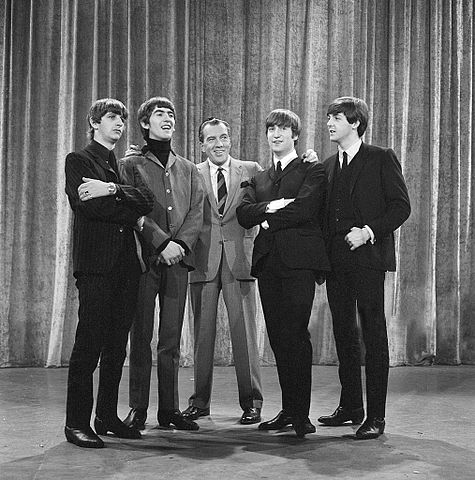
The first program to break all previous viewing ratings with an appearance by a young Elvis Presley, The Ed Sullivan Show had all the world’s biggest stars jumping at the chance to make an appearance, from Bing Crosby, Judy Garland, and Frank Sinatra to Rudolf Nureyev and The Beatles. A typical Ed Sullivan evening could include sogre dancing bears, Robert Goulet, Joan Rivers, a plate spinner, a film clip, Red Skelton, and then The Rolling Stones to close. Sullivan won an Emmy Award in 1971.
The Ed Sullivan Show ran for 23 years, making it one of the longest-running variety shows in U.S. television history and a central piece of Americana.
The Ed Sullivan Theater was named for Ed Sullivan on December 10, 1967, to mark the 20th anniversary of his show. Before 1967, the venue was known as CBS-TV Studio 50, and it housed The Ed Sullivan Show from 1953 until the show’s cancellation in 1971. Both David Letterman and Stephen Colbert (who also has Irish roots) broadcast their respective versions of The Late Show from the Ed Sullivan Theater in New York City. Letterman hosted from 1993 to 2015, and Colbert has hosted since.
Ed Sullivan died in 1979 and was inducted into the Television Hall of Fame in 1984.♦
Visit Ed Sullivan.com for more information and clips from his shows.
This filled in some blanks for me., and I’m grateful for IRISH AMERICA. After all of these years, I’m still learning a lot from its pages.