
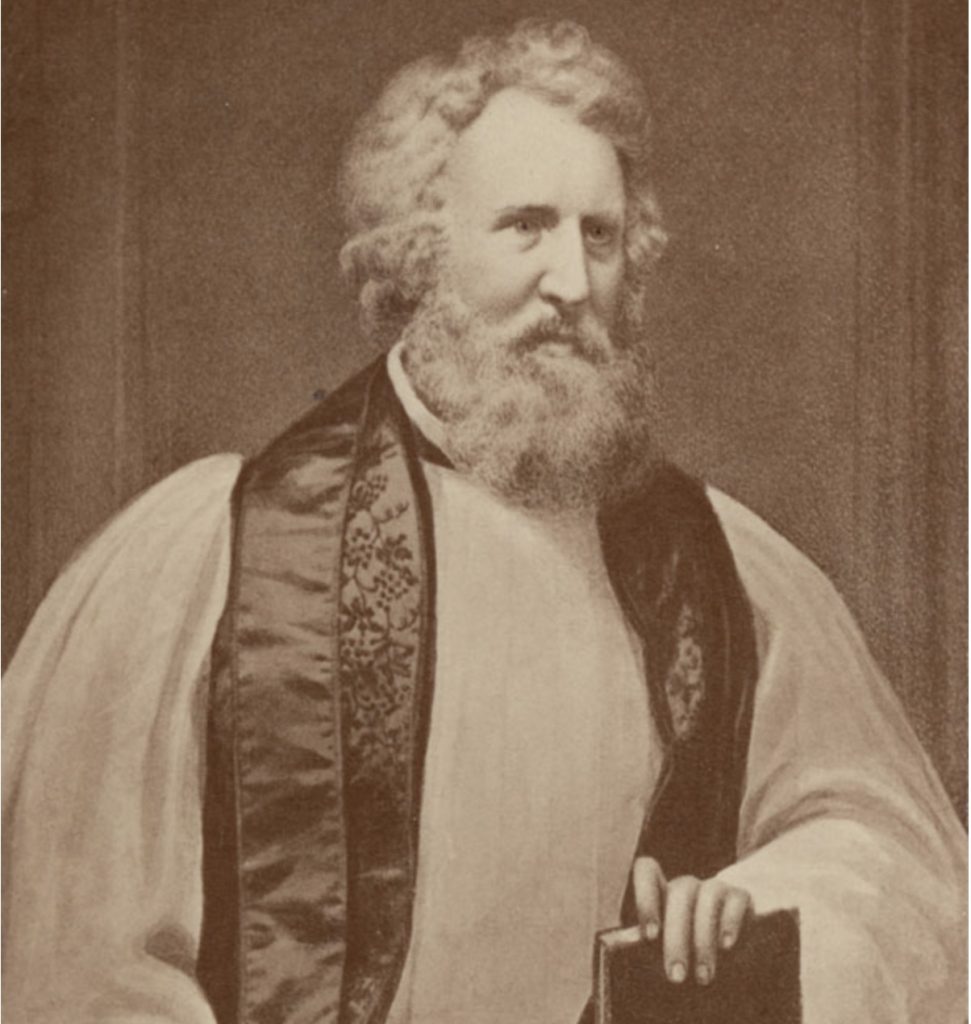
A recent Financial Times article noted that one of the most popular Christmas carols in history was written by “a journalist-turned-clergyman” with “an Irish father who became the Bishop of Vermont.”
The song is “We Three King,” which the newspaper called the “first American carol to achieve global success.”
The author was John Henry Hopkins Jr., born in Pittsburgh to an Irish father from Dublin who became an influential Episcopalian priest and bishop in the U.S., while also passing on various musical talents to his son.
Sources suggest Hopkins Jr. wrote “We Three Kings” in the 1850s, mainly for a small show featuring his nieces and nephews.
Like his father, Hopkins Jr. became a leading religious figure in the Episcopalian communities of New York and Pennsylvania, and even delivered the eulogy at the funeral of former President Ulysses S. Grant in 1885. Hopkins himself died at the age of 70 in 1891.
All the while, audiences for Hopkins’ song about the three wise men “bearing gifts” for the infant Jesus and following the “star of wonder” just kept getting bigger.
Fittingly, one of the most interesting versions of the holiday staple was made by the Irish Rovers in the late-1990s, complete with lush pipes and fiddles.
50 Years of “Hope”
Remembering a Groundbreaking Irish American TV Show
When Malachy McCourt died earlier this year, much was made about this larger-than-life Irishman’s accomplishments as a family man, book writer, and all-around raconteur.
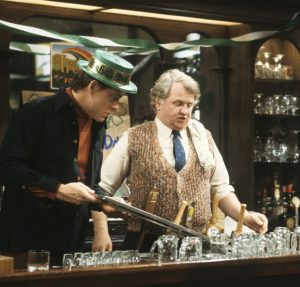
Less was said about Malachy the actor – and even less, still, about his role in a groundbreaking, unjustly-forgotten Irish American TV show that celebrates its 50th anniversary this year.
Ryan’s Hope wasn’t a once-a-week, hour-long drama like The Sopranos or Mad Men, or so many other prestige shows from the so-called “Golden Age of television.”
It was a 30-minute daytime soap opera that ran nearly every day for 15 years.
Still, “the show felt revolutionary,” according to New York Times columnist Ginia Bellafante, who wrote a celebratory rembrance about Ryan’s Hope.
The show “dealt with the generational tension between Old World cultural and religious values and the new freedoms embraced by the young,” Bellafante added, noting that the show was set in Washington Heights, “amid a Catholic, working-class Irish American family whose matriarch, Maeve Ryan (played by the Tony Award-winning actress Helen Gallagher), loved Yeats and spoke with a brogue.”
Fifty years after its debut, a wide range of show biz people are fondly recalling the show, which offered a bold, new vision of Irish American life to TV viewers.
Charlie Mason, deputy editor of the website Soaps.com called Ryan’s Hope “the best, most grounded daytime drama ever,” adding that “From the start, Ryan’s Hope didn’t play by the rules of afternoon television.”
Perhaps Ryan’s Hope will finally get credit for influencing a generation of urban storytellers – and also get on to a streaming service like Netflix or HBO, so that a whole new generation of TV fans can enjoy Ryan’s Hope, which showcased the talents of up-and-coming actors like Malachy McCourt as well as Kate Mulgrew, Helen Gallagher, Mary Loise Parker and Dana Delaney.
“Unlike most soaps, which were claustrophobic, Ryan’s Hope let the world in. It was grounded in a reality – about women’s actual lives – that the genre had otherwise disavowed,” Bellafante added in the Times.
Teaching the Write Way
A one-time student of celebrated Irish novelist Claire Keegan has written one of biggest – and most unlikely – publishing hits of the year.
“After struggling as an author for two decades,” the Wall Street Journal noted, “Virginia Evans has a bestseller with The Correspondent.”
The novel is hardly a fast-paced twisty-turny thriller. Instead, The Correspondent is about a rather grouchy woman in her 70s who has lots of opinions to share, and does just that in letters, emails and other forms that make up what is often called an “epistolary novel.”

Somehow, it became a huge hit for the 39-year-old Evans.
“It’s a total unicorn,” said bestselling novelist Ann Patchett, who also owns a bookstore.
In the past decade or so, Evans – who spent most of her youth in Maryland – wrote “a stack” of books and had reached out to “hundreds of literary agents in New York,” without any success, WSJ.com noted.
In 2019, she took a chance and moved to Dublin with her husband and two young children.
Evans enrolled in a creative-writing master’s degree program at Trinity College, and studied under celebrated writer Claire Keegan, whose novels have been adapted into two films: The Quiet Girl (2022) based on her short story “Foster,” and Small Things Like These (2024), based on her novella.
As of December, The Correspondent has gone through 14 printings to meet reader demands. Which means that after more than ten years, Virginia Evans is finally an overnight success.
Leave a Reply