
Deirdre O’Connell Honored
The Bronx girl who changed the face of Irish Theater
By Rosemary Rogers
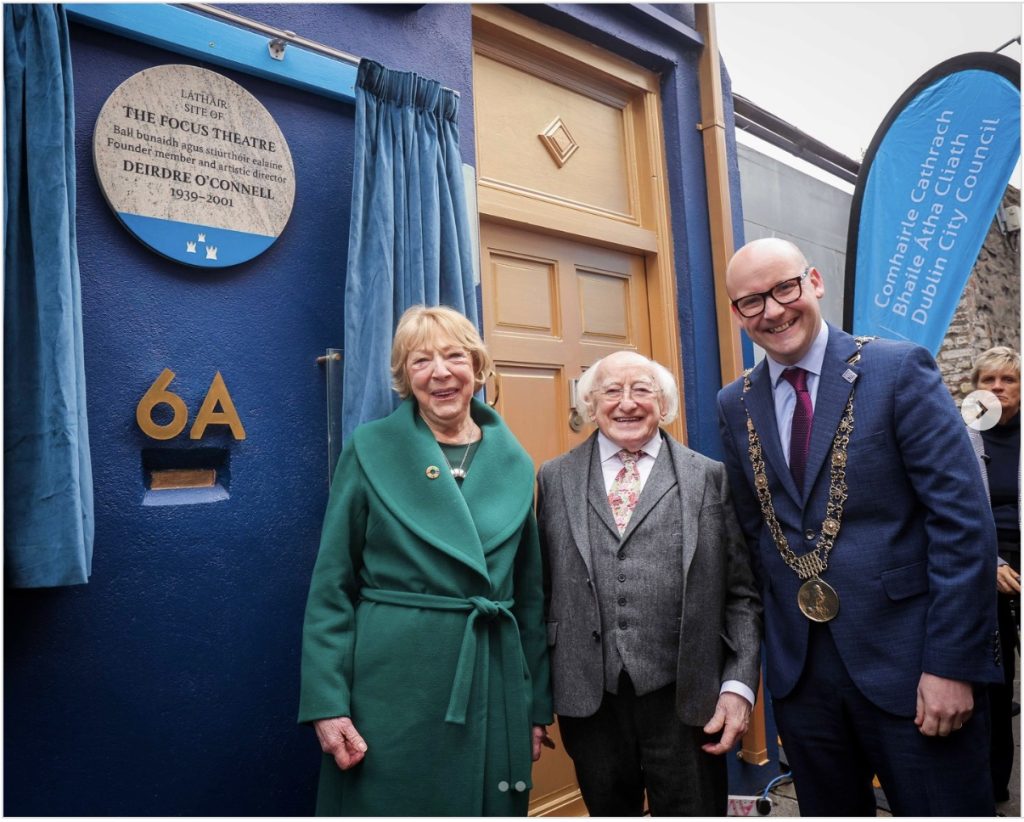
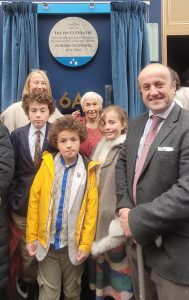
The visionary founder and artistic director of Dublin’s Focus Theatre, Deirdre O’Connell (1939-2001), was honored with a commemorative plaque on October 18, 2025, at the former theatre’s site.
The unveiling ceremony was attended by dignitaries, including the Lord Mayor of Dublin, Ray McAdam, and the President of Ireland, Michael D. Higgins and his wife, Sabina, recognizing Deirdre’s legacy as a pivotal figure in Irish arts.
Born in the Bronx, baptized Eleanor, she was Ellie as a child, a little beauty with a bounty of red-gold hair. Her gifts – singing, dancing, and especially acting – were supported by her parents, who encouraged creativity in all five of their children.
The O’Connell family was different in other ways, too; they were three generations of immigrants and emigrants who straddled the Old and New Worlds, continually moving back and forth between both.
Ellie studied at the Drama Workshop, where she immersed herself in the Stanislavski Method, the revolutionary drama technique that had already inspired a whole new generation of actors.
Lee Strasberg, head of the exclusive Actors’ Studio (alums included James Dean, Marlon Brando, and Marilyn Monroe), saw Eleanor in an off-Broadway production and invited her to join the Studio. She acted on and off Broadway in plays by Tennessee Williams, Arthur Miller, Samuel Beckett, and Henrik Ibsen. In her spare time, she performed in coffee houses and even sang at the Newport Folk Festival, sharing a stage with Joan Baez and Bob Dylan.
Her star was rising, but her dream was veering in a different direction altogether: she was going to Ireland to establish a school and theater, the first to be dedicated to the Stanislavski Method. She was 23, had no money, but needed to follow her heart, and Ireland, she knew, was her soul’s home.
She arrived in Dublin in 1962 and changed her name. Eleanor became Deirdre, borrowing from the tragic Deirdre in Irish mythology whose story is told in the classic Synge play, Deirdre of the Sorrows.
Deirdre established an actor-training school at Dublin’s Pocket Theatre, teaching her students improvisational techniques, practical memory work, and later directing them in small productions. It was all groundwork to create a permanent company of actors trained in the Stanislavski Method.
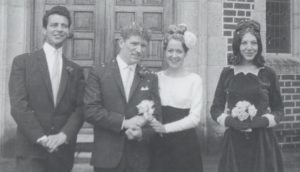
To raise money for the theatre, Deirdre continued playing folk gigs, and in Donoghue’s Pub, the headquarters of the Dubliners, Ireland’s first urban folk group, she met founding member Luke Kelly, and they later married.
In 1967, Deirdre’s hard work and planning finally paid off when she converted a building on the laneway of Pembroke Street into the Focus Theatre. It had only a 73-seat capacity, the facilities were crude, but as one critic put it, the “tiny theatre was a place of magic.” Deirdre created a repertoire of contemporary and classic works, never wavering from her commitment to Stanislavski. A member of her loyal troupe, Gabriel Byrne, paid her this tribute, “With minuscule grants, this unsinkable woman has given the country some of its finest performances and a fair percentage of its best actors.” Like her hero, Samuel Beckett, Deirdre worked with prisoners, performing with inmates from Mountjoy Gaol at the 1983 Dublin Theatre Festival in a show (ironically?) called “Fancy Footwork.”
Because it was small, the Focus was always poor, and Deirdre was always struggling to keep it going, relying on patrons, friends, and her generous husband. Unfortunately, Luke’s benevolence extended to total strangers as well, inviting them to live in the home he shared with Deirdre. And his drinking, never moderate, was out of control as he drank “pints for thirst, whiskey to get drunk . . . an accident about to happen.” They separated, but their bond remained, and when Luke Kelly died in 1984, she called herself his widow even though they had been apart for years and there had been another woman in his life.
Years later, when she was diagnosed with cancer, she took it on with characteristic independence and determination, telling no one, refusing treatment, and even hospitalization. She died in 2001, and, like Luke, was buried in Dublin’s Glasnevin Cemetery, the resting place of restless heroes.
At the unveiling of the plaque, President Higgins acknowledged Deirdre’s impact on Ireland. “Through that small theater space, so many have carried forward a spark that was kindled by Deirdre’s teaching, each embodying her belief in honesty.”
As Mayor McAdam beautifully put it: “Today we honor Deirdre O’Connell – an artist whose courage reshaped Irish theatre.”
Leave a Reply