
As the 250th anniversary of the signing of the Declaration of Independence approaches, Edythe Preet looks to March 17, 1776, and the role the Irish played in America’s bid for freedom.
Pop quiz: what color ink is used to sign legislative bills into law? If you answered black, you’d be right with one exception. On March 12, 1941 Massachusetts Governor Leverett Saltonstall used green ink to sign a bill authorized by the state’s Senate and House of Representatives making March 17th a legal holiday in Suffolk County, the region most well known for including Boston.
If you think the day’s status is due to the fact that Boston has a large Irish American population and stages one of the United States’ most famous Saint Patrick Day Parades, you’d be wrong. The date, known as Evacuation Day, commemorates an event that occurred early in the American Revolutionary War. On March 17, 1776 the Continental Army, under the command of General George Washington, forced more than 10,000 British troops and Loyalists to evacuate Boston, ending an 11-month siege of the city that until then had been an English stronghold in Colonial America. The evacuation was Washington’s first victory in the war, and for it he was awarded the first medal commissioned by the Continental Congress. The triumph was even more significant as it occurred in the city where the Revolution had begun at the Battle of Bunker Hill.
The coincidence of the date targeted to drive the British from Boston and the fact that Irish Catholics had, for centuries, celebrated March 17th as Saint Patrick’s Day did not go unnoticed by Washington. The General Orders he issued for March 17th, 1776 named John Sullivan as Officer of the Day and set “Boston” as the password and ‘Saint Patrick’ as the countersign for safe passage into the city. But Washington’s recognition of the reverence for Saint Patrick held by Colonial America’s Irish population didn’t end in March 1776.
During the 17th and 18th centuries nearly 250,000 Irish immigrants had settled in America and almost one-third of the Revolutionary forces (including 1,500 officers, among them 22 generals and more than a dozen sea captains) claimed Irish ancestry. In addition, Mother Ireland was engaged in a political struggle with Britain, which mirrored the American colonies’ quest for liberty and diminished the attention and resources England could focus on the rebellion occurring across the Atlantic.
On December 1, 1779, the American forces made camp in Morristown, New Jersey, a location Washington had chosen for its proximity to British-held New York. But frigid temperatures and 28 snowfalls, proved the winter of 1779-1780 to be the bleakest on record and the Continental Army fell on dire straits. Provisions were minimal, a lack of horses hampered artillery movement, and the Congressional treasury was so depleted that the troops were poorly clothed and unpaid.
With a threat of mutiny hovering and hoping to raise morale, Washington announced a holiday for his troops (the only respite from active duty they had all winter) with this order penned on March 16, 1780: “The general congratulates the army on the very interesting proceedings of the parliament of Ireland and the inhabitants of that country which have been lately communicated; not only as they appear calculated to remove those heavy and tyrannical oppressions on their trade but to restore to a brave and generous people their ancient rights and freedom and by their operations to promote the cause of America. Desirous of impressing upon the minds of the army, transactions so important in their nature, the general directs that all fatigue and working parties cease for tomorrow the seventeenth, a day held in particular regard by the people of the nation.”
After the conclusion of the war, on April 2, 1784, Lord Mountjoy told the English Parliament: “America was lost by Irish emigrants … I am assured from the best authority, the major part of the American Army was composed of Irish and that the Irish language was as commonly spoken in the American ranks as English. I am also informed it was their valor that determined the contest.“ Slainte!
Recipe
New England Boiled Dinner (personal recipe)
Note: This one-pot traditional New England meal stems from the Irish custom of preparing boiled Bacon and Cabbage as a special dinner for Saint Patrick’s Day, which always occurs during Lent, the 40-days prior to Easter during which time Irish Catholics did not consume meat. In America, corned beef is substituted for Irish bacon, a brined pork cut including the loin and a bit of pork belly, plus assorted vegetables in addition to cabbage.
4 pounds corned beef, trimmed of fat
12 pearl onions, skins removed
2 turnips, peeled and cut in 1” chunks
2 carrots, peeled and cut in 1” chunks
2 parsnips, peeled and cut in 1” chunks
3 russet potatoes, peeled and cut in 1” chunks
1 medium head green cabbage, cut in 6-8 wedges, core removed
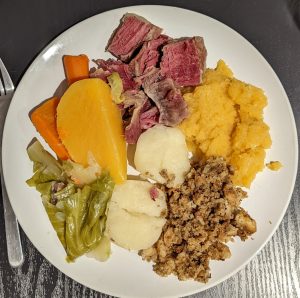
Put corned beef in a large soup pot and cover with water. Allow water to come to a slow, rolling boil for 2 hours. Check every 30 minutes, adding water if necessary. Remove meat, wrap in foil and keep warm. Skim any fat off stock.
Place onions, turnips, carrots, parsnips,
cabbage, and potatoes in pot of stock and cook on low heat until tender (check potatoes to make sure they don’t fall apart). Add salt and pepper to taste.
Slice corned beef, against the grain, into
1⁄4-inch slices and place over cabbage wedges. Arrange onions, turnips, carrots, parsnips and potatoes on the side. Accompany with horseradish and/or mustard. Makes 6 servings
Famous Irish of the American Revolution
John Barry / County Wexford
Driven from their ancestral home by the British, the Barry family relocated to the American Colonies where John Barry became a prosperous transatlantic trading captain. In December 1775, he was given command of the USS Lexington, the first commission issued by the Continental Congress, and three months later became the first U.S. Navy captain to seize a British ship (HMS Edward). Once offered 100,000 British pounds and command of any frigate in the British Navy if he would desert the American Navy, an outraged Barry replied that not all the money in the British treasury or command of its entire fleet could tempt him to desert his adopted country. While commanding the USS Alliance in March 1783, Barry and crew won the final naval battle of the American Revolution off the coast of Cape Canaveral. In 1797, Barry, who is known as The Father of the American Navy, was issued Commodore Commission Number One in the U.S. Navy by President George Washington.
Gustavus Conyngham / County Donegal
From March 1, 1777 to February 21, 1779, Coyngham terrorized British shipping, capturing or sinking more than 80 ships. England’s King George III is reported to have said he would be pleased to personally witness Conyngham’s hanging, if only the British Navy could catch him. Commissioned overseas by Benjamin Franklin as a Navy Captain, the paperwork was lost and the Continental Congress refused to recognize Conyngham’s appointment despite his contribution to the war effort. He never allowed his quarrels with politicians to curb his commitment to his country.
Henry Knox / Boston, MAssachusetts
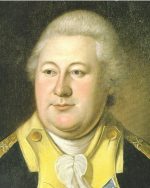
Boston bookstore owner Knox, abandoned his business to join the local Patriot militia. In December 1775 he masterminded transporting 60 tons of cannon captured at British Fort Ticonderoga across frozen terrain and rivers to fortify Washington’s siege of Boston. His success, called ‘one of the most stupendous engineering feats of the war’, was key in forcing the Boston Evacuation. Rising to the rank of Major General, Knox was appointed the first Secretary of War under the U.S. Constitution in Washington’s first Cabinet (1789).
Richard Montgomery / Swords, County Dublin
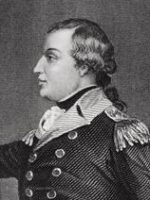 His father, Thomas, was a baronet and member of the Irish Parliament. He joined the British Army in Canada in 1756, moved to NY in 1772 and married into the prominent Livingston family. Appointed Brigadier General by the Continental Congress in 1775, and second in command in the successful Montréal Expedition, he was killed leading an assault on Quebec City.
Stephen Moylan / County Cork
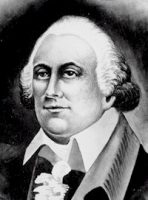
Son of a wealthy Cork shipping family, Moylan immigrated to Philadelphia and opened his own shipping firm. When the Revolutionary War broke out, he spent considerable amounts of his own fortune outfitting the first ships of the Continental Navy, and subsequently earned several Continental Army posts, including first Muster-Master General, Secretary and Aide to General George Washington, 2nd Quartermaster General, Commander of The Fourth Continental Light Dragoons and Commander of the Cavalry of the Continental Army.
Hercules Mulligan / County Derry
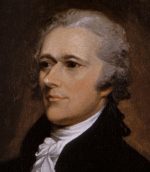
When the British took control of New York, Mulligan remained in the city as an espionage agent, posing as a Loyalist and gathering vital intelligence from British soldiers during their meetings in his clothing store. Mulligan’s vital communiqués included the British plan to invade Pennsylvania and a warning that British agents intended to kidnap George Washington.
Timothy Murphy / Pike County, Pennsylvania
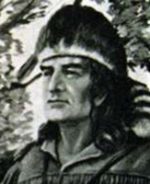
Murphy was a member of Col. Daniel Morgan’s Rifle Corps, a fierce group of sharpshooters with deadly accurate aim. While Murphy neither rose to great heights in the Continental Army nor sought political status after the war, his participation in the colonies’ fight for independence was, like thousands of other Irish-Americans, vital to the Revolution’s success.
Jeremiah O’Brien / Kittery, Maine
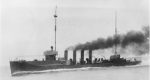
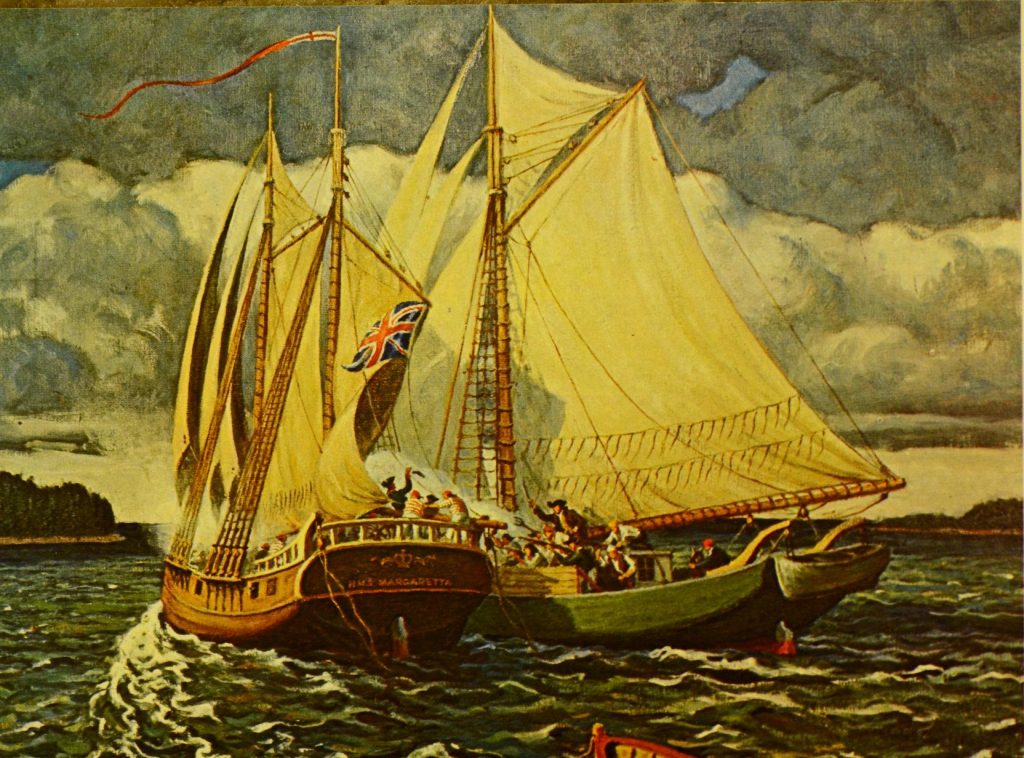
Five days before the Battle of Bunker Hill, O’Brien and his four brothers raided and seized the British warship HMS Margaretta in Machias, Maine. The event was the first naval battle of the Revolution. Jeremiah and his brother John were commissioned as privateers and authorized to seize enemy ships.
John Stark / Londonderry, New Hampshire
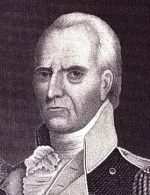
Stark served as an officer in the British Army during the French and Indian war, and at the outbreak of the Revolutionary War, joined the New Hampshire Militia. Enlisted by the Continental Army for his knowledge of the frontier, he was promoted to Brigadier General for defeating the British at the Battle of Saratoga, a turning point in the war. Toward the end of his life, he wrote to his comrades: ‘Live free or die’, which became the New Hampshire state motto.
John Sullivan / Summersworth, New Hampshire
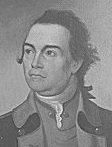
A lawyer by profession, Sullivan attended the Second Continental Congress and argued that war had been started by the British attacks on Lexington and Concord. Serving as a Major General during the war, he led the forces that defeated an Iroquois- Loyalist alliance along the NY frontier. After the war, Knox served as Attorney General and Governor of New Hampshire, and the first federal judge for the United States District Court for the District of New Hampshire.
Leave a Reply