
It is understandable that the mention of wartime heroism tends to evoke images of combat valor. But there are other ways that people can contribute heavily to the wartime cause without taking a bullet, firing a bullet, or even setting foot on a battlefield.
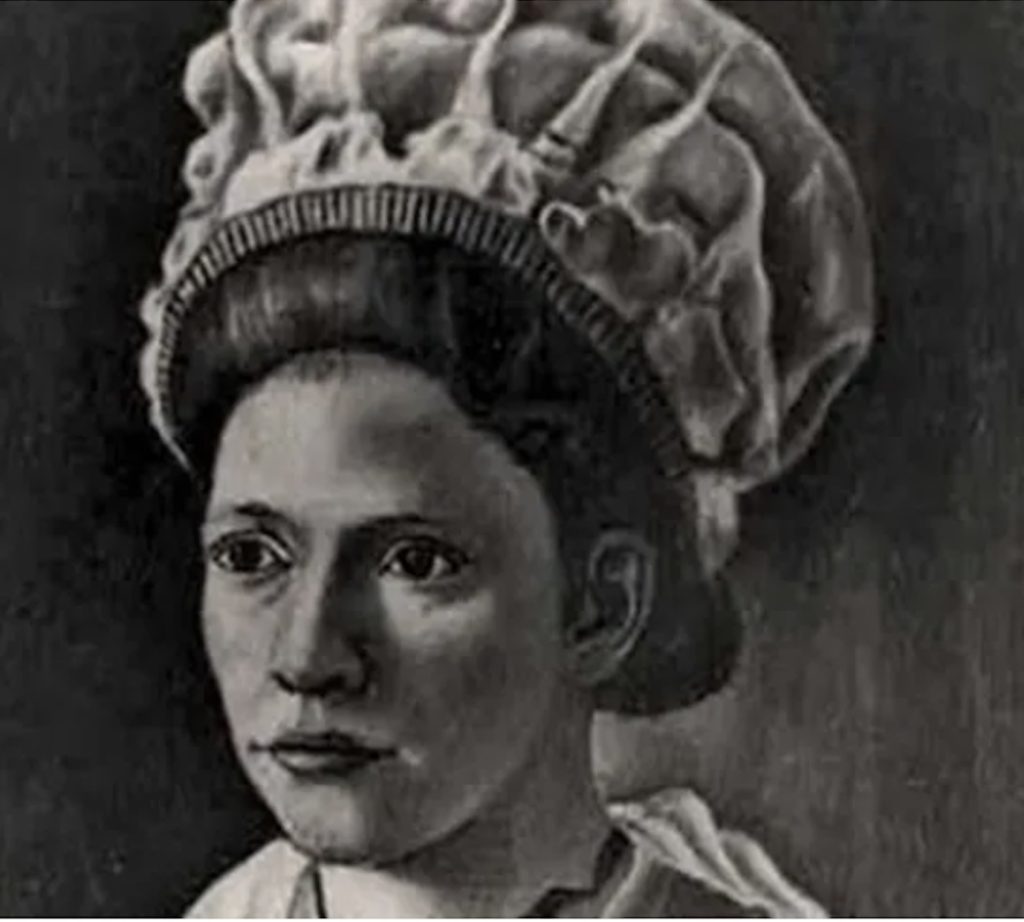
Lydia Barrington Darragh was most certainly a noncombatant, but she served her adopted country well in crucial circumstances.
According to findagrave.com, she was born as Lydia Barrington in Dublin in 1728. As a young woman, she married William Darragh, her former tutor. Not long after, they came to colonial America, settling in Philadelphia, where he resumed working as a tutor, and she worked as a midwife. They had five children.
Though she had no idea yet, Lydia Darragh was nearing her moment of glory by the autumn of 1777. The American Revolutionary War was underway. And following a string of victories over the Continental Army (the American side), the British took control of Philadelphia on Sept. 26, 1777.
About one-third of Philadelphia’s population had evacuated by then. The Darraghs chose to remain at their home, assuming the occupying British would not harass them, given that they were a Quaker family – and Quakers, being pacifists, were therefore neutral and a wartime nonentity.
In reality, though, the Darraghs were not 100 percent neutral, as their eldest son was fighting for the American side. There wasn’t any point, of course, in rubbing that detail in the faces of the new occupiers. Doing so might give the wrong sort of impression and cast doubt on the Darragh family’s Quakerish neutrality.
They needed that neutral identity, because the British were very close indeed: Not only were they occupying the city, but their improvised headquarters was located literally right across the street from the Darragh family residence.
Soon enough, the British officers, under the command of General William Howe, were expanding their operations and requested to use the Darragh family residence as an occasional meeting place.
Darragh honored their request, under the condition that she and her husband could continue living in their home. The British officers accepted, perhaps assuming that, as Quakers, neither she nor her husband would support either side in a war, and therefore posed no risk.
On Dec. 2, 1777, the British officers told her that they were going to hold a meeting, and so all household residents had to retire to their bedrooms by 8 pm, and stay put.
Something was up. That much was clear.
Quaker or not, Darragh had a dog in this fight. Her son was on the opposite side of her house guests, and she also might have been growing weary of these house guests and their “requests.”
At some point, after the 8 pm curfew, she sneaked out of her bedroom and stashed herself within the closet of a room next to the meeting. Eavesdropping on the British officers, she heard plans of an ambush on the American troops at Whitemarsh, about 15 miles north of Philadelphia.
This was definitely noteworthy to Darragh, whose son was stationed at Whitemarsh. Carefully sneaking back to her bedroom, she did not share the news with her husband.
Early on Dec. 4, Darragh obtained a pass (special permission was required to leave city limits during this period of war and occupation) to go purchase flour at Frankford Mill, about six miles away.
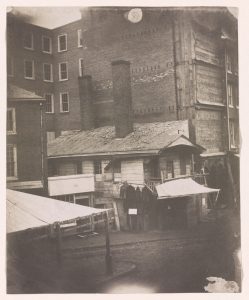
The website battlefields.org relates that Darragh, upon reaching the Frankford Mill, put down her empty flour bag and began making her way to the Rising Sun Tavern, a known Revolutionary hangout.
Here is where the accounts start to differ … Darragh’s daughter’s account said that Darragh, en route to the tavern, encountered Col. Thomas Craig of the Pennsylvania militia. She then gave Craig the needed information; she went back to the flour mill; he went straight to Whitemarsh to spread the word of impending British attack.
A separate (and more substantiated) account comes from Elias Boudinot, the American prisoner-of-war commissary. He was at the Rising Sun Tavern on Dec. 4, 1777, when “a little poor looking insignificant old woman” entered the tavern, approached him and placed into his hands a “dirty old” book, inside of which was a rolled up piece of paper containing information that the British were planning an ambush the next morning. Boudinot then immediately headed to Whitemarsh with news of the impending attack; Darragh headed back to the flour mill, gathered her refilled bag of flour, and journeyed back home.
That evening, Gen. Howe headed out of Philadelphia with some 10,000 British troops. Upon their arrival at Whitemarsh, it soon became clear that everyone was aware of the “ambush.” Multiple skirmishes ensued, but the British eventually had to abort the attack and retreat to Philadelphia. The Americans had suffered about 100 casualties, and the British three times as many.
Back in Philadelphia, the British launched an investigation to ascertain how word of their ambush had leaked. Darragh, among others, was questioned. But she played herself off as ‘insignificant’ and eluded further attention.
In this type of situation, Darragh’s ‘insignificant’ appearance was greatly to her benefit, making it seem she had neither the ambition nor the pluck to involve herself in anything especially important. The stakes were high enough: She risked a charge of treason, which would have made her eligible for execution, relates womenhistoryblog.com.
The British left Philadelphia in June 1778 and several years later would leave America altogether in defeat.
Darragh remained in Philadelphia, working as a shopkeeper until her death at age 61 on Dec. 28, 1789. During her lifetime, she did not go public about her heroic act of espionage. After her death, her daughter broke the silence.
In the ensuing century, some people would question the historical accuracy of Darragh’s purported wartime exploits. But in the early 20th century, the surfacing of Elias Boudinot’s private letters gave strong circumstantial evidence pointing to Darragh having been the person who warned the American revolutionaries.
Darragh therefore endures as an example of someone who – though lacking in physical, financial, or political power – was able to make a huge contribution.
Another possible lesson from Darragh’s espionage is that it’s slightly naive to request use of someone’s house as a wartime think tank, and assume they won’t seek to betray you.
Leave a Reply