

• Skip to main content
  • Skip to secondary menu
  • Skip to primary sidebar
  • Skip to footer
Irish America

Irish America

Irish America

  • HOME
  • WHO WE ARE
    • ABOUT US
    • IRISH AMERICA TEAM
  • IN THIS ISSUE
  • HALL OF FAME
  • THE LISTS
    • BUSINESS 100
    • HALL OF FAME
    • HEALTH AND LIFE SCIENCES 50
    • WALL STREET 50
  • LIBRARY
  • TRAVEL
  • EVENTS

By Ian Warpole, ContributorAugust / September 2009

Frankie Gavin Back with De Dannan

By Ian Warpole, Contributor
August / September 2009

August 2, 2009 by Leave a Comment

De Dannan, along with The Bothy Band, Planxty and The Chieftains, is one of the seminal super-group Irish traditional bands that started up in the heady days of the 1970s and have powered along in various incarnations to this day. Hailing from Spiddal, Co. Galway, and originally made up of Frankie Gavin on fiddle, Alec Finn on bouzouki, Johnny “Ringo” McDonagh on bodhrán and … [Read more...] about Frankie Gavin Back with De Dannan

The Human Cry: An Appreciation of Francis Bacon
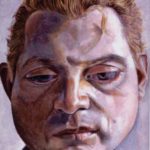
By David Remfry, Contributor
August / September 2009

August 2, 2009 by Leave a Comment

If, in 1964, you were to have asked me which two things excited me most, aside of course from ‘The Siren Call of Sex’ as the poet Philip Larkin put it, I would have answered, the Ronettes and the paintings of Francis Bacon. Oh, and the fact that I was leaving Hull College of Art intent on a life of painting, so three things. The first Francis Bacon paintings I saw were in … [Read more...] about The Human Cry: An Appreciation of Francis Bacon

Those We Lost
By Irish America staff
August / September 2009

August 2, 2009 by Leave a Comment

Chuck Daly 1930-2009 Charles Jerome “Chuck” Daly, head N.B.A. coach and Hall of Fame inductee, died at age 78 on May 9 of pancreatic cancer in Jupiter, Florida. Born in St. Mary’s, Pennsylvania, and raised in the 1930s by an Irish Catholic family in the midst of the Depression, Daly’s humble roots kept him grounded throughout his successes. He resolved in high school to become … [Read more...] about Those We Lost

Thomas Cahill: Civilization on Trial

By Kara Rota, Contributor
August / September 2009

August 2, 2009 by 1 Comment

I first encountered Thomas Cahill in the reading requirements for ninth grade history, where Mr. Dachille’s designation of Cahill’s book The Gifts of the Jews as a substitute for the dry textbooks to which I was accustomed instantly granted him canonical stature in my mind. And for good reason: Cahill’s accessible and fascinating takes on the histories of the Irish, the Jews, … [Read more...] about Thomas Cahill: Civilization on Trial

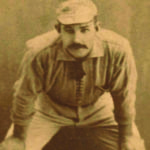
The Irish in Early Baseball

By David L. Fleitz, Contributor
August 2, 2009 by 6 Comments

More than two dozen sons of  Irish immigrants, who played in the 1880-1920 period, are enshrined in the Baseball Hall of Fame in Cooperstown. Many other great Irish players have made their mark on the game as well. The Irish potato famine of the 1840s and 1850s was probably the greatest human tragedy of the 19th century. The famine sparked a massive wave of emigration to … [Read more...] about The Irish in Early Baseball

« Previous Page
Next Page »

Primary Sidebar

Featured Video

Featured Podcast

News from the Irish Post

  • Molloy prepares for Wembley bout as Galway homecoming plans take shape

    GALWAY boxer Kieran Molloy will return to the ring at London’s OVO Arena Wembley on November 14 a...

  • Ireland’s final peacekeeping troop prepares to head for Lebanon

    THE final Irish peacekeeping soldiers who are to deploy to Lebanon are preparing to take that jou...

  • Darina Allen helps showcase best of Irish food in India

    IRISH chef Darina Allen has been showcasing the best of Ireland’s culinary offerings in India. Th...

  • Why are Liverpool and Manchester United the two most popular football clubs in Ireland?

    ASK an Irish football fan which English club they support, and there is a good chance the answer ...

November 8, 1847

Bram Stoker, the famous author of “Dracula,” was born in Dublin on this day in 1847. Born Abraham Stoker, he was the third of seven children. He had a very sickly childhood and spent most of it bed-ridden, which allowed for his imagination to run wild. He recovered and attended Trinity College Dublin where he studied mathematics. Following Trinity, he found an interest in theater and became a critic. After reviewing Henry Irving’s production of “Hamlet,” the two became close friends and Stoker then went on to become business manager for Irving and the Lyceum Theater. While manager, Stoker began writing fiction. He published his novel “The Snake’s Pass” in 1890 and “Dracula” followed in 1897; it is considered the first definitive vampire novel.

Footer

Follow Us

  • Facebook
  • Instagram
  • LinkedIn
  • Twitter
  • YouTube

Subscribe

  • Subscribe
  • Give a Gift
  • Newsletter

Additional

  • Advertise
  • Contact
  • Terms of Use & Privacy Policy

Copyright © 2026 · IrishAmerica Child Theme on Genesis Framework · WordPress · Log in