• Skip to main content
  • Skip to secondary menu
  • Skip to primary sidebar
  • Skip to footer
Irish America

Irish America

Irish America

  • HOME
  • WHO WE ARE
    • ABOUT US
    • OUR CONTRIBUTORS
  • IN THIS ISSUE
  • HALL OF FAME
  • THE LISTS
    • BUSINESS 100
    • HALL OF FAME
    • HEALTH AND LIFE SCIENCES 50
    • WALL STREET 50
  • LIBRARY
  • TRAVEL
  • EVENTS

October November 2005 Issue

20 Moments in History

By Irish America Staff
October 1, 2005 by Leave a Comment

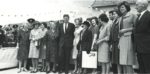
Ambassador Smith (second from left) with JFK and other family members in Ireland in June, 1963.

From witch hunts and huddled masses to the White House– 20 significant moments in the history of the Irish in America.  1688: Witch Hunt Goody Glover, an Irish woman, was hanged as a witch four years before the infamous Salem Trials of 1692 (as illustrated left). Glover, an Irish laundress who came to Salem, Massachusetts via the Caribbean, was arrested, tried for bewitching, … [Read more...] about 20 Moments in History

An Interview with Seamus Heaney

Patricia Harty, Editor-in-Chief
October / November 2005

October 1, 2005 by Leave a Comment

Seamus Heaney was awarded the 1995 Nobel Prize in Literature "for works of lyrical beauty and ethical depth, which exalt everyday miracles and the living past." The first person from Northern Ireland to be so honored, Heaney was born on April 13, 1939, the eldest of nine children, to Margaret and Patrick Heaney, at the family farm in Mossbawn, County Derry. In his Nobel Prize … [Read more...] about An Interview with Seamus Heaney

20 Great Interviews: Mary Higgins Clark

Mary Pat Kelly, Contributor
October / November 2005

October 1, 2005 by Leave a Comment

Mary Higgins Clark is one of America's premier "who done it" writers. Her books are worldwide best-sellers. Several of her novels have been made into television dramas and major movies. In April 2000, she signed a five-book deal with Simon & Schuster worth an astonishing $64 million, but as one book after another passes the million mark in sales, the arrangement looks like … [Read more...] about 20 Great Interviews: Mary Higgins Clark

20 Great Interviews: John Huston

T.J. English, Contibutor
October / November 2005

October 1, 2005 by Leave a Comment

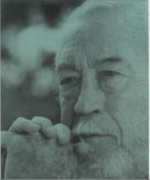
Was it good for you?" asked the legendary director John Huston, his distinctive voice bellowing across the sound stage. "Fine, perfect," replied assistant director Tommy Shaw, a stout, white-bearded terrier of a man, who in turn motioned to Fred Murphy, the cinematographer, and asked, "How was it for you?" "Good," said Murphy, ever so politely. "Couldn't have been … [Read more...] about 20 Great Interviews: John Huston

« Previous Page

Primary Sidebar

Featured Video

Featured Podcast

News from the Irish Post

  • Funeral details confirmed for architect and tv presenter Hugh Wallace

    TRIBUTES have been paid to the architect and television presenter Hugh Wallace who has died at th...

  • Man extradited to Lithuania for child human trafficking offences

    A MAN has been extradited from Northern Ireland to Lithuania over child human trafficking offence...

  • Anniversary appeal 25 years after murdered Sandra Collins disappeared from Mayo

    AN ANNIVERSARY appeal has been issued today for information on the murder of Mayo woman Sandra Co...

  • Witness appeal after driver dies following collision in Cork

    GARDAÍ have appealed for witnesses to come forward after a driver died in a collision in Cork cit...

December 5, 1921

Following the conclusion of negotiations between Irish government representatives and British government representatives, the British give the Irish a deadline to either accept of reject the Anglo-Irish Treaty. The treaty established the self-governing Irish Free State but still made Ireland a dominion under the British Crown. The treaty also gave the six counties of Northern Ireland, which had been acknowledged in the 1920 Government of Ireland Act, the option to opt out of the Irish Free State and remain part of England, which they opted for. The Anglo-Irish treaty split many and on this day in 1921 Prime Minister David LLoyd-George said that rejection by the Irish would result in “immediate and terrible war.”

Footer

Follow Us

  • Facebook
  • Instagram
  • LinkedIn
  • Twitter
  • YouTube

Subscribe

  • Subscribe
  • Give a Gift
  • Newsletter

Additional

  • Advertise
  • Contact
  • Terms of Use & Privacy Policy

Copyright © 2025 · IrishAmerica Child Theme on Genesis Framework · WordPress · Log in