
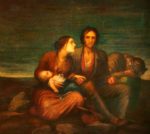
The Irish Famine was the first national disaster to attract international fundraising activities. These activities cut across traditional divides of religion, nationality, class and gender. Such a response was unprecedented. The earliest fund-raising activities took place at the end of 1845. The first place to send money to Ireland was Calcutta in India. The fundraising was … [Read more...] about Help from Afar
Dr. Christine Kinealy
The Spoilers of Our Land

How the British Government Responded to the Great Hunger In January 1847, the Nation published a poem entitled ‘The Stricken Land.’ It was a searing indictment of the policies of the British Government in the wake of the second failure of the potato crop only a few months earlier. It was written by a young woman, Jane Elgee, who was drawn from the Protestant … [Read more...] about The Spoilers of Our Land
Daniel O’Connell: His Legacy, His Impact, & His Home
By Dr. Christine Kinealy
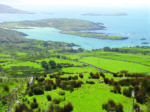
The legacy of the statesman known as “The Liberator”, is explored over a two-day ‘school’ in his home place in Kerry. Cahersiveen, County Kerry. Population, 1041: Famous because it is the furthest point from Dublin – traveling westwards, the next parish is New York. Despite its remote location, it is a town steeped in history and surrounded by rugged beauty. And, since the … [Read more...] about Daniel O’Connell: His Legacy, His Impact, & His Home
Following in Frederick Douglass’s Footsteps:
A Walking Tour of Dublin
By Christine Kinealy
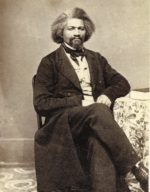
In August 1845, an American “fugitive slave” named Frederick Douglass arrived in Dublin. He was seeking refuge from capture and a return to enslavement in his home country. Twenty-seven-year-old Douglass referred to his four months in Ireland as the “happiest moments” of his life. He also described it as “transformative”. Ireland changed Frederick Douglass and Frederick … [Read more...] about Following in Frederick Douglass’s Footsteps:
A Walking Tour of Dublin
Frederick Douglass and Irish Home Rule

Born a slave, Frederick Douglass died as a champion of human rights, and Ireland played an important role in his political awakening. In 1845, Ireland provided a safe refuge to Frederick Douglass, a 27-year-old “fugitive” slave from America. Douglass described his four months in the country as the “happiest times” in his life and the Irish people as the most “ardent” … [Read more...] about Frederick Douglass and Irish Home Rule