
• Skip to main content
  • Skip to secondary menu
  • Skip to primary sidebar
  • Skip to footer
Irish America

Irish America

Irish America

  • HOME
  • WHO WE ARE
    • ABOUT US
    • IRISH AMERICA TEAM
  • IN THIS ISSUE
  • HALL OF FAME
  • THE LISTS
    • BUSINESS 100
    • HALL OF FAME
    • HEALTH AND LIFE SCIENCES 50
    • WALL STREET 50
  • LIBRARY
  • TRAVEL
  • EVENTS

Martin Milmore

Boston’s Great Civil War Sculptor

By Michael Quinlin
IA Newsletter, September 14, 2024

September 11, 2024 by Leave a Comment

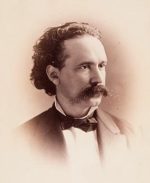
A portrait of Slig-born Sculptor Martin Milmore in Sepia.

Sculptor Martin Milmore of Boston (1844-1883), admired for his Civil War sculptures and for his classical statuary and busts of famous men throughout New England, was born in Kilmorgan, County Sligo on September 14, 1844, the youngest of five sons of parents Martin and Sarah Milmoe (nee Hart).  When the father died in 1851, Sarah emigrated with her five sons to Boston, where … [Read more...] about Boston’s Great Civil War Sculptor

Primary Sidebar

Featured Video

Featured Podcast

News from the Irish Post

  • Irish community in Britain needs to talk about end-of-life care

    EARLY conversations about end-of-life care must be had if death matters and outcomes are to be im...

  • Chefs Denis Shankey, Sasha Brent and Beth O’Brien named among Irish influencers in London

    CHEFS Denis Shankey, Sasha Brent and Beth O’Brien have been highlighted as ones to watch on the L...

  • Aer Lingus flies Jessie Buckley’s family to Los Angeles for Oscars ceremony

    THE family of Irish Oscar contender Jessie Buckley are on route to Los Angeles to attend this wee...

  • Lifejacket worn by Titanic survivor goes on display in Belfast

    A LIFEJACKET worn by one of the survivors of the Titanic tragedy has gone on display in Belfast. ...

March 12, 1685

Philosopher George Berkeley was born in Kilkenny on this day in 1685. Berkeley’s most substantial contribution to philosophy was his theory of “immaterialism,” or “subjective idealism.” He combined empiricism (the belief that knowledge comes only from direct sensory experience) with idealism (the belief that reality as we know it is mentally constructed) concluding that material substance does not exist, but our perceptions of it do. Berkeley is associated with the phrase, “to be is to be perceived.” However, he didn’t believe that physical objects cease to exist when not being perceived, explaining that God always perceives of everything. In contemporary terms, this describes the world as an interactive illusion, similar  to “The Matrix,” but with God in place of the machines.

Footer

Follow Us

  • Facebook
  • Instagram
  • LinkedIn
  • Twitter
  • YouTube

Subscribe

  • Subscribe
  • Give a Gift
  • Newsletter

Additional

  • Advertise
  • Contact
  • Terms of Use & Privacy Policy

Copyright © 2026 · IrishAmerica Child Theme on Genesis Framework · WordPress · Log in