
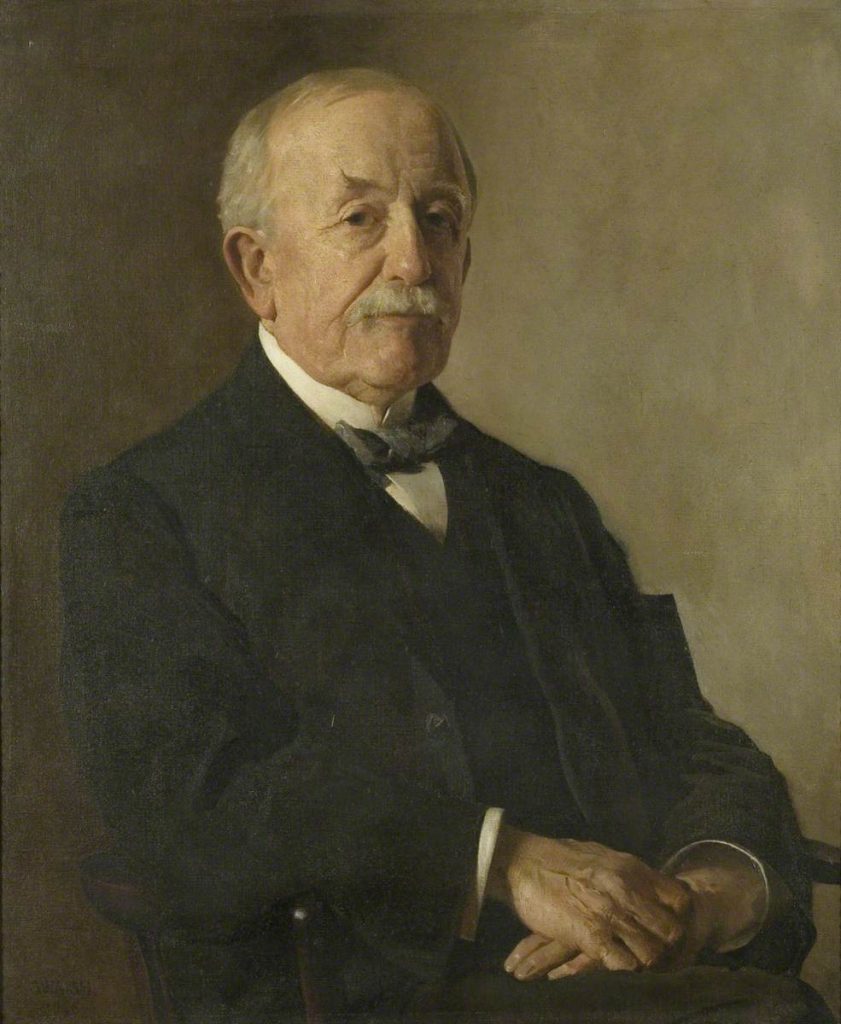
The words to perhaps the most famous of all Irish songs, “Danny Boy,” were actually written by an Englishman named Frederick E. Weatherley, a leading barrister and lyricist of his day. The tune of this song is Irish-the “Londonderry Air,” first seen in print in 1855 after Miss Jane Ross of Limavady, a village east of Derry, in Northern Ireland, had taken it down from a peasant who visited her village on a market day. However, the lyrics, which the world knows and identifies as quintessentially Irish, were in fact written by an Englishman. Who was he? Fred Weatherley, after a preliminary career as a teacher at Oxford, became not only a leading English barrister but also wrote the lyrics for over fifteen hundred songs, published and immensely popular in his own day. He also wrote, for performances at Convent Garden, English versions of the librettos of several operas, including Leoncavallo’s “Pagliacci” and the “Cavalleria Rusticana” of Mascagni.
An article in the files of the New York Public Library at Lincoln Center, clipped from an 1896 copy of a magazine called The Minute, states that: “For twenty years Mr. Weatherley has been writing the words of all the most famous songs of the day — ‘Dresden China,’ “Darby and Joan,’ ‘When We are Old and Grey.'”
The article is based on an interview with the barrister-lyricist and is entitled Lyrics and the Law.” The photograph that accompanies it shows Weatherley, aged forty-eight. He has a youthful face that sports a heavy moustache and is capped with a barrister’s wig. He wears the black gown and white shirt of the legal profession, with his left hand held in elegant Victorian pose across his front. At the interviewer’s prompting, Weatherley informs the reading public that he is also the author of “A Treatise on Logic, which is at present one of the University text-books,” and that he has written “a book on musical copyright, and of course; any amount of words for gift books and things of that kind.”
Let us here tune in on this 1896 interview: “‘My dear sir, what a tremendous output,’ I said, ‘but tell me how and when you write the songs we all know so well. How and when? Well, generally I do them at the sea-side. I lie on the cliffs with a novel till an inspiration comes. and then I go and write a song straight off. I think, on the whole, I prefer writing at night.”‘
The interviewer goes on to ask the lyricist if, as a barrister, he appears in musical copyright cases: “Yes, I have been in a good many copyright cases. ‘Ta-ra-ra-boom-de-ay’ was one of them.”
In his autobiography, Piano and Gown, Weatherley also mentions the “Ta-ra-ra-boom-de-ay’ case, but does not give any details. This autobiography is still interesting today for it preserves the charm, intelligence and the toughness of the Victorian age that Weatherley represents, as well as his reminiscences of such eminent Victorians as Sir Henry Dickens (son of Charles), Sir Henry Irving, John McCormack, Gladstone, Oscar Wilde, Ellen Terry and others.
Weatherley relates that he was born in 1848 “at Portishead, then a little fishing village in Somerset on the shore of the Bristol Channel, and from earliest childhood, ships, books and music were my chief delight.” The son of a country doctor who had “contrived to give his eight boys a university education,” Frederick won a scholarship to Oxford and, first as a student and ardent member of the boat club, and afterwards as a “coach” or private tutor, remained there for twenty years. Among his pupils was the Prince Swasti Sobhon, brother of the King of Siam, and various men who would become notable in sport, journalism and politics.
Only after this twenty years at Oxford did Weatherley’s career begin in earnest, when he was “called to the bar” in 1887.
For the next forty years he was a barrister involved in many cases, including some murder trials, but he found time, in spare moments, as he tells it, to write about two thousand lyrics for songs.
With the steady publication and great popularity of these songs, of course, came fame, but no great riches, as the first gramophone records did not appear until the end of Weatherley’s life and the lyricists of his day received only a modest sum per song.
At the age of seventy-seven he was promoted to the rank of King’s Counsel, which gave him a “K.C.” after his name and designated him “a barrister selected to serve as counsel to the British Crown.” Weatherley also filled the roles of husband, father and grandfather during his long, healthy life and career.
How did he come to write “Danny Boy?”
Here is the story as he tells it in Piano and Gown: “In 1912 a sister-in-law in America sent me a tune called ‘Londonderry Air.’ I had never heard the melody or even heard of it…It so happened that I had written in March of 1910 a song called “Danny Boy,” and rewritten it in 1911. By lucky chance it only required a few alterations to make it fit that beautiful melody.”
Mr. Weatherley, as one comes to know him through his autobiography, was an English gentleman through and through.
Furthermore, many of his songs were written about and sung by British soldiers and sailors. He certainly does not mention any particular affinity of his own for Ireland, just mentioning a few Irish composers, poets or singers with whom he worked. However, he does tell one intriguing story. It took place at the Sessions Bar, which was a traditional dinner meeting of British barristers:
“Sir William Hardman (then the editor of the Morning Post) was in the chair on the night when I first dined with the Sessions Bar. I not only had to make a short speech, but to sing! I sang the ‘Wearing o’ the Green,’ the only song I could remember without the music before me. Sir William sent me a little note: ‘Don’t sing that rebel song at our next dinner or I shall leave the Chair.’ I only saw ‘art’ in the song. He saw ‘polities.’”
Sir Hardman indeed!
God bless you Frederick E. Weatherley. Sing on your English lyrics in our Irish “Derry Air.”
Editor’s Note: This article was originally published in the March 1991 issue of Irish America. ♦
Leave a Reply