

Limerick: When revolutions occur in Ireland, it’s usually with a roll of drums and armies clashing, but what is happening at the University of Limerick, just a few miles from Shannon Airport, could have as fundamental an impact as any armed struggle.
Those who are aware of Ireland’s economic woes – 20 percent unemployment, massive emigration, huge tax burdens on wage earners – will also know that the crushing economic problems have utterly defeated the politicians to the point where they seem mesmerized by them, rather like animals caught in the headlights.
In Ireland politicians prefer to admire problems, not solve them. Issues are painted as enormously complex — the North of Ireland situation as immutable as stone, for instance – as if the Berlin Wall crashing down and the astonishing collapse of Communism had no resonance for the possibility of change in Ireland.
The stifling consensus that pervades the country – that the economy is a basket case, that unemployment and emigration are inevitable that the Northern problem is unsolvable — has led to a mindset that would make Diogenes sound like an optimist.
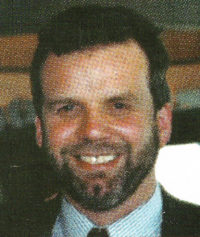
There are some beacon lights, however, individuals who refuse to buy the consensus. One such man is Dr. Edward Walsh, the founder of Limerick University, who with a loyal and dedicated staff has set up an institution that challenges the centuries of hidebound tradition that bedevils Irish academic thinking.
At present, Irish universities are busy churning out thousands of unemployable graduates in almost every discipline.
Entire graduating classes in disciplines such as architecture and engineering have emigrated en masse. The ivory tower universities traditionally have worried little about such realities, or the lost cost to the taxpayer. Academics, they claim, should really not be bothered by such mundane considerations.
A nuclear scientist by profession, Walsh’s philosophy that the university cannot survive without integrating with and influencing the society, and the economic reality around it, has exploded with rare impact on the Irish academic and political scene.
Limerick University, then, does not exist in splendid isolation. The degrees on offer are for skills desperately needed in Ireland, including advanced computers, business administration, entrepreneurial development and other areas where the Irish economy is desperately lacking. The prediction (and reality so far) is that there will be very few unemployed Limerick graduates.
In addition, outreach to the local community in the Limerick area is encouraged at every level by the university. The university facilities are available to local groups, and a major concert hall which will be a huge cultural focus in the Shannon region will shortly be completed on the campus. The splendid isolation of other major Irish third level colleges is not repeated.
There is also a distinguished American Board of Trustees at the college, composed of leading figures in the Irish American business and cultural community such as John Mitchell, president of Motorola, and Liz Shannon, wife of the former ambassador to Ireland, William Shannon. On the Irish side, Tony Ryan, chief executive of Guinness Peat Aviation, one of Ireland’s most successful multinational companies plays a leading role. All believe in the vision that Walsh espouses.
By adding such business and American expertise, Limerick University is a far step ahead of other Irish institutions. Fundraising in the U.S. is highly organized, while placement of graduates in U.S corporate training programs has been very successful.
The American concept of alumni support is also encouraged Limerick is an example of what happens when the finest elements of Irish American know-how is married to the brain power of a man such as Ed Walsh, and applied to Limerick students who represent the best educated generation in Ireland’s history: Though the experiment is still in its infancy, it is already pointing a bright way to the future amid the darkening gloom of Ireland in winter 1991.
Editor’s Note: This article was originally published in the December/January 1991 issue of Irish America. ♦
Leave a Reply