
The Celtic feast of Bealtaine (Bright Fire) began on the first day of May with the lighting of the May Fires. The clan gathered to celebrate the end of the dark months and the return of the light. The fires symbolized the earth’s life-giving forces-fertility and rebirth after the dormant winter months. Dancers enacted the sun’s movement through the skies and the Maypole and other folk rituals have their origin in this mad dance around the fires. Cattle were blessed and driven between the sacred bonfires to protect them from disease.
To prepare for the Bealtaine festivities, hearth fires were extinguished. People rose at dawn to gather fuel. That night teams of men took turns kindling two huge bonfires. After the dancing and feasting, each household carried home glowing embers from the scared fire to rekindle its own hearth fire.
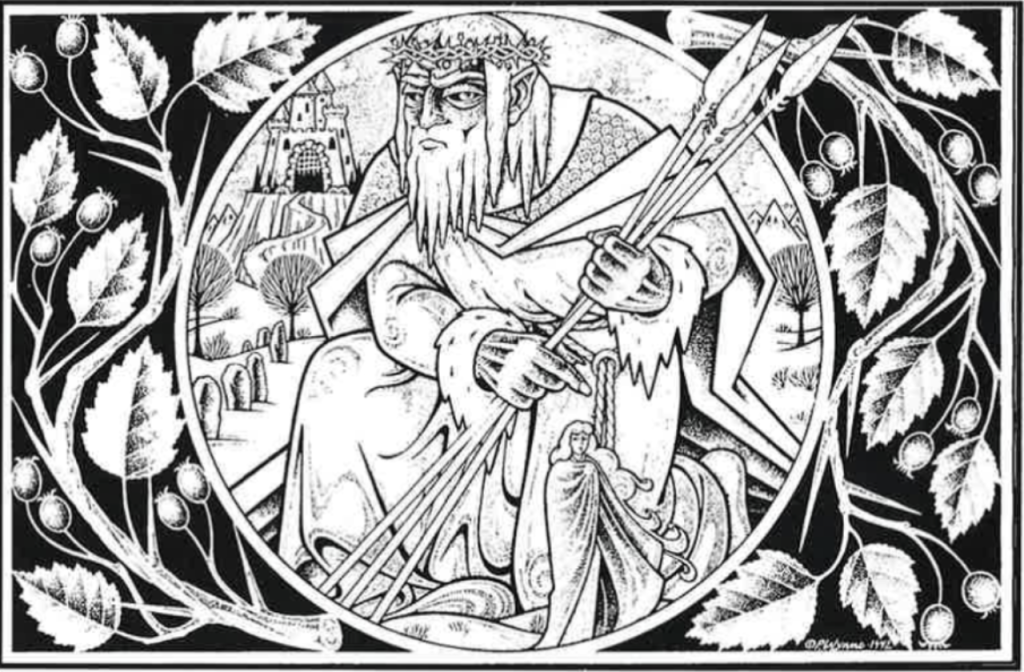
The Celtic god Belenos (the word bel means “bright” or “brilliant”) represented the power of light and healing, hence the name of the feast, Bel-tine, “fire of Bel(enos).” In both Gaul and Britain during the Roman period Belenos was identified with Apollo.
The feast of Bealtaine is also associated with the myth of Olwen, a young Summer Maiden, who is wooed away from her retentive earth-giant father by the young champion Culhwch who won her by seeking the help of the Oldest Animals, and by hunting the Boar Trwth. In some areas a hawthorn tree representing the giant and the stingy forces in nature was cut down. At this time also, the Celts believed that the veil between our world and the Otherworld was removed and fairies roamed at large.
According to W.B. Yeats (Irish Fairy and Folk Tales, 1893), fairies celebrated three festivals during the year: Samhain when they mourned the coming of winter, Midsummer when they were gayest, and Bealtaine when their armies marched out of the fairy mounds to fight under the light of the moon.
“Everything is capricious about them. They take whatever size or shape pleases them. Their chief occupations are feasting, fighting, making love and playing the most beautiful music,” wrote Yeats. He also averred their singing has the power to bewitch listeners, and, when goaded to anger, they shoot paralyzing darts into men or cattle.
The huge bonfires that the Celts lit on hilltops on Bealtaine night were supposed to keep these mischievous spirits at bay. The most important ceremonial blaze burned at Tara in what is today County Meath. No one was permitted to light a Bealtaine fire until the High King had lit the first one on Tara Hill. In 433 A.D., Saint Patrick violated the tradition by lighting a fire on Slane Hill before High King Laoghaire had kindled his. It was the beginning of Christianity’s supremacy over the old ways.
Celtic festivals merged with the church’s teaching and May became the month to Virgin Mary, mother of God. May altars or shrines are still put up in homes in Ireland to this day, decorated with primroses and and bluebells and other spring and early summer flowers.
From our 20th century perspective, putting out and relighting the family fire, as happened at Bealtaine, seems a quaint custom until one understands the Irish hearth’s significance. It was the center of all activity in the home. Even in summer, the fire was never allowed to die. At night glowing coals were banked with ash; in the morning the ash was raked off, fresh fuel was put on the embers, and the fire was blown back into life with a bellows.
In the past, all cooking was done on the open hearth. But the hearth was more than just an expedient culinary corner. It was the social heart of the home as well. Visitors were brought at once to the hearth to warm themselves. And on evenings when neighbors came to call, everyone would gather around the fire to chat, play music and, best of all, tell stories. This Bealtaine invite friends over and celebrate with some Irish cooking. Sláinte!
Recipes
Carrageen Moss Pudding
- 1/2 cup of carrageen moss
- 1 to 1 1/2 tablespoons sugar
- 1/2 teaspoon vanilla
- 4 cups milk
- 1 egg separated
Soak the carrageen in warm water for 10 minutes. Strain off the water and put the carrageen in a saucepan with the milk/ Bring to a boil, reduce heat, cover and simmer for 20 minutes.
In a large bowl, whisk the egg yolk, sugar and vanilla. Pour the milk and carrageen moss through a colander lined with damp cheesecloth directly onto the egg yolk mixture, whisking all the time. The carrageen moss will be exuding jelly which you should press through the colander, whisking it into the milk and egg yolk mixture.
Put a spoonful of pudding on a saucer to see if it will set. If it doesn’t, pour a cup of pudding back into the colander and press more jelly through. Whisk again.
Beata the egg white stiff and fold it into the pudding mix. Pour the combined mixture into a clean bowl, let cool, then refrigerate until completely set. Serve with soft brown sugar and cream.
–Festive Food of Ireland by Darina Allen.
Poached Salmon with Leeks
Salmon
- 1 five lb. salmon filet
- 2 tbsp. chopped fresh dill.
- 1/4 cup white white
Garnish:
- Chopped dill
- Watercress sprigs
Preheat oven to 300 F. Place the salmon on heavy foil large enough to gather up like a pouch. Sprinkle chopped dill on the filet and pour wine over it. Gather up foil and crimp the edges to seal it. Place foil-enclosed fish in a baking dish and put it in the oven. Cook 10-15 minutes per pound or until the fish flakes when tested with a fork. (Do not overcook or the flesh will dry out!) Let the fish cool for a few minutes before opening foil. Remove salmon to a warm serving platter, surround with leeks, sprinkle with more dill and garnish with watercress. Serves 8-10.
Leeks:
- 8-10 medium leeks, trimmed and thoroughly washed
- 2 tbsp butter
- 2 cups milk
- salt and pepper
Put the leeks in an enamel or stainless steel frying pan large enough to hold them in one or two layers. Pour in milk and heat until almost boiling. DO NOT BOIL OR MILK WILL CURDLE! Immediately turn down heat and simmer for 20 minutes or until leeks are tender. Drain. (Reserved milk can be used to make chowder with leftover salmon). Add butter, salt and pepper and arrange around salmon.
Parsley-Buttered New Potatoes
- 8 to 12 small new potatoes
- 1 1/2 tsp salt
- 2 tbsp minced parsley
- 2 cups water
- 1/4 cup melted butter
- salt and pepper
Scrub potatoes well. Bring water and salt to boil in large saucepan over high heat. Add potatoes and cover. Bring back to boil and reduce heat to low. Cook 10-15 minutes or until just tender. Drain, return to pan and cover with a towel. Let covered pan sit for a few minutes to dry steam potatoes. Add butter, parsley and salt and pepper to taste. Serves 4.
Farmhouse Cheese
- 2 quarts whole milk
- 1 cup heavy cream
- 2 to 4 tablespoons fresh lemon juice.
Place a colander draped with damp cheesecloth over a large pot. Set aside.
Combine milk and cream in stainless steel pot. heat slowly until the surface is bubbly. Do not boik. Remove from heat when a thin skin appears on the surface. Stir in enough lemon juice so the milk separates into curds and whey.
Pour curds and whey into the colander. Gather the cheesecloth in a ball and suspend over the colander until the whey stops dripping. Remove cheese from the cheesecloth and refrigerate until ready to serve.
Refrigerate whey separately. It is a delicious refreshing drink similar to buttermilk.
Makes 2 cups of cheese and 2 quarts of whey.
Editor’s Note: This article was originally published in the May/June 1994 issue of Irish America. ♦
Leave a Reply