
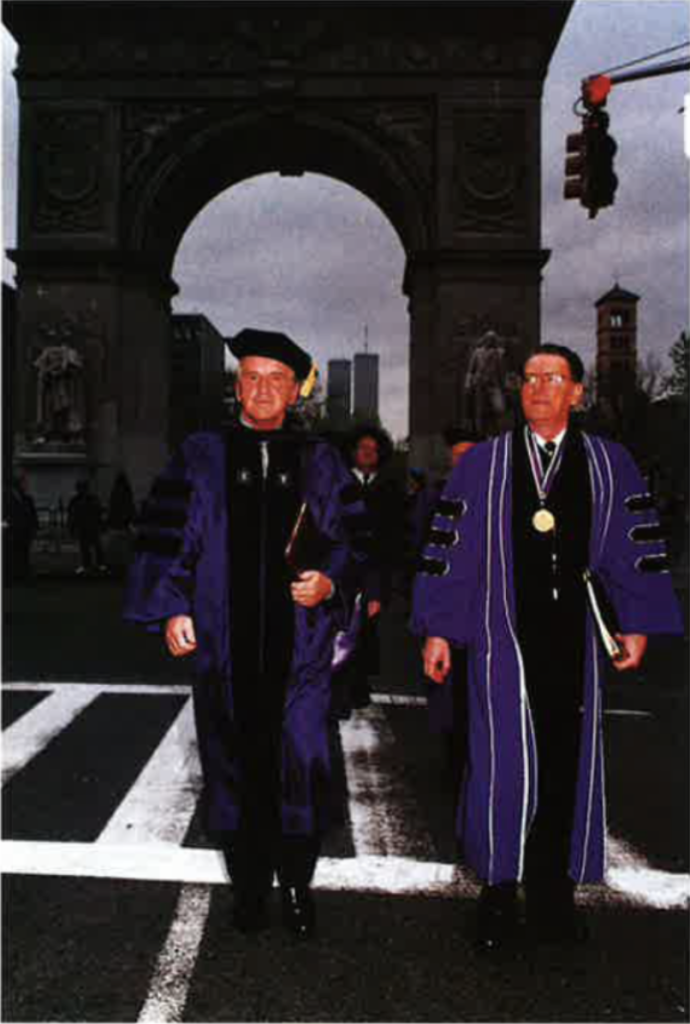
Michael Scanlon talks to the team behind The Glucksman Ireland House –New York University’s elegant building on Fifth Avenue.
For over a year now, the very best of Ireland’s writers, poets, journalists, playwrights, historians, and filmmakers, have come together in a beautiful brownstone in Manhattan, close to New York University’s Campus and Washington Square Park, to take part in discussions, readings, book launchings, and fun-filled evenings, all open to the general public. It’s a dream come true, one brought to fruition by a group of interested people who all have a common bond that reaches across ethnicity – a love of Ireland.
“I was a professor of Russian Literature at New York University in the 1970’s when I joined an Irish singing trio called The Men of the West,” says Dr. L. Jay Oliva, President of New York University, and one of the team behind this great venture. “We performed in Irish pubs around town and I remember at one point I was invited to a reception for an Irish dignitary who was visiting New York City. The reception was held at one of our fine Irish bars and — as warm and welcoming as the bar was — I remember thinking that the Irish should have a special cultural center of their own for occasions like this. Ireland is a great nation with a great tradition and New York, with its immense Irish presence, needs a special place where notable Irish men and women from the arts, sciences, politics, law and business can come and be greeted by the American Irish, where ideas can be exchanged, where the culture can truly be celebrated. That dream for such a place stayed inside of me for many years.”
What Jay Oliva did not know at the time was that over twenty years later, he would be the first faculty member in NYU’s 159 year history ever chosen from the ranks to become President of the University. Almost immediately he reached out to his longtime friend and philanthropist, Lewis Glucksman and his wife, Loretta Brennan Glucksman, to help him realize his dream. Lewis Glucksman agreed to underwrite a complete renovation of two private town houses owned by the University a half block from the Washington Square Memorial on New York’s Fifth Avenue and, within a year, The Glucksman Ireland House was born.
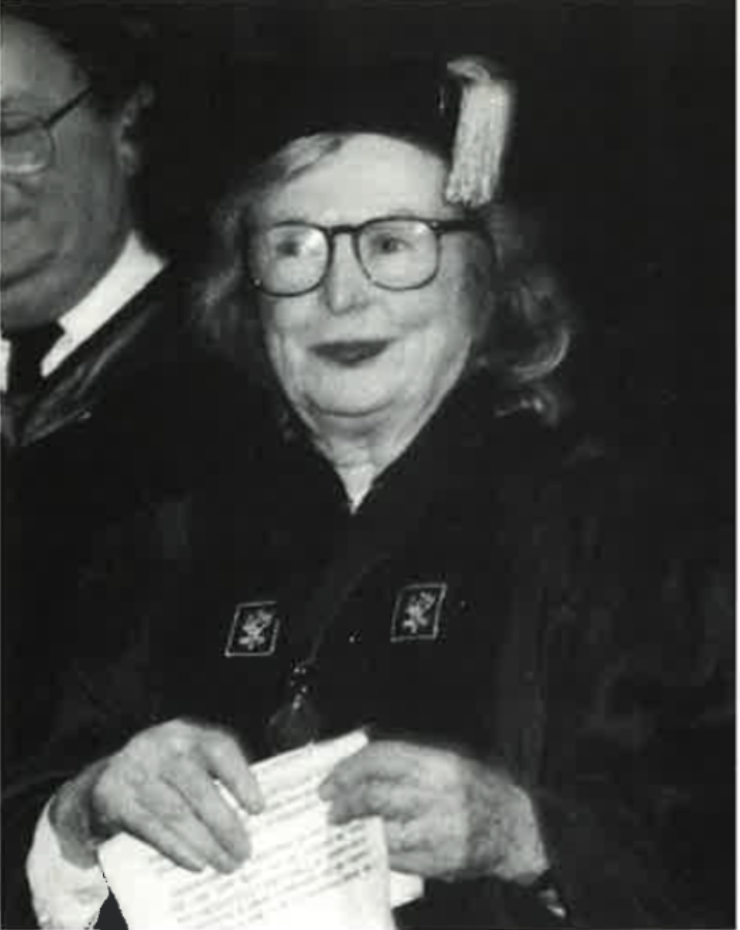
Opening day festivities took place in April 1993 with a procession of luminaries that included Albert Reynolds, the Prime Minister of Ireland, Seamus Heaney, Maureen O’Hara, James Galway, Brian Friel, Geraldine Fitzgerald, Cyril Cusack, Noel Pearson and Nobel Laureate Sister Stanislaus Kennedy. On that opening day, Ireland House became the focal point of Irish culture on a campus that is world renowned in a city considered by many to be the capital of the world. The expectations were high. And, over the past year, the actual success of Ireland House in bringing Irish learning and culture to New Yorkers has exceeded all expectations and has been nothing short of astounding.
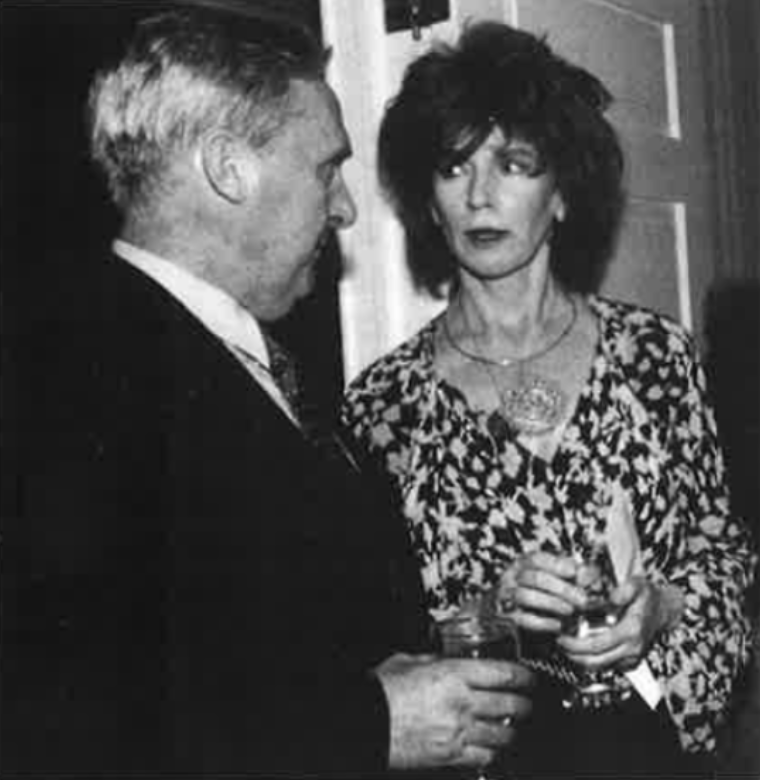
On a recent summer’s evening, the poet Derek Mahon introduced author Edna O’Brien who read to a full hall from her new book, The House of Splendid Isolation. Weeks before that, Seamus Heaney packed the same auditorium and was greeted at a huge and flowing reception at Ireland House afterwards. Over a period of less than a year there have been art shows, a piano concert by the acclaimed John O’Connor, a violin recital by Geraldine O’Grady, readings by American novelists Thomas Flanagan and Peter Quinn and by Irish writers Roddy Doyle, Eavan Boland and John Banville. Seamus Deane, the director of the newly created Irish Studies program at Notre Dame University, spoke on Edmund Burke, and Denis Donoghue lectured on W.B. Yeats. Receptions have also honored Jane Alexander, the new head of the U.S. National Endowment for the Arts, and Conor Sexton, the director of RTE Television, who presented Ireland House with a splendid film archive. A symposium of journalists from the North and South of Ireland debated the troubles in the North. There have been screenings of numerous Irish films, some of which were a result of a joint venture between the NYU Film School and the Film School at the University College Dublin. And if you wanted to see Marcia Rock’s documentary film on New York’s oldest saloon — the world famous McSorley’s — Ireland House had that too and much more!
Every week of the year Ireland House opens its doors to the public, and the crowds of people attending these eclectic cultural events are as diverse as New York City itself. In a New York Irish community not always known for its lack of critics, Ireland House has virtually no detractors. From the Irish Consulate to the Ancient Order of Hibernians to Connecticut’s Wild Geese to the American Irish Historical Society, The American Ireland Fund, The American Irish Cultural Institute and, from almost every quarter of the community, there has been universal praise and support for this new cultural center.
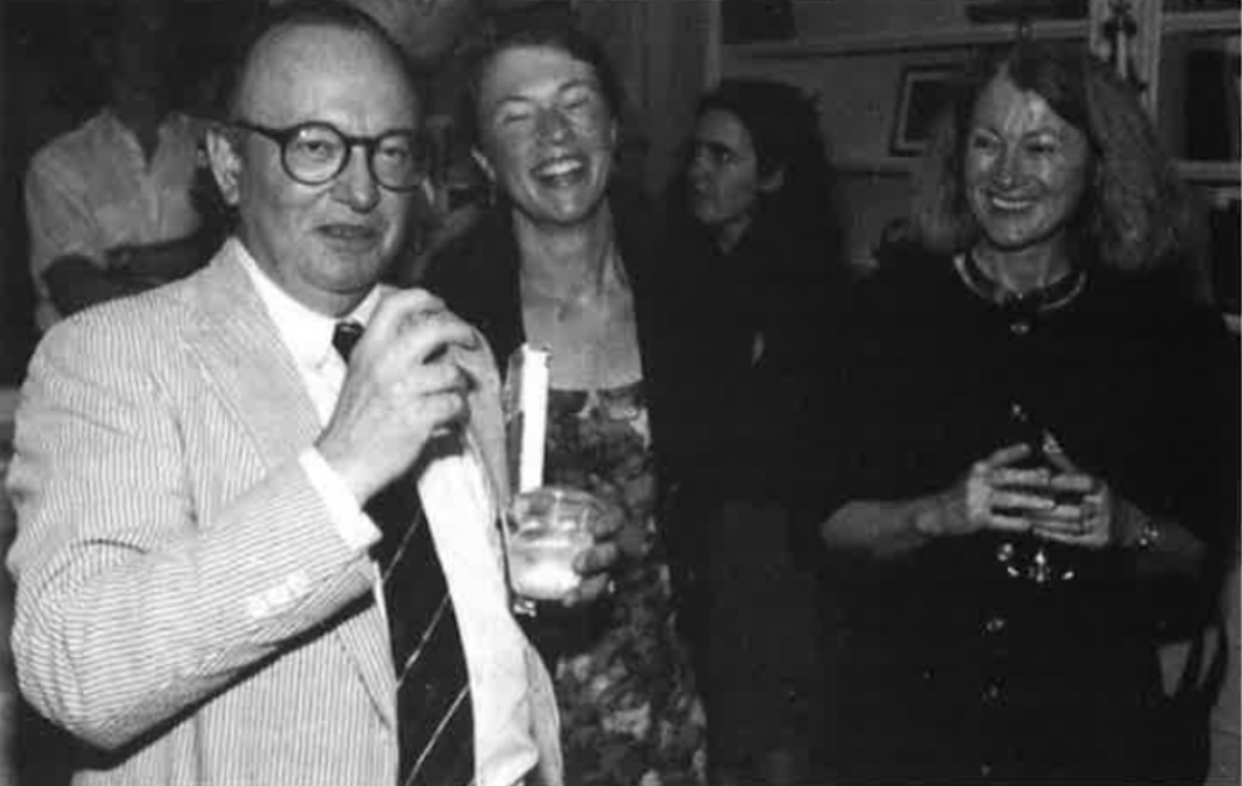
Why so much success in so short a time? “We seem to be filling a need that has not been met up until now,” says Dr. Robert Scally, a professor of history at NYU and the director of Ireland House. The Irish of the 1990’s have become one of the most affluent, intellectual and successful groups in America. Those dark days when signs like “No Irish Need Apply” confronted immigrants seeking jobs in America are part of the long distant past. The American Irish of today have arrived. Since 1960, when John Kennedy was elected President of the United States, Irish-American Catholics have risen higher and higher on the social and economic ladder in the United States. In law, in politics, in the arts, in the media and especially in business, where a roster of names of Chief Executives in the Fortune 500 companies reads like a convention of the Friendly Sons of St. Patrick, the Irish have continued to excel.
And along with this success and self-esteem has come a sense of security that has allowed the American Irish to take a collective pause to look at who they are and where they came from. This new consciousness is most dramatically manifested in the increasing number of Irish studies programs springing up in colleges and universities throughout the country. The students attending these Irish studies courses are often third, fourth and even fifth generation Americans of Irish extraction who have a pride and a curiosity about the land of their ancestors.
“At the same time that Irish Americans are feeling this new pride, the Irish themselves are experiencing an unprecedented explosion of success in the arts,” Bob Scally says. Rock groups like U-2, motion picture directors like Jim Sheridan and Neil Jordan, writers like Brian Friel, Seamus Heaney and John McGahern, musicians like James Galway and dozens of Irish actors who have become international stars in the past decade are all reasons to believe that in the field of arts and entertainment, Ireland may be the country to watch in the fast approaching 21st century.
“In the midst of all this new pride among Irish Americans and the concurrent stunning success of Irish artists, New York University opens an elegant center on Fifth Avenue to showcase Irish culture,” Bob Scally continues. “Fortunate timing is one of the reasons, I believe, we have had such immediate acceptance. There’s a crest of interest in all things Irish at this time and we are riding it.”
The House itself is also warm and inviting. In the words of Lewis Glucksman, it is “user friendly.” His wife, Loretta Brennan Glucksman, a former documentary film maker and president of her own public relations firm, is mostly responsible for that. Her enthusiastic and tasteful spirit permeates the entire project. She supervised the meticulous renovation of two adjacent residences and created a single two story red brick town house that is as elegant on the outside as it is welcoming on the inside. A lower level, with its subdued lighting, stained wood floor and bookcases, gives the feel of an Irish academic lounge. The first floor features a pleasing conference and lecture room which is also used for receptions. Upstairs is another conference room and offices for visiting scholars and for Mr. Scally and his staff, Patricia King and Eliza O’Grady. All levels are connected by an elevator but the feature of the house that most strikes the eye is the simple white staircase with its rich green carpeting. No one who has seen John Huston’s film of James Joyce’s The Dead will be able to walk these stairs without secretly stopping for a quiet moment to listen for the sweet strains of The Lass of Aughrim sung faintly from above.
Ireland House is American inspired. Dr. Jay Oliva is the son of a second generation Italian father and an Irish mother from County Galway. Loretta Brennan Glucksman is the grandchild of Irish immigrants who settled in Pennsylvania. Lewis Glucksman is Jewish and yet has always had a deep affection for Irish literature since he was a boy. “I’ve been reading the Irish authors for over fifty years,” he says. “One of my favorite authors as a young man was the Irish novelist George Moore. I always found that the literature of the Irish and the philosophy, as well as the music and the language, had a special appeal to me as I was growing up, and it still does.” Mr. Glucksman, a graduate of NYU himself, is the Vice Chairman of the investment banking firm Smith Barney, Harris Upham and Company and has been a trustee and a contributor to his alma mater for many years. “I have a very simple philosophy. You have to pay your dues. I’m a firm believer that those of us who have been fortunate in the world have to do something to pay back into society. This comes from an old Jewish tradition. In Jewish homes when I was a boy we had a little tin box called the pushke box where you put your extra pennies for those who didn’t have as much as you. And, throughout my life, this pushke box ingrained in me a sense that if you have money you are not supposed to spend it all on yourself. You have an obligation to participate in the welfare and benefit of the community. Some people give to medical institutions. With me it has always been education.” Before building Ireland House, Mr. Glucksman endowed a chair in American Studies at NYU.
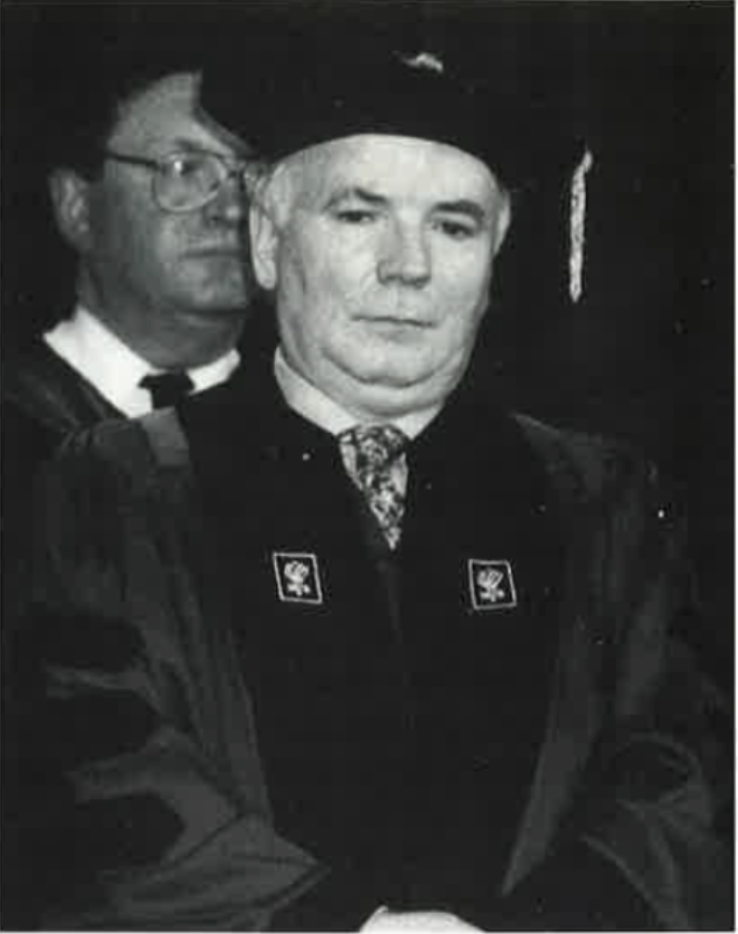
The Glucksmans have a home in County Limerick which they visit seven or eight times a year and where Mr. Glucksman enjoys boating and fishing. Loretta Glucksman serves on the Board of Directors of the National Library of Ireland, and the American Ireland Fund. They have made friends with Dr. Edward Walsh, the President of the University of Limerick, and have also become generous contributors to that educational institution.
Dr. Jay Oliva had a specific vision when he helped bring Ireland House into being. Many Irish Americans look upon Ireland as a kind of antique shrine that seems to inspire a form of romantic ancestor worship having little to do with the Ireland of today. This emphasis on the old and the quaint may be good for Irish tourism — and who can argue with that — but it is not necessarily the only aspect of Ireland that Jay Oliva wants to promote at Ireland House. “Sometimes in immigrant societies the mother country tends to get fixed in amber,” he says. “But life has a way of moving on. Life changes. We can fight the battle of the Boyne forever if we want but I’d like to see Ireland House also showcase the living, modern Ireland. We don’t intend to forget Patrick Pearse and the Bold Fenian men and all the rest, but we hope that at Ireland House you are just as likely to see a group of Irish businessmen sitting down with the Prime Minister talking to some Americans about an investment in present day Ireland. We want to be a megaphone for current Ireland, its authors, lawyers, historians, businessmen and politicians and artists. I want to present a living Ireland — an Ireland that has a very important role in the new Europe — because Ireland will be the model of how other smaller nations are going to survive and prosper in the new European order.”
As the world becomes increasingly smaller, Jay Oliva’s NYU is taking on more and more of a global dimension. Not only is the University attracting students and scholars from all over the world in increasing numbers but other countries like France, Germany, Italy, Greece and, in the near future, Spain, are represented with their own national houses on campus. “I am proud to add Ireland House to this list,” says Oliva who is himself a Gaelic speaker. “And without sounding disparaging, because I certainly don’t mean to be, I believe it is one thing to have a major Irish presence under the administration of a good Catholic school, and it is quite another to have it set among a galaxy of other national houses four square in the middle of the largest private University in the world. I love Manhattan College and I will never forget the Christian Brothers who taught me, but I prefer to see this great national house of Ireland not attached to just one religion or tradition.”
In many ways Ireland House fits into Dr. Oliva’s philosophy about the changing role of the university in today’s society. “Let’s not forget that all the great universities first started in cities where there was a mingling of lots of people. Our university is part of a great city and shouldn’t just be a place where professors lock the doors and escape into an ivory tower to think. At NYU we believe we have a regional responsibility to the public, to open the doors and say, ‘Come on in. We have many stimulating events going on here. There are wonderful things that academics do and you can come and enjoy them too.
“Ireland House is almost the quintessential description of the kind of outreach we want to promote at NYU. We are saying to the public, ‘These events are here for you. Poetry, dramatic readings, legal discussions, music, art and business. Come and grow with us.’ Our wish is for Ireland House to become a place where two worlds meet and that is a fitting and proper role of the university.”
Judging from the events of the past year at Ireland House and the number of people attending them, Jay Oliva is getting his wish. The dream he envisioned all those years ago has come true and we are all the richer for it today, and hopefully for many years to come.
Editor’s Note: This article was originally published in the September/October 1994 issue of Irish America. ♦
Leave a Reply