
From ancient kings to Bramley apples and modern-day resilience, this quiet corner of Northern Ireland offers rich rewards for travelers tracing roots and chasing meaning.
County Armagh doesn’t scream for attention – and that’s precisely its charm. Tucked away in Northern Ireland’s lush heartland, it’s not the most obvious stop on a tourist trail. But for Irish Americans seeking something more than scenic backdrops and souvenir shops, Armagh offers something rare: connection, depth, and a powerful sense of place.
This is a county of contrasts – ancient and modern, mythic and industrial, spiritual and political. From apple orchards to cathedral spires, from Gaelic Athletic Association (GAA) fields to canal banks, Armagh doesn’t present a single story; it offers all of Ireland’s stories in miniature.
Orchard Country with a Mythic Core
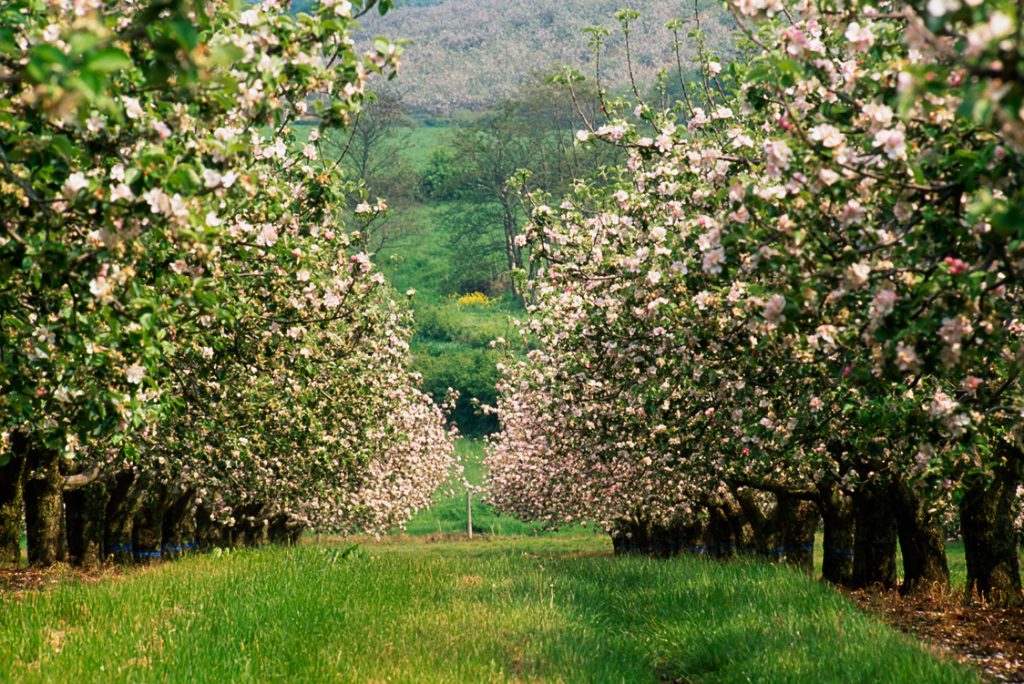
Known as The Orchard County, Armagh’s gently rolling hills are stitched with over 6,000 acres of Bramley apple trees. In autumn, the county bursts into harvest celebration, culminating in the Armagh Food & Cider Festival each September – a fizzy mix of orchard tours, traditional music sessions, local food, and rural pride.
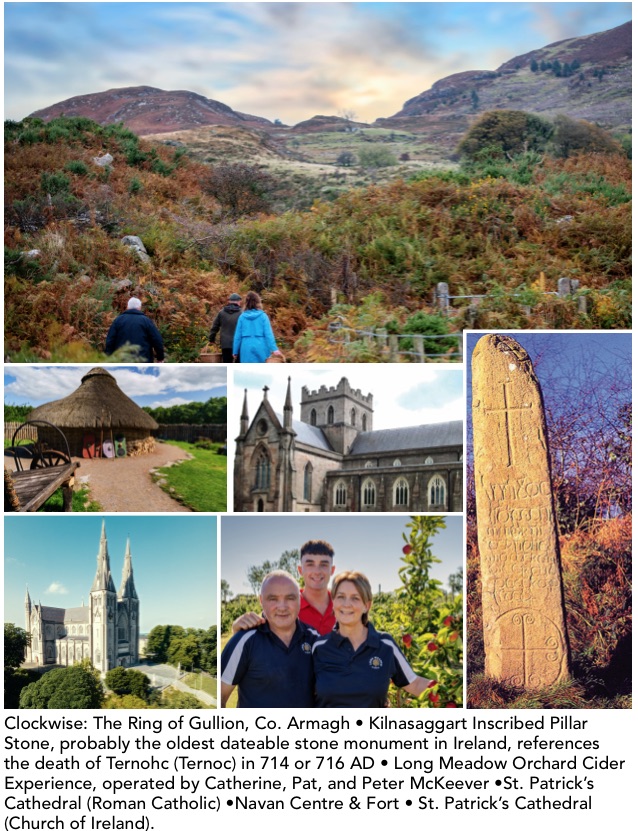
But Armagh’s richness runs deeper than its harvests. Armagh was once the ancient capital of Ulster, long before the arrival of Saint Patrick in the 5th century. Just outside the city, you can climb the ceremonial hilltop of Navan Fort (Emain Macha), where Celtic kings ruled and warriors like Cú Chulainn once walked – or so the legends say.
Twin Cathedrals, One Saint, a Divided History
Armagh City also holds the unique title of ecclesiastical capital of Ireland and is the only city in the world with two cathedrals dedicated to Saint Patrick – one Catholic, the other Church of Ireland. They stand on opposite hills, gazing at one another across a city that has seen both division and reconciliation.
To really understand the stories behind these sacred spaces, take a walking tour with Donna Fox Tours. A passionate local guide, Donna brings Armagh’s layered history to life – from early Christian settlements and Georgian ambition to folklore, rebellion, and living memory. Whether it’s your first time in Ireland or your roots run deep, her tours offer perspective, humor, and personal insight.
Where Science Meets Story
Down the hill from the cathedrals is the Armagh Observatory and Planetarium, where star charts and telescopes continue a tradition of sky-watching that began with ancient druids. And just next door, the Robinson Library, founded in 1771, houses treasures including Jonathan Swift’s annotated Gulliver’s Travels – proof that even small towns can carry large ideas.
Venturing North: Industry, Identity, and Everyday Ireland
To truly understand Armagh’s complexity, head north, where the landscape changes – and so does the story.
Lurgan speaks of Armagh’s industrial past and its social complexity, while Lurgan Park provides a peaceful pause.
Nearby Portadown was shaped by railways and mills, and later became a flashpoint during the Troubles. Today, it’s a resilient and evolving town where the past is remembered, but the future is being rebuilt – and nowhere is this clearer than at Moneypenny’s Lock and the Newry Canal, where canal paths and quiet waters tell the story of another kind of journey.
Craigavon, a planned new town of the 1960s, is now home to the Craigavon Lakes – ideal for a walk or a paddle. The nearby Montagu Arms is a traditional coaching inn (historic roadside inn) offering solid Irish fare in a cozy, fireside setting.
Down South: Poetry, Hills, and a Strong Sense of Place
South Armagh is rich in folklore, music, and memory. Around Slieve Gullion, the views open up – and so does the food scene.
And there’s Keady – a border village with a stubborn heart. Known for its strong GAA traditions, lively music sessions, and proud textile heritage, Keady sits astride the stories of both Ireland and the North. The old railway viaduct stands as a silent witness to a past of industry, conflict, and resilience. It’s a place where the border may shift, but the community never wavers.
Tommy Makem, the renowned Irish folk singer, born in Keady on November 4, 1932, famously called his hometown the “hub of the universe.”
Today, there is an arts center in Keady named in his honor that promotes the rich tradition of music, poetry, and storytelling that inspired him. The center is the main venue for the annual Tommy Makem Folk Festival and other events that showcase local and traditional folk talent.
Gaelic Games and Quiet Glory
In Armagh, sport is more than a pastime – it’s a passion.The county’s men’s Gaelic football team made history in 2002 and again in 2024, winning the All-Ireland Championship. The women’s team is blazing its own path, too, having won national honors.
Even the county jersey has a story: its distinctive orange color was first knitted by Poor Clare nuns (a contemplative Catholic order) in 1926. It’s more than fabric – it’s folklore.
A Living Memory
Armagh also carries the scars and stories of the Troubles, especially in South Armagh, once among the most militarized regions in Europe. Villages like Crossmaglen, Forkhill, Culloville – and yes, Keady – are quieter now, but still full of memory, music, and quiet defiance.
And across the county – whether in a pub in Lurgan or a café in Keady – you’ll find people who are warm, funny, and thoughtful. Just start a conversation. They’ll take it from there.
Why Armagh Matters
For Irish Americans, County Armagh offers a chance not just to see Ireland, but to know it – to walk its fields, hear its stories, and feel its quiet pulse.
This is not a county that shouts. It doesn’t have to. It welcomes you with cider in the glass, stars overhead, hymns from the hills, and a history that never quite stays buried. You don’t just visit Armagh – you come into conversation with it. And like the best conversations, it stays with you long after the bags are unpacked.
When You Go:
• When to Visit: September for the Food & Cider Festival; April-May for apple blossom.
• Don’t Miss: Navan Fort, both St. Patrick’s Cathedrals, Donna Fox Walking Tours, Armagh Observatory & Planetarium, Robinson Library, Lurgan Park, Craigavon Lakes, Moneypenny’s Lock, and Slieve Gullion.
• Need a Guide?: Book a walking tour of Armagh City with Donna Fox for deep stories, warm insight, and a local’s perspective on centuries of faith, politics, poetry, and place.
• Travel Tip: Armagh is in Northern Ireland, so the currency is British pounds sterling – but the welcome is warm in any denomination.
Where to Eat in Armagh
Armagh City:
• Embers Restaurant – Elevated Irish comfort food.
• Uluru Bar & Grill – Irish produce with Australian flair.
• Mulberry – Artisan soups, toasties, breakfasts, and standout scones.
North Armagh:
• Kitchen Bites (Lurgan) – High-quality modern Irish cooking.
• The Mill (Lurgan) – Local favorite with fresh bakes.
• Zio (Portadown) – Wood-fired pizzas and handmade pastas.
• The Yellow Door Deli (Portadown) – Fresh, artisan café fare.
• The Montagu Arms (Tandragee) – Traditional coaching inn with hearty fare.
South Armagh:
• Ti Chulainn Cultural Centre (Mullaghbawn) – Hearty food with a side of storytelling.
• Fayre & Square (Crossmaglen) –Community hub with generous plates.
• Synge & Byrne Café (Slieve Gullion Forest Park) – Legendary scones and café favorites.
Leave a Reply