

Despite the air of innocence that overlays the Rose of Tralee Festival, a distinct lack of sentimentality, hard business acumen and scandalous trivia are the order of the day, as Oistin MacBride discovered when he attended this year’s festival, now in its 36th year.
The Rose of Tralee, one of the biggest and oldest of the burgeoning number of festivals now dotting the Irish summer calendar, is taking a well needed look at itself in this its 36th year. According to Brendan Cronin, national sales manager for Aer Lingus who is one of the five judges, it is needed “to bring it into the next century.”
Speaking to IA, Cronin said that a firm of outside consultants has been employed by the Festival at a cost of over $35,000 to look at every aspect of the event. For example, how it is positioned and what the competition is like. “It’s a very wise thing to do; to step back and not to look just internally.”
Perhaps the consultant’s intervention was fortuitous timing on the Committee’s behalf given the less than “rosy” publicity picture emerging during this year’s event.
Always keen for a new angle, newspapers in Ireland carried stories about the exploits of two of the male escorts who were unceremoniously dismissed from their positions af- ter one “drank too much” and the other was discovered with a woman in his room. “Not a Rose” it was emphasized. Escorts are selected on the basis of their impeccable chivalry and therefore, even though in the scheme of world events their “offenses” were normal human behavior, it was conduct unbecoming and they got the road.
An exploitation flurry was caused by the arrival of the first black Rose, Frances Evelyne Faye, whose father is from Senegal and mother from Dublin.
According to Brian Brown, sponsorship manager of Guinness Ireland, some smart photographer decided to pose Ms. Faye with a pint of the “black” in a thinly disguised racist metaphor. He added that Dermott Walsh, publicity supremo for the Festival, made an effort to stop the offending picture’s being taken but was too late.
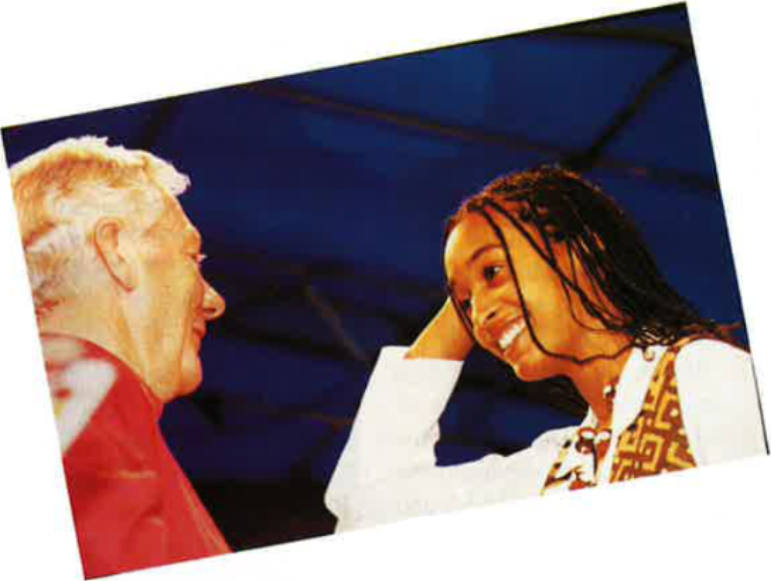
It was not the racist overtones that were at the center of his frantic efforts but that Festival “law” prohibits Roses from drinking, at least in public, and that Guinness, the biggest sponsor, did not want or solicit any publicity that directly included their product. Charges of exploitation thus understandably struck a raw nerve. Damage control included a side debate whether the pint of offending Guinness was A) real; B) being drunk, or C) just conveniently on the table in front of her.
With the offending picture already in circulation, Guinness’ PR company added to the fray by distributing copies of it to the further discomfort of Messrs. Brown and Co. Unfortunately for Ms. Faye, whose broken English conveyed a rather bemused and quizzical attitude, her publicity didn’t do the trick with the judges who obviously not ready for a Roisin Dubh.
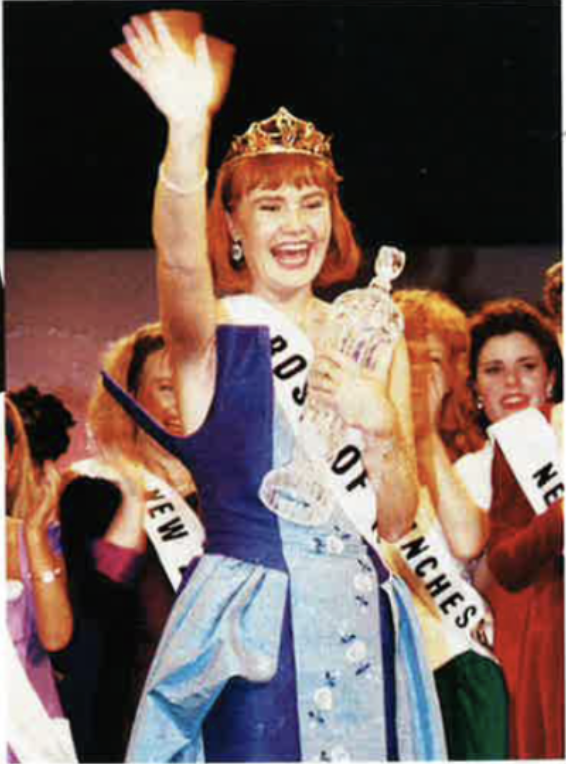
Walsh’s Festival worsened when he rather incautiously confided that all was far from “rosy” in the Limerick garden. Muirne Hurley, the Limerick Rose and eventual overall winner, stole the show with a polished, practiced and well-traveled rendition on the harp. She had previously entertained in the U.S., Germany, Jamaica, France and Britain, made a record and appeared on “Bibi,” one of Ireland’s most popular television shows. With such a resume she was always going to be streets ahead of the competition and was derscribed, perhaps unkindly, by one scribe as a “professional Rose.”
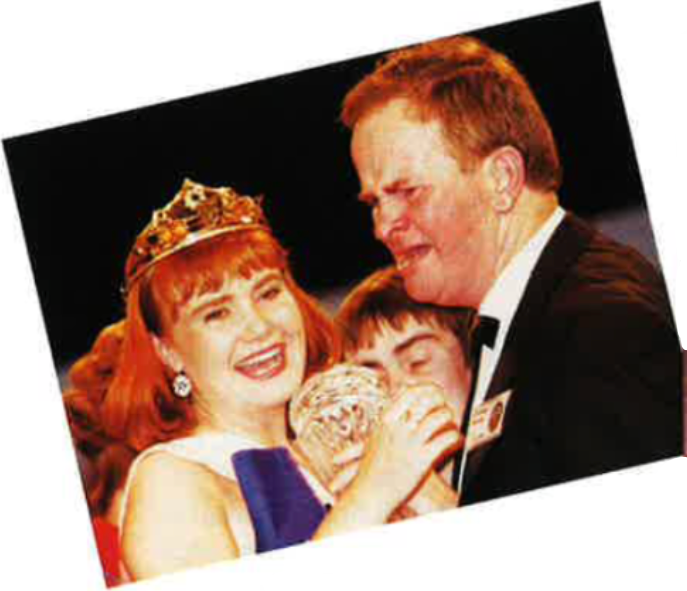
However, according to Walsh, standing at the side of the dome as her applause peaked, her father Cormac – a Limerick Garda who serenaded his daughter with a rendition of the Festival anthem live on TV during the show – had a serious dispute with his local Rose Center, where he was apparently a member. Three years ago the Center failed to nominate his daughter and he was so annoyed, according to Walsh, that he never spoke to any of the Committee in the intervening period. Doubtless there was a stifled scream of “I told you so” in his throat as he and Muirne embraced in floods of tears when she was crowned.
Scandalous trivia aside, there is no doubt that the Rose of Tralee has a special place in the affections of the Irish Diaspora, and when one goes behind the scenes a picture of a simple formula, good business and undoubtedly a huge amount of local voluntary energies emerges. There are so many elements combining to the success that singling out one is a little unfair, but undoubtedly the personality of Ireland’s most famous broadcaster Gay Byrne is pivotal.
In an interview with IA, asked how long he has been hosting the show he joked, “It feels like 194 years but I’m told officially that it is 20.” Without further ado he explains, “Denis Ream, when he was President, first asked me in 1974, I did it for two or three years but not on TV. I’m not terribly sure why. A whole gang of people did it before that including Terry [Wogan].” Wogan is now one of the highest paid talk show hosts on British TV.
Byrne and his director then approached the Controller of RTE and suggested the show for TV. When he explained that he was in a tent in Tralee and interviewing 32 Roses, the Controller’s reaction was “not on my TV station.” Eventually, they prevailed and the rest is as they say history.
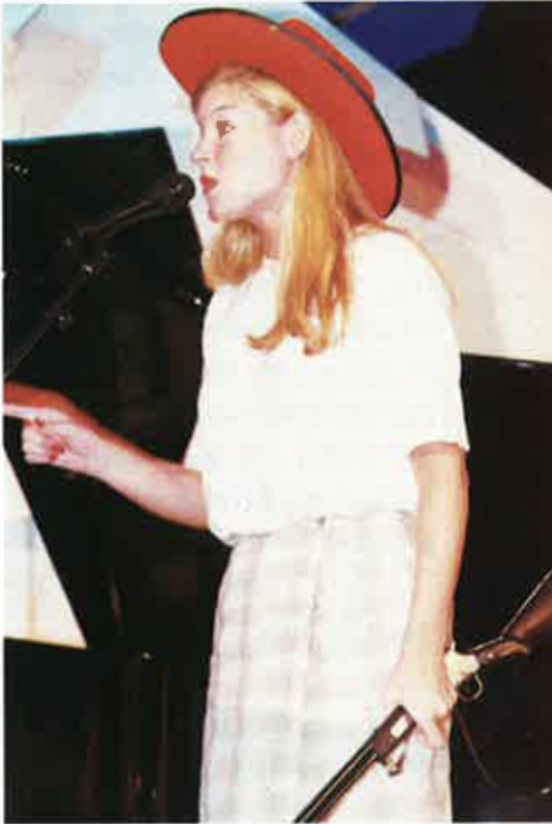
Byrne is constantly bemused and amazed by the gap between what the Roses claim they can do and the reality.
“They tell you the most amazing things on the [application] forms. They tell you they do ballet, they mountaineer, horse ride or play the saxophone, and really none of it is true. It’s all in their minds. Maybe they did ballet for six months when they were four. The mountaineering, when you boil it down, means they were taken up a hill sometime by their boyfriend, and as for the sax!!!” He quotes mockishly, “I don’t really play the sax, my brother plays and I tootered on it once or twice.”
Asked about disasters, he recalls how one girl casually announced on stage that her father was married to the head nun in the convent. Amidst the consternation she explained that when her mother was sick she was attended by the Mother Superior and that after her mother’s death the Mother Superior “jumped the wall” and married her father.
Gay put the success of the show down to a number of factors but one stands out for him. “There’s an air of innocence about them, and the vast majority are quite genuinely extraordinarily fond of their parents and grandparents. They are the most important people in their lives.” He also admits that when it comes to picking a winner, “I am always, always wrong. I’ve never got it right yet.”
Picking a winner, according to Brendan Cronin, is “exactly the same as if you’re making a commercial appointment.” The Committee appointed judges, like obsessed horticulturists, have criteria worked out over many years of honing the process to find the “perfect Rose.”
After two days Cronin and Co. have already narrowed it down to “manageable proportions, 32 to 16 to 8. “We meet a couple of times day, have numerous meals, individual interviews, group sessions of eight, it’s all very structured. We go into the final night with two names and at the final commercial break we say definitively A or B.” Surprisingly, he says it’s not the TV-oriented girls who are natural winners.
“Gay Byrne is looking for a very good TV performance and program, and the judges are looking for a Rose of Tralee. The two are actually quite different. TV plays a part but isn’t the driving factor. The driving factor is when you come into the judges’ suite and have 20 minutes to sell yourself. That’s where the action is. That is added to things like their performance at mealtimes, with kids looking for autographs, and being helpful towards one another. They are under scrutiny all the time, we look for behavior patterns.” With the experience of six years’ judging he adds, “they can’t be on their guard all the time.” Ironically, for someone so intimately involved in the process, during a three year break from judging, when he was one of the 1.5 million watching it on TV, he failed to pick the winners.
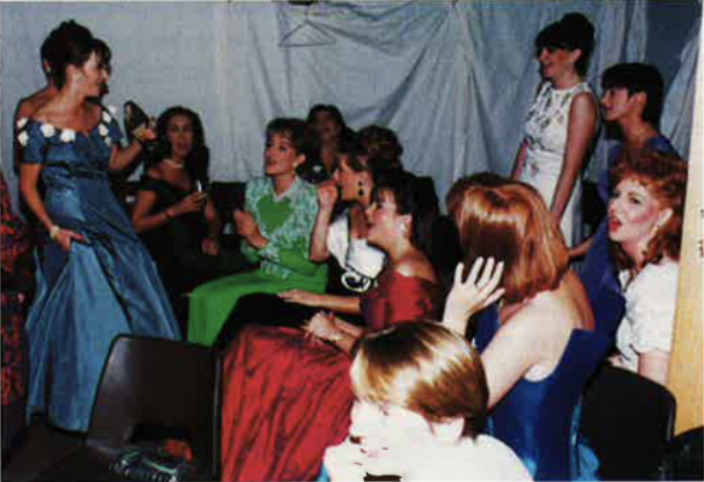
For Bill Looney, president of the Festival of Kerry for the second year, opening the envelope and announcing the winner is a minuscule portion of his duties that start in December in Los Angeles. If a black Rose was this year’s new bloom, there are many more exotic possibilities. According to Looney, they are currently considering applications from Mexico, Prince Edward Island, Italy, Spain, Holland, South Africa and Hong Kong. Since there is room for only 32 Roses,any Center that doesn’t “run a good show” gets a warning, and with “the girls seeing it as a great plus for their careers” the centers can afford to be fussy.
Like any good business they guard their product carefully. Sponsors, girls, escorts and any inside dealing are cloaked in parochialism so that the public perception is one of wholesome, innocent, well-rounded, comely maidens who will be “ambassadors for the Festival, for Tralee, for Kerry and for Ireland,” and, to quote the festival anthem, have “The truth in her eyes ever dawning.” With the blemishes in the bloom only reaching the public eye on rare occasions, clearly the 37th Rose of Tralee Festival will continue to attract a huge number of people to Kerry and remain one of Ireland’s premier events.
Editor’s Note: This article was originally published in the November/December 1994 issue of Irish America. ♦
Leave a Reply