
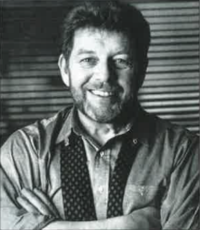
Writer Pete Hamill, whose parents are from Belfast, explores the connection between the Irish diaspora and Ireland, and offers suggestions as to what Americans of Irish descent can do now to help further the peace process.
Almost forty years ago, a fine Irish-American writer named John McNulty wrote an account of his first trip of Ireland. The story was lovely, full of the small moments – those delicate Third Avenue Epiphanies – that McNulty always noticed. In pubs and cottages, horse fairs and package stores, he talked and he listened, his affectionate feelings tempered by irony, his eye clear and embracing. But what stayed with me longest was his title. He called it “Back Where I Had Never Been.”
That title almost perfectly expresses the emotion felt by many Irish-Americans when they first glimpse the land of their parents or grandparents. I felt it myself when I first saw Ireland in 1963: the sense that I had been there before, seen those endless green fields, walked in those soft rains, heard those murmurous voices. I felt then: this also is mine.
The word “back” is at the heart of the emotion because is implies a return. The pilgrim, separated by time and geography from the country of his people, feels a mysterious sense of familiarity and belonging. It’s as if the genes themselves contain memory.
Among Irish-Americans, of course,there are other factors at work: the power of songs, comic and sentimental; browning images from photo albums; the sweet lies of movies; and the stories, the stories….
For me, that sense of “back” had nothing to do with ruined castles, dirt-floor cottages, peat fires or, God help us all, leprechauns. My parents were each from Belfast, my father from the Falls Road, my mother from the Short Strand.
If Belfast had been secular, just, prosperous, democratic, I would probably not have had the dubious good fortune of being an American. But I resemble many people in the diaspora, from the Catholic stream and the even larger stream of Irish Protestants. My personal history helps explain why Ireland is not a mere accidental footnote in a American life. I grew up with the songs of Ireland, the jagged history, and the myths. Throughout my childhood, letters would arrive from Belfast; packages and money would be sent back across the sea. In 1941, when hundreds of Nazi planes tried to turn Belfast into Guernica, we prayed for the living and the dead. Magazines and comic arrived in the mail; Tit-Bits was on the kitchen table, along with the Brooklyn Eagle, Beano was in the stack of comic along with Captain America and the Boy Allies. The connection never was broken. And the exile’s spirit of unrequited love roamed like a ghost through my childhood rooms.
To be sure, I was American, living an American childhood. I loved comic books and Jackie Robinson, stickball and Jack Armstrong on the radio. I laughed at Fred Allen and Jack Benny and shuddered at the tales of the Inner Sanctum. I was proud that a portrait of Franklin Delano Roosevelt was on our kitchen wall. We were Americans. We beat Hitler. We beat the Japanese Imperial Army. Or so we thought. God bless America.
But I was something else too. As a son of Belfast Catholics, I learned from the stories to hate bigotry, which had also led to Buchenwald and Auschwitz and drove the hooded idiots of the Ku Klux Klan. And I was taught to root for the underdog. My parents were part of a minority group; as a boy they taught me, though words and example, to recognize the humanity of every individual, which in Brooklyn meant the Jews, the Puerto Ricans, the blacks. I don’t mean that they conducted a daily seminar in human rights; they were too busy putting food on the table. But they taught crucial lessons. I was once slapped for using the word “kike” at the dinner table. The word “nigger” was forbidden (“Say colored person,” my mother said, “or Negro.”) Belfast helped make me a liberal.
Early on, I realized – as so many children of the Irish diaspora do – that my own identity was tied to a place I’d never seen. I could never hope to understand my parents (and therefore, myself) without trying to understand Ireland too. Ireland made them what they were; Ireland plus America made me. When Irish-Americans go back to where they’d never been, when they act out the cliche of discovering the places that hurt their parents into exile, they are not engaged in some trivial act. They are looking for continuity with the past. They are trying to find the line of a story that was interrupted by history; there are some aspects of being Irish American that resemble starting a novel in chapter 17.
The children of the diaspora Irish also go to Ireland to discover some concrete proof of the myths that swirled through their childhoods – or some refutation. Most are like me: they discover that they aren’t Irish, they are Americans. You can see them in the lobby of the Shelbourne, rifling the newspapers for baseball scores.
But that doesn’t mean that the enterprise of discovery is a waste. No search for personal identity is ever a waste. Nor is any voyage into another culture, particularly if it is done with a skeptical, agnostic eye. The voyager comes away with old myths shaken or new myths embraced.
If the Old Country is Belfast, instead of Mayo, or Sligo, or Wexford, the myths are different. They are darker, more angular, spikier. And they are scarred by a long, wretched quarrel. As a newspaperman, I made more than 20 trips to the North after 1963, and was often told in Dublin that as a Yank I didn’t know what I was talking about – usually by people who’d never been north of Howth Head. Perhaps they were right; like most human beings. I’ve talked with ignorant confidence about too many subjects.
But I did try to learn about Ireland. About the North. About my people. Some of the lessons moved me to rage. After Burntollet Bridge, after the burning of Bombay Street, after internment, after Bloody Sunday, after all the too-familiar horrors of the immediate past, I would be appalled by the indifference I heard in the South. I was hardly objective, of course; as a columnist, I had no requirement to be objective and made my feelings clear. I hated the IRA bombing campaign, its indifference to the innocent, its political stupidity; I could never endorse the ease with which some turned to violence. But I understood why there was a Provisional IRA and why they would keep on fighting. There’s no need to go into the details here, to tell the squalid tale of institutionalized bigotry, gerrymandering, housing discrimination, along with the invincible stupidity of the Orange Order and the Unionist politicians. There are hundreds of books on the subject now.
In my work, I was sympathetic to the nationalists but tried hard to avoid the wormy rhetoric of propaganda. Year after year, the war caused wider damage, corroding British institutions as the province became a place of Diplock courts, paid informer, perjured testimony, British collaboration with loyalist paramilitaries, paranoia was general. And in the South, that Republic for which some Northerners yearned, the general indifference was outrageous. In those Dublin pubs, the North was shrugged off, as if it were somewhere in the Balkans. There were occasional demonstrations, spurts of publicity, the odd speech in the Dail. After Bloody Sunday in 1972, the British embassy – a handsome Irish building – was burned in Dublin, an act of mindless vandalism; politics was being replaced by therapy. In the Republic, the problem of the North, and the guilt about its ferocities, was usually blocked.
As the war ground on and on, barely covered in the American press, it became more difficult to sustain passion in place like New York. My father died in 1983. My mother kept going to rallies for Northern Aid, showing up at picket lines, as she had in 1946 when Sir Basil Brooke, that great hater, had sailed to New York; and then her legs could carry her no longer. The hunger strikes brought the last great burst of anger in the Irish diaspora. And the war continued. Boys were killed while their mothers made tea in the kitchen. The young men of Leeson Street kept killing the young men of Liverpool and Leeds. The gaunt houses of Ballymurphy and Sandy Row seemed to weep, their upstairs bedrooms scoured of dreams. Irish Americans sent money for The Cause, but not much. Some wrote letters to politicians. But to little avail. American presidents shrugged and deferred to Maggie Thatcher; yes, the violence was unfortunate, but it wasn’t violent enough to rouse the interest of the faceless bureaucrats in the State Department. It was clear, given the indifference of the Irish Republic and the American government, and the sneering lack of imagination in London, that the North would have to be settled by the men and women of the North.
Now at last the breakthrough has been achieved, Gerry Adams was crucial to this frail beginning; anyone with common sense knows that there can be no peace unless you speak to the man with the gun. Equally crucial was John Hume, a good man in a bad time. They had seen too many of their friends killed, broken, driven into exile, or languishing in prisons. Adams and Hume had different notions about resistance, different visions for Ireland and the North; but they found a way to join together. In their separate ways, with varying degrees of wan courage and dithering timidity, Albert Reynolds and John Major faced down the general spirit of negation and cynicism, and made the change possible.
But it was no accident that the diaspora Irish also played a most important part in the drama. To mention only a few: Paul O’Dwyer, who had given a large portion of his long and honorable life to the cause of conciliation with justice. And in these immediate negotiations: Niall O’Dowd, of Irish Voice/Irish America, and former Congressman Bruce Morrison. Along with Bill Flynn of Mutual of America and Charles Feeney, of General Atlantic. A journalist, a lawyer, two businessmen. They (along with a number of others) pressure0d candidate Bill Clinton to take some position on Northern Ireland; the pressured him as President into granting a visa to Gerry Adams last February.
This enraged the rabid dwarfs of Fleet Street. And the British Foreign Office was in a fury. But it was done. The ice-jam was broken. There was movement at last. These American Irish talked by letter, fax and phone to Dublin, Belfast and London. They traveled together to Dublin and Belfast to serve as brokers. If this process is successful, if the peace endures, then Irish history will find a prominent place for them too. It had better. Ireland has had enough martyrs and enough exiles. It’s time to write some ballads about – and build some statues to – Irish heroes who die of old age in bed.
What are we in the diaspora to do now?
Some answers are obvious. Above all, we can do our part in helping the process along, with ideas, with money, with critical support. Peace and conciliation must promise a better future to the people of the Irish Northeast, free of the spirit of revenge, or the words have no meaning. All sides in the North know that Irish American businessmen can accelerate the process of investment in Northern Ireland, with one specific goal: the creation of jobs.
The great bulwarks of the industrial North – those once proud shipyards, ropeworks and linen mills – are finished. But they do offer models for development. It should be remembered that they were not the results of some austere Presbyterian work ethic in Ulster;; they were created by foreigners or immigrants. The great shipyards of Harland &Woolf was founded by a Englishman named Edward Harland and a German named G. W. Wolff. George Clark of the “wee yard,” Workman and Clark, came from Scotland in 1880. The textile machinery industry was dominated by two Scots – James Combe and James Mackie – and two immigrants from Leeds – George Horner and Steven Cotton. Their long years of success could not have been possible without the labor of the Ulster Irish, including – in the linen mills – large numbers of women. But they do demonstrate that outsiders can come to Northern Ireland and succeed. Some are there now. If there is peace, they will come in even larger numbers. And if they don’t come, there will be no permanent peace. Without jobs, men and women in any country are always susceptible to the politics of blame.
Irish-American businessmen don’t have to abandon the cities of the U.S. to create work in Ireland. Their goal should be expansion, not transfer, of those businesses into the markets of Europe – that continent, that idea, of which the North remains such a reluctant member. Those Irish-American businessmen can fund think tanks to develop ideas for businesses. They can help with market research, urging creation of institutions such as Japan’s MITI. They can help their Northern Irish partners to examine the maquiladora industry in Mexico to see if some variation on that assembly system could work for Europe, its flaws reduced, its potential for exploitation eliminated. They could greatly expand a form of intellectual lend lease, bringing the Northern Irish to train in American business, guaranteeing their return to assured management places at home. They could develop language training schools to enable the Northern Irish to more easily do business in France, Italy, Germany and Spain. Perhaps more useful than anything else, they could help build up a system of investment banking that would allow the Northern Irish to obtain financing for expansion or rehabilitation of existing businesses and the creation of new enterprises. In the age of the computer, much is now possible that was beyond imagining in 1969. The North is home to the best educated corner boys in Europe. In a world of shrinking literacy and collapsed educational standards, they represent the North’s greatest potential resource.
After 25 years of war, the economy of the North is also distorted in bizarre ways. The unemployment rate is stalled at about 18 percent, among Catholic, it’s about 30 percent, with some areas of West Belfast, such as Ballymurphy, as high as 85 percent. In 1951, 40 percent of the workforce was engaged in shipbuilding; today 40 percent of the statelet’s jobs are in the public sector, many of them engaged in maintaining security. In most respects, Belfast is much safer than East New York, Newark, N.J. or Washington D. C. But if the war does come to a negotiated end, the need for all that security will quickly vanish. Many of the jobs will have to be replaced by real work: the manufacture of goods, the provision of productive services. The region can’t risk having a large number of citizens who are rooting for violence, in order to preserve jobs and pensions.
These changes will have to be part of the process that is already under way. I’m one of those diaspora Irish who would like to see a united Ireland: I don’t think that goal is some sentimental fantasy but a practical necessity. I hope the current process will lead to an all-Ireland constitutional convention, in which men and women of decent instincts and good common sense will create a new constitution that will remove forever the conflicts of the 17th century. That document – the basic contract between the Irish peoples and their democratically chosen representatives – would create a secular state, in a nation with coasts, but no borders. It would have to satisfy every Irish person who has ever wished, as did Albert Camus about France, that he or she could “love justice, and my country too.”
If that happens, there would be other benefits, North and South. As one very minor example, it would allow this diaspora Irishman – and thousands like me – to love Ireland again, in a simple, uncomplicated way. And to look upon England with a clear, embracing vision. For years, it has been impossible to do either. I couldn’t move through the Republic without cursing the general indifference to the suffering North – and the church-driven policies that helped to feed the suffering. I couldn’t visit the country which gave me its language, which gave my own country its essential notions of common law, which gave me Shakespeare and Dickens, George Orwell and V.S. Pritchett, among many other glories – without wishing its rulers grievous harm. I want those ugly emotions removed from my heart.
But this isn’t up to the likes of me. This must be accomplished by the Irish. All of them. It will not happen in a week or a month. The writing of our own constitution required extended debate and argument; the British were defeated in 1781 but it took two additional years of negotiations to complete a peace treaty (one of the peace commissioners was Henry Laurens of South Carolina who had to be released from a British prison to do his work; the permanent Irish peace will be forged by Irish people with similar credentials. After 1783, another six years went by before the Constitution was ratified and even then it was an imperfect document, institutionalizing slavery, denying suffrage to women. An Irish constitutional convention might not take so long. It would have for its guidance and agonizing experience of the United States, along with dozens of other countries in the years since, including the Republic of Ireland.
Above all, Northern Catholics must recognize that there was a legitimate case for Union in the past, that many Protestants feared the loss of personal liberty that would accompany unification with the South. Why would any citizen surrender the right to a divorce? To an abortion? To access to birth control devices or education about contraception? Why would anyone agree to a loss in social services already provided? Those were good, honorable position; the narrow men who ruled the Republic never made conciliation easy. The denunciation of working women in the 1937 Constitution was an insult to the women working in the linen mills of the North. The “special position” of the Catholic Church enshrined in that document helped kill Northerners. Again and again, from 1937 to the persecution of Noel Browne, the cowardly politicians of the South helped convince people in the North that Home Rule was indeed Rome rule. When the Dail passed the law forbidding divorce in 1925, William Butler Yeats rose in just anger to say: “you have lost the North!” Yeats was not right about everything, as his flirtation with Italian fascism later demonstrated; but his understanding of the minds of Northern Protestants was acute. In the years that followed, there would be a lot more evidence to support his insights.
The Republic now is a different place from the one I first saw in 1963, when J.C. McQuaid, the Archbishop of Dublin, still dictated the contents of bookshops and movie houses and told Catholics they couldn’t attend a university that was good enough for Oliver Goldsmith. The world now looks at the Ireland of U-2 and Sinead O’Connor, Neil Jordan and John Banville, Jim Sheridan and Terry George, Seamus Heaney and Seamus Deane, Derek Mahon and Michael Longley, Medbh McGuckian and Tom Paulin, Paul Muldoon and Ciaran Carson, Brian Friel and Roddy Doyle; the list of accomplished Irish, male and female, Catholic and Protestant, northerners and southerners, is now too long to list here. But all of them are modern in the best sense. Plural. Free. They have transformed Dublin into a European city at last. They are heard in both ends of the island. They’re known in the wider world.
For the change has come, the artists moving leagues ahead of the politicians and t6he no longer feel they must go off in bitterness to Trieste or Zurich, as Joyce did, or to Devon, as O’Casey did, or Paris, as Beckett did, or the United States as Frank O’Connor did. They can stay at home without cutting themselves off from civilization. Or they can live elsewhere in a spirit of inquiry or embrace instead of negation. As William Trevor does. Or Derek Mahon. Or Seamus Deane. They are Europeans now without ceasing to be Irish, free to sample the wonders of the world and measure them with the metronome of home.
Equally important, the Church in the Republic is losing its old iron grip. In huge numbers, women are refusing to submit to the old pious hypocrisies – and expressing their choices at the ballot box (this did not, alas, affect the composition of the Irish delegation to the Cairo conference on population; the chosen men, in various stages of suety decomposition, looked as if they were bound for the World Cup, 25 years behind schedule). Priests who were young under Pope John the 23rd have risen to ecclesiastical power and understand what that good man meant. In some ways, Eamon Casey, the Bishop of Galway, by being triumphantly and foolishly human, did more to diminish the secular power of the Church than any streetcorner atheist. And by doing so, he might inadvertently have helped to ease the paranoia of some of the Northern Protestants.
It might be difficult to ever ease the night fears of the Paisleyites, but in the end, they are a minor sect, no different from a thousand similar life-sickened sects in the United States. If Catholics themselves embrace the values of modernity – including doubt – they will help to isolate the Paisleyites, making of them mere comic turns in public parks.
This will require much talk and the North has been for too long a place of constrict6ion and silence. The feeling was once expressed in a poem by Seamus Heaney: O land of Password, handgrip, wink and nod Of open minds as open as a trap, Where tongues lie coiled, as under flames lie wicks, Where half of us, as in a wooden horse Were cabin’d and confined like wily Greeks. Besieged within the siege, whispering morse.
The siege within the siege now might end, the tongues uncoil, free men and women enabled to look to a future in which their children can embrace any creed, or none, without penalty of harsh judgement. For too long, the Ulster Unionists, like right-wing Americans, have defined themselves by what they were against. That is, by what they feared. As this dreadful century winds down, they at last have the opportunity to embrace instead of reject, to celebrate instead of condemn, to speak instead of whisper in morse, to demand union with modern Europe instead of with the pathetic ruins of the imperial past.
Those of us in the diaspora can help. But the many kinds of Irishmen must do the hard, slogging, sometimes dispiriting work of making hope concrete and real. They will need the qualities celebrate by Fiorello LaGuardia: patience and fortitude. But it can be done…TX.-In the North, they could all begin by reading a poem by John Hewitt. In 1957, after 27 years’ work on the staff of the Belfast Museums, Hewitt left for England to serve as director of art in a museum in Coventry. He was obviously impressed by a country that was building for the future, a modern place in which things worked. But like all Irishmen, he carried personal luggage with him. This poem came from that experience. An Irishman in Coventry A full year since, I took this eager city, the tolerance that laced its blatant roar, its famous steeples and its web of girders, as image of the state hope argued for, and scarcely flung a bitter thought behind me on all that flaws the glory and the grace which ribbons through the sick, guilt-clotted legend of my creed-haunted, Godforsaken race. My rhetoric swing round from steel’s high promise to the precision of the well-ganged tool. Tracing the logic in the vast glass headlands. The clockwork horse, the comprehensive school. Then, sudden, by occasion’s chance concerted, in enclave of my nation, but apart, the jigging dances and the lilting fiddle stirred the old rage and pity in my heart. The faces and the voices blurring round me, the strong hands long familiar with the spade, the whiskey-tinctured breath, the pious buttons, called up a people endlessly betrayed by our own weakness, by the glittering fables which gave us martyrs when we needed men. By faith which had no charity to offer, by poisoned memory, and by ready wit, with poverty corroded into malice, to hit and run and howl when it is hit. This is our fate: else hundred years’ disaster, crazily tangled as the Book of Kells; the dream’s distortion and the land’s division, the midnight raiders and the prison cells. Yet like Lir’s daughters banished to the waters our hearts still listen for the landward bells.
That too, is a song of the Irish diaspora. Ireland is this century has already broken too many Irish hearts. Too many good Irish Men and women have died for their country. Too many have been driven into exile, to be buried in the fields of Boston and New York, Liverpool or Adelaide. But a cool wind is carrying a lovely sound right now. As the process of peace moves lumpily through that creed-haunted island, all of us, Protestants, Catholics and unbelievers, greenhorns and narrowbacks, should be listening for those landward bells.
May the Lord in his mercy be kind to Belfast.
Editor’s Note: This article was originally published in the November/December 1994 issue of Irish America. ♦
Leave a Reply