
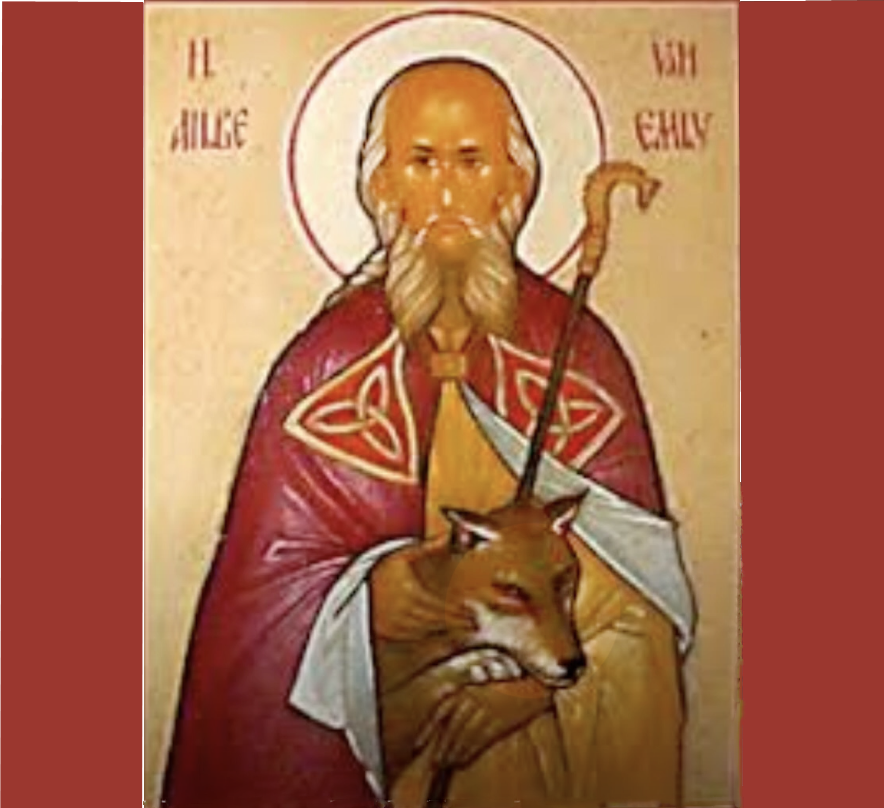
Patron of Wolves | Feast Day September 12th
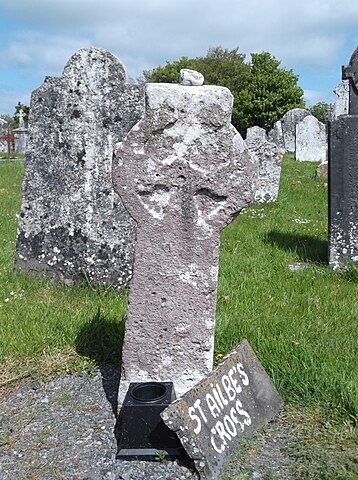
St. Ailbe, sometimes known by his anglicized name, St. Elvis, was a 6th-century saint born in County Tipperary. The name Ailbe is derived from the old Irish words Ail (rock) and beo (alive) since as a newborn, the saint was discovered alive under a rock where he had been hidden… by a wolf.
Ailbe was the illegitimate offspring of a serving girl and an Irish prince of Munster, Cronan. Cronan, disgusted and inconvenienced by his son’s birth, ordered his men to throw the newborn to the wolves “ that he might be devoured.” But a wandering she-wolf took pity on the infant, picked him up, and moved him in with the pack. She suckled him with her other pups and hid him under a rock for safety. As a toddler, Ailbe took to wandering off from the other pups until one day some traveling Britons were shocked to discover a literal babe in the woods. Shock turned to dismay when they realized they were unable to leave the place where they found Ailbe. Having no choice, they took him with them back to Wales.
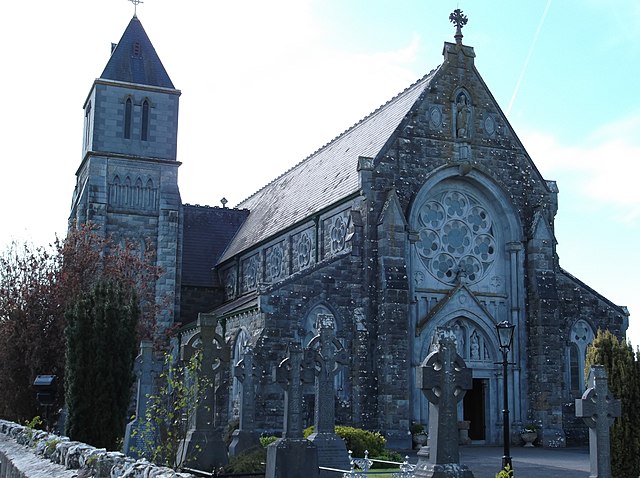
As a teen, he returned home to Ireland and became a disciple of St Patrick who later ordained him a bishop and urged Ailbe to build a monastery in Emly,

Tipperary. It was there, many years later, that Ailbe saw an old wolf being pursued by a hunting party and stopped the chase. The bishop and the beast locked eyes, the wolf rushed over to lay her head on Ailbe’s breast, and the tearful saint promised, “I will protect thee, Old Mother.” He kept his foster mother by his side as she spent her last years in the monastery, taking all her meals and sitting on his right side at the table.
A magnanimous Saint, Ailbe prayed for 100 horses as a gift for King Munster. A cloud arose, from which 100 steeds burst forth. Ailbe persuaded the same king to give the Aran Islands (which the monarch did not know he possessed until he saw them in a dream) to Saint Enda. Ailbe’s munificence extended to the local peasants who asked him to bless a river that had no fish. St. Ailbe did so; an hour later fish were jumping out of the water. It was said that while on a trip to Rome, he was able to feed the residents of that city for two days, but the story does seem to stretch credulity.
At the end of his life, Ailbe went away with the faeries to learn the secrets of their world. Sadly, on his return, he promptly died, never having the chance to reveal what he had learned.
In the U.S. today, there is a Christian ministry, The Fellowship of Ailbe, that describes itself as “in the Celtic tradition informed … by the teaching of Christian leaders from Ireland.” Its origin seems to be with Chuck Colson (of Watergate fame) who was born again in prison. However, other than the name, there doesn’t seem to be any connection to Our Saint.
Who owns the copyright to the icon of St. Ailbe used here? I would like to purchase one for a friend in my parish who goes by this saint name. Thank you!
St Elvis Parish is near Solva [ Solfach] Pembrokeshire, West Wales. He was a cousin of the Welsh Patron saint, Saint David. The city and cathedral of St Davids are only 4 miles from Solva. There is also “St Elvis Farm” next to the old church area.
Patrick, was, of course , a Welshman who took Christianity to Ireland. The Romans had brought Christianity to Britain in the First Century, when the Welsh were the inhabitants of the whole of what is now England, Wales and Southern Scotland. The English did not come from Germany to Britain until AFTER the Romans had left in AD 410. The word “WEALAS”[ hence Wales] is the Germanic [ SAXON] word for the ORIGINAL BRITISH. It means “Romanised foreigners”. The Romans did not go to Ireland. Hence Patrick, a Welsh saint, took Christianity there.
The oldest existing Welsh poetry, was composed in WELSH-SPEAKING Din Eidyn [ now called Edinburgh] circa AD 600 . It is called Y GODODDIN . The Romans called Y Gododdin the VOTADINI.. Gaelic speaking SCOTS did not come to Scotland, from Ulster, until around the 4th century………but to Argyll in the Highlands.
Read “Welsh Origins of Scottish Placenames” by Dave Oxenham and the great historical books of TERRY BREVERTON. The Prayer Book Act of 1662 refers to the “Welsh or Brittish tongue.” English is not a BRITISH tongue…it is West Germanic!! The English did not even regard themselves as “British” until after unification with Scotland……. after 1707.. Only the WELSH and their CORNISH cousins were “British”. Welsh is MODERN BRITTONIC OR BRITISH.