
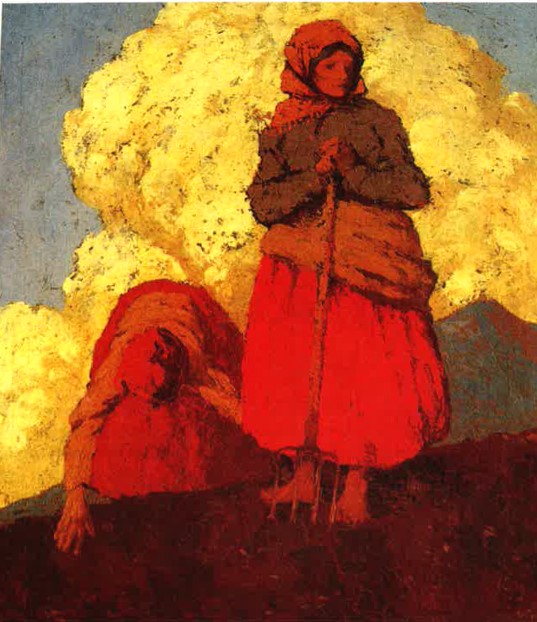
Whether they’re baked, boiled, roasted, fried, mashed or hashed, potatoes are a cornerstone of Ireland’s diet. Hardly a dinner is served without its helping of boiled spuds. Fish invariably comes with a side of crisp chips. Colcannon (mashed potatoes with kale or cabbage) can almost be called a national dish. In fact, potatoes are so much a part of life in Ireland that many people believe it’s the land where they originated.
Nothing could be further from the truth. Potatoes were virtually unknown to the global palate until the discovery of the New World. As the Conquistadores marched through South America pillaging ancient civilizations for treasure, the foods they discovered proved far more valuable than the gold they sought. From the holds of Spanish galleons, potatoes found their way to farms and gardens all over Europe.
There are Irish folk tales of potatoes washing ashore from wrecks of the Spanish armada that stalked the British seas during Elizabeth I’s reign. Actually, it is much more likely that Sir Francis Drake brought the South American tubers back from an expedition in 1586 and gave some plants to his friend, Sir Walter Raleigh, who planted them at his estate in Youghall, County Cork.
The new vegetable quickly became a staple crop of the island’s agricultural economy. Potatoes flourished in the mild climate — a single acre yielded over six tons. Potatoes were a godsend. They were easy to raise, requiring only an initial planting with minimal tending. They were easy to cook, needing only a pot and a fire. And they were abundant. Supplemented with plenty of fresh whole milk, greens, and a bit of meat, fish or eggs, the average country person had ready access to a nutritious diet.
“Be eating one potato, peeling a second, have a third in your fist, and your eye on a fourth.” The proverb sums up Irish devotion and dependency on potatoes. For nearly two hundred years the ancient South American plant nourished Ireland’s poor. A good potato harvest usually fed a farm family for eleven months, but stores from the season before usually began to run out by early summer. Even in good years, July was a time of want, earning itself the sobriquet of “the hungry month.”
In the warm wet summer of 1845 a fungus attacked the potato crop, and as winds carried the invisible spores from county to county green fields turned black in days; the tubers putrefied and rotted. Blights had troubled local areas before, notably Mayo (1831) and Donegal (1836). This time the infestation was national. Even though a third of the crop was destroyed, most families harvested enough potatoes to get them through the winter and everyone prayed the next year would be better.
Instead, 1846 brought more disaster. More than two-thirds of the national harvest rotted, and in some western areas the crop was lost completely. To make matters worse, the winter of ’46-’47 was the coldest and wettest in history. Tens of thousands starved to death. Ironically, summer was warm and dry, but there was little to plant and the harvest was small. More seed was sown in 1848, but the fungus returned. Once more, almost the entire national crop was lost.
Blight struck again in 1849 and 1851.
With the main food source for people and livestock destroyed five times in seven years, Ireland was devastated. One and a half million people died of starvation, cholera and famine fever. Another million emigrated. In the following decades, the tide of emigration swelled to a rushing flood as millions more fled the specter of starvation. More than one million Irish immigrants came to the United States.
Initially, Americans were suspicious of potatoes, but with over forty million sons and daughters of Erin now spread from sea to shining sea, potato passion has permeated America’s population.
Despite their tragic role in the Great Famine of the 19th century, potatoes have never ceased being a favorite Irish food. For centuries inventive Irish cooks have mixed potatoes with various vegetables or transformed them into soups, breads, cakes and pastries. But the classic way to serve the humble spud is simply boiled in its vitamin rich jacket.
My grandmother came from Donegal where she said “they eat potatoes, skins and all.” For her, the first potatoes of the year were always a special treat and she served them up cooked to a “floury” perfection. I can still remember my father’s delight when dinner starred the thinskinned tiny potatoes. He’d cut them into steaming chunks, top them with bits of butter, a heavy shake of pepper and follow each bite with a long swig of icecold fresh milk. It’s one of my favorite childhood memories.
In honor of our intrepid ancestors who had the courage to seek a new beginning across the sea, here’s hoping the taste of summer’s first baby potatoes becomes a tradition and fond memory of yours too.
Slainte!
Editor’s Note: This article was originally published in the July/August 1994 issue of Irish America. ♦
Potato Soup
1 lb potatoes, peeled and diced
2 small onions, chopped
1 tablespoon butter
2 cups milk
2 cups chicken stock
salt and pepper
minced parsley
Melt butter in a medium saucepan. Add potatoes and onions, and cook over medium heat until soft but not brown. Mix milk with chicken stock and pour over the vegetables. Stir in salt and pepper. Bring to a gentle boil, then lower heat, and simmer 1 hour. Remove from heat, pour into a blender and whirl until smooth and creamy. Ladle into warm soup bowls and garnish with parsley.
Makes 4 servings.
Champ or Poundies
2 lbs potatoes
4 tablespoons butter
1 bunch finely chopped scallions
1 cup milk
4 tablespoons melted butter
Cook potatoes in boiling salted water until just tender. Drain, cover with a twoel, set over low heat and let dry for a few minutes. Peel potatoes and mash. Heat butter, scallions and milk until warm. Scoop out scallions and add to mashed potatoes. Transfer to a warm serving bowl, make a hollow in the middle with a large spoon and fill with melted butter.
Makes 4 servings.
Fadge (Potato Bread)
1 lb unpeeled potatoes
1 egg, beaten
4 tablespoons soft butter
1 heaping tablespoon flour, milk, salt and pepper, flour, butter for frying
Boil the potatoes in their jackets, pull off the skins and mash immediately. Add the egg, butter and flour and mix well. Season with salt and pepper to taste. Add a few drops of milk to make a thick dough. Shape into a 1 inch thick circle. Cut into eight wedges. Dust with flour. Fry in a buttered skillet until golden on one side, then flip over and cook on the other side.
Makes 4 servings.
Leave a Reply