Publisher Niall O’Dowd reflects on the life of Irish America magazine over its four decades.
March 14, 1996, was the most surreal and satisfying day of all my days in America. That evening, I stood in a small holding room at the back of the stage at the Plaza Hotel, located off Fifth Avenue in New York, waiting to walk on stage with the most powerful man on earth – President Bill Clinton.
Suddenly, quieting the din, the announcer boomed: “Ladies and gentlemen, the President of the United States and Mr. Niall O’Dowd.”
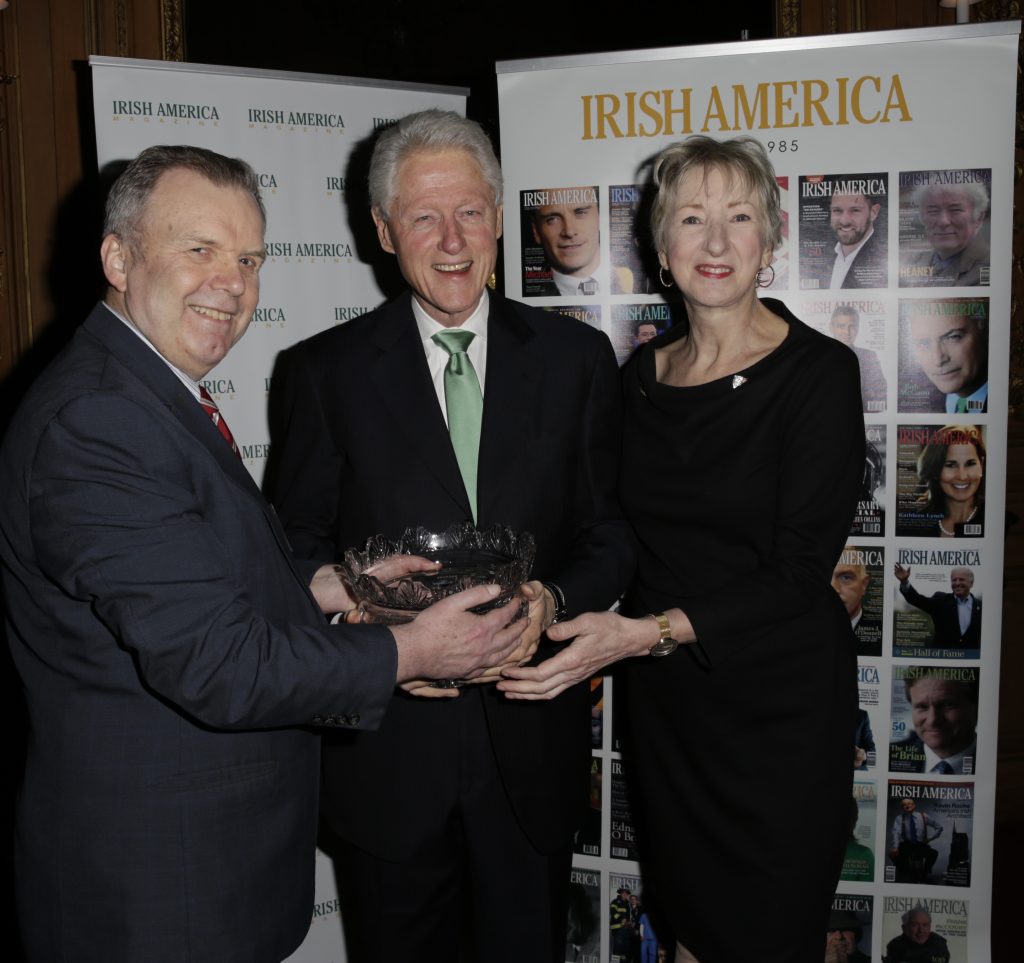
“Hail to the Chief” rang out, and Clinton and I entered the packed ballroom. The wall of sound seemed to last forever as the excitement built. I could see my mother in the front row. What son would not be proud? It was an evening that generations of Irish thought they would never see: an American president, for the first time in 225 years, taking a stand that was not reflexively pro-British. The event was our Top 100 Irish Americans gala, created by editor and co-founder Patricia Harty and me.
Earlier that magic afternoon, we had been positioned by the Secret Service outside the presidential suite to meet and greet President Clinton as he arrived. There are moments when you realize nothing like this will ever happen to you again. In our case, two Irish immigrants, Patricia and I, who came to America separately with just a few hundred dollars each, and a dream.
There was a feeling of tremendous gratitude towards the President for agreeing to attend our event and for his extraordinary role in bringing peace to Ireland.
No other president in 225 years had cared a fig about Ireland and its troubles, though JFK might have if he had lived.
But the man from Hope, Arkansas, had delivered astonishingly. I was very proud of Irish America magazine’s role in that drama, galvanizing the community around American involvement in Ireland as a key element in the peace process.
Clinton’s decision to become involved in the 30-year war known as ‘The Troubles’ was a key factor in the peace process. Thus, it was a hugely significant moment for the Irish to express their gratitude.
Irish America magazine began 40 years ago. In July, 1985, Patricia and I moved to the East Coast after publishing a successful Irish paper in San Francisco. Along the way, we encountered Brendan MacLua, publisher of the Irish Post in Britain, who agreed to sponsor us in starting a new publication in New York.
We were unsure whether it would be a newspaper or a magazine and received many differing views. Still, one day as we passed a newsstand in Manhattan, we were drawn to an Italian ethnic magazine named Attenzione. Suddenly, it all clicked. A glossy magazine, well-edited and funded, focused on Irish identity was the ticket. The editing was straightforward; the funding, like that of all new startups, was challenging. Our first office was upstairs from a Turkish carpet store, which we shared with a Jewish couple, David and Roberta, who had a small Graphics Design company. As an introduction to the marvelous ethnic diversity of New York, it was hard to beat.
We persevered through some tough times, almost failing several times, before launching Irish America at the Halloran House Hotel in Manhattan on October 16, 1985. Mayor Ed Koch, Maureen O’Hara, Pete Hamill, and Paul O’Dwyer were at our launch party, to name a few of our guests.
Maureen Dowd of the New York Times featured our debut in her column and has remained a strong supporter. Adrian Flannelly promoted us on his weekly radio show – driving up our subscriptions.
The early years were very tough. We knew 90 percent of new publications failed, so we had to beat the odds. Sometimes, we barely made payroll or didn’t pay ourselves, but soon enough, Irish America magazine became an essential part of the community’s fabric.
We had a plan, strong opinions on issues such as immigration and Northern Ireland, and a motto that showcased the best of Irish history and heritage: “Mórtas Cine,” which translates as “Pride in our Heritage. “
Nowadays, immigration is a huge issue. Only a handful of Irish have been allowed into America since the 1965 Immigration Act. But back then, an opportunity had presented itself.
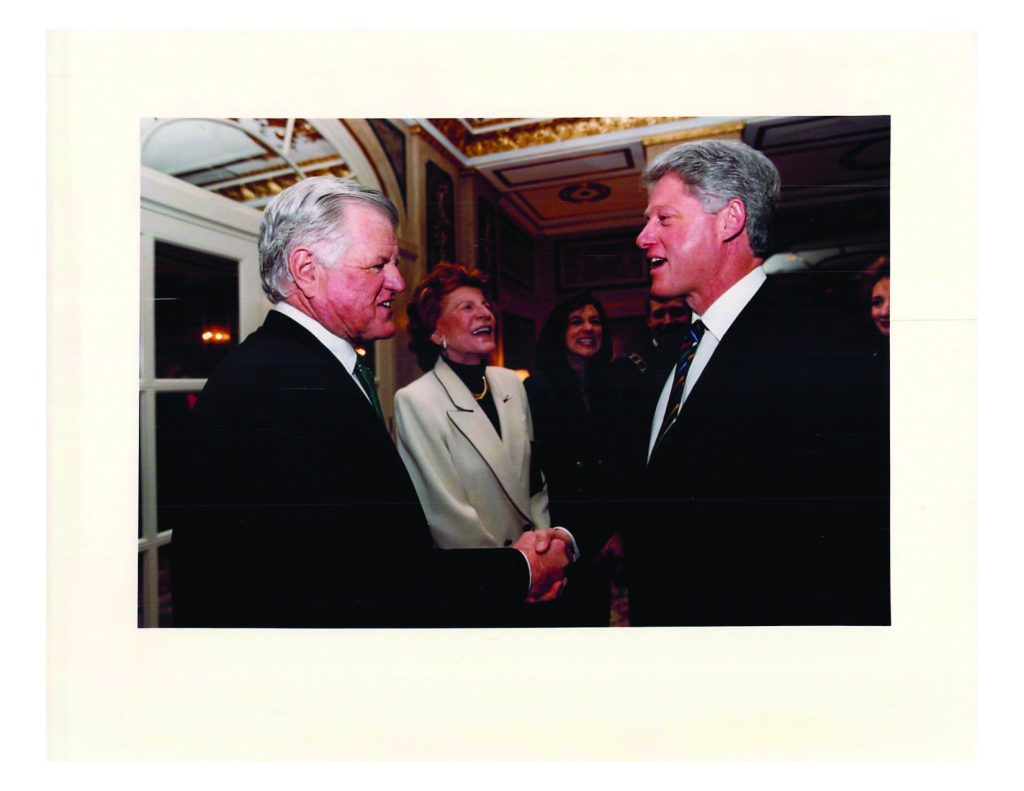
To their eternal credit, two congressmen, Brian Donnelly and Bruce Morrison, were working hard to ensure the Irish, who had contributed so much to America, were not wholly forgotten. We helped to lead the charge in creating the successful Morrison and Donnelly Visa programs, which enabled thousands of young Irish to immigrate to America. We also focused on big-name interviews, including Bill Clinton, John McCain, Joe Biden (then a relatively unknown senator), Jimmy Breslin, Maureen O’Hara, Edna O’Brien, Justice William Brennan, Amb. Jean Kennedy Smith, Senator Ted Kennedy, and Dr. William Campbell from Donegal, who was awarded the Nobel Prize in Medicine for helping to eliminate river blindness.
In many cases, we were the chroniclers of Irish America, showcasing just how far the Irish had come in a few generations after the Famine.
We devised several events to renew and restore our heritage. It worked like a charm. We began to pull in big names for our events. Gabriel Byrne and Liam Neeson who brought actress Brooke Shields, turning many heads, were frequent attendees. We also invented new categories, the ‘Business 100,’ the ‘Wall Street 50, and the ‘Healthcare 50.’
We interviewed Coca-Cola President Donald Keogh, genius investor Peter Lynch, Warren Buffett (arranged by his personal friend Don Keough), Anne Sweeney of Disney, Bill Flynn and Tom Moran of Mutual of America, Bob Devlin of Curragh Capital, and Denis Kelleher, founder of Wall Street Access.
A very special interview was when I had the opportunity to sit down with Charles Feeney – the first such exchange the reclusive billionaire had granted. He gave away his $8 billion fortune and played a massive part in funding Irish education, as well as helping to bring about the peace process, alongside such stalwarts as Bill Flynn, Tom Moran and Ed Kenney of Mutual of America.
Soon, our different lists became must-read material for thousands of Irish Americans every month. The magazine’s second glory day was January 2000, when we held our Irish of the Century event at the Plaza. The biggest names in the Irish American diaspora were in attendance, including Hollywood powerhouses Gregory Peck and Angelica Huston, the Kennedy family, Hillary Clinton, Tommy Makem, Frank McCourt, Loretta Brennan Glickman, and Michael Flatley.
Our most poignant event followed the September 11, 2001 attacks, when in March 2002, we packed the ballroom at the Plaza with first responders, their families and others who had been affected by the tragedy, and Irish President Mary McAleese gave a heartwarming speech, forever uniting the Irish in Ireland and those in America.
Further uniting Ireland and the U.S. in 2011, we began the Irish America Hall of Fame twinning with the Dunbrody Famine Ship and Irish Emigrant Experience which is housed on the quay in New Ross where thousands had left for America.
And so it goes. Forty years have slipped away like a thief in the night, and Irish America has encountered tempests and triumphs, but it has always been full speed ahead in keeping hope and heritage alive.
Patricia Harty and I still occupy the same two jobs we had 40 years ago. We have had many wonderful writers, sales people, interns and others who have contributed over the years. Kevin Mangan from Cork has been our financial controller for 35 years, and our fantastic designer, Marian Fairweather, even longer.
The magazine’s raison d’être is to showcase the overwhelming contribution of the Irish to the greatest country on earth. There will be many more twists and turns, but I hope and foresee that someone will continue the legacy and sing the praises of the little magazine that could in 40 more years. Meanwhile, we sail on a small boat with the currents that made a difference.
Mórtas Cine
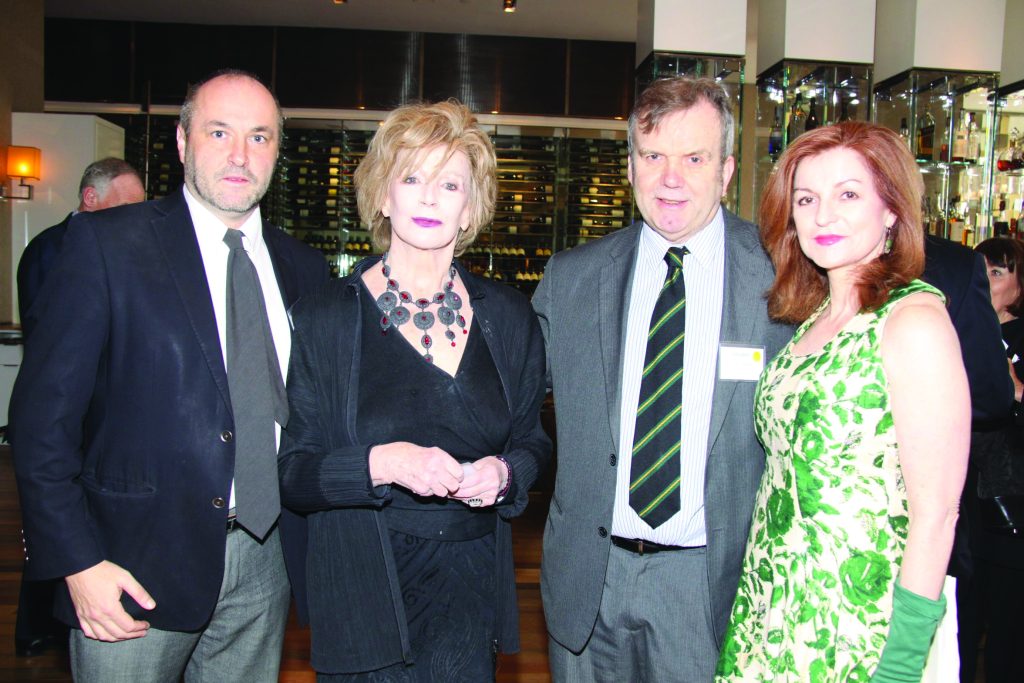
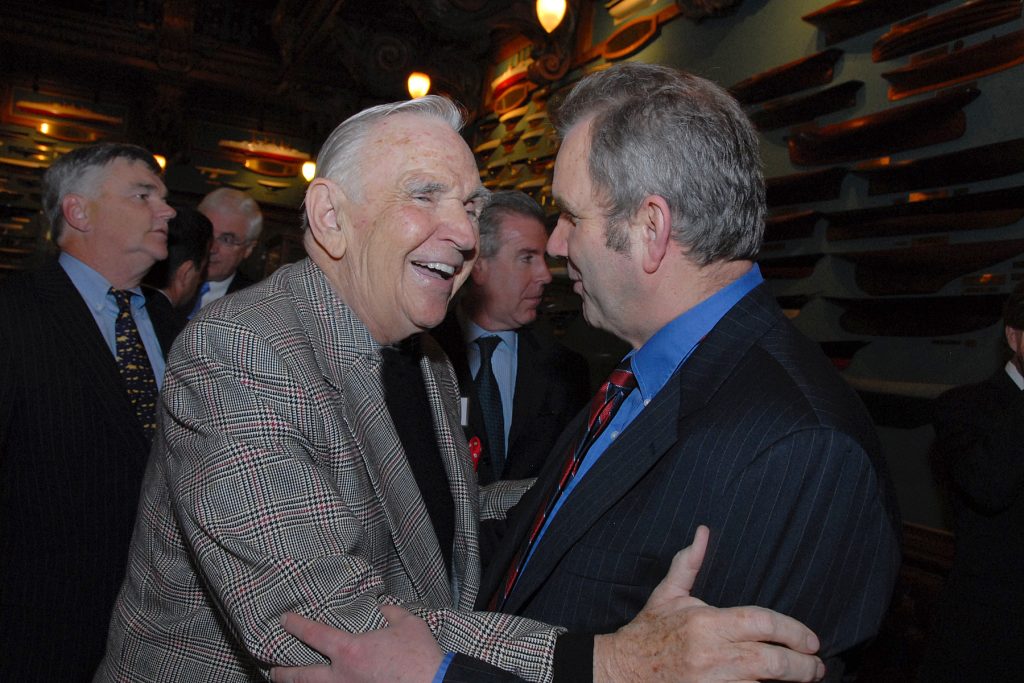
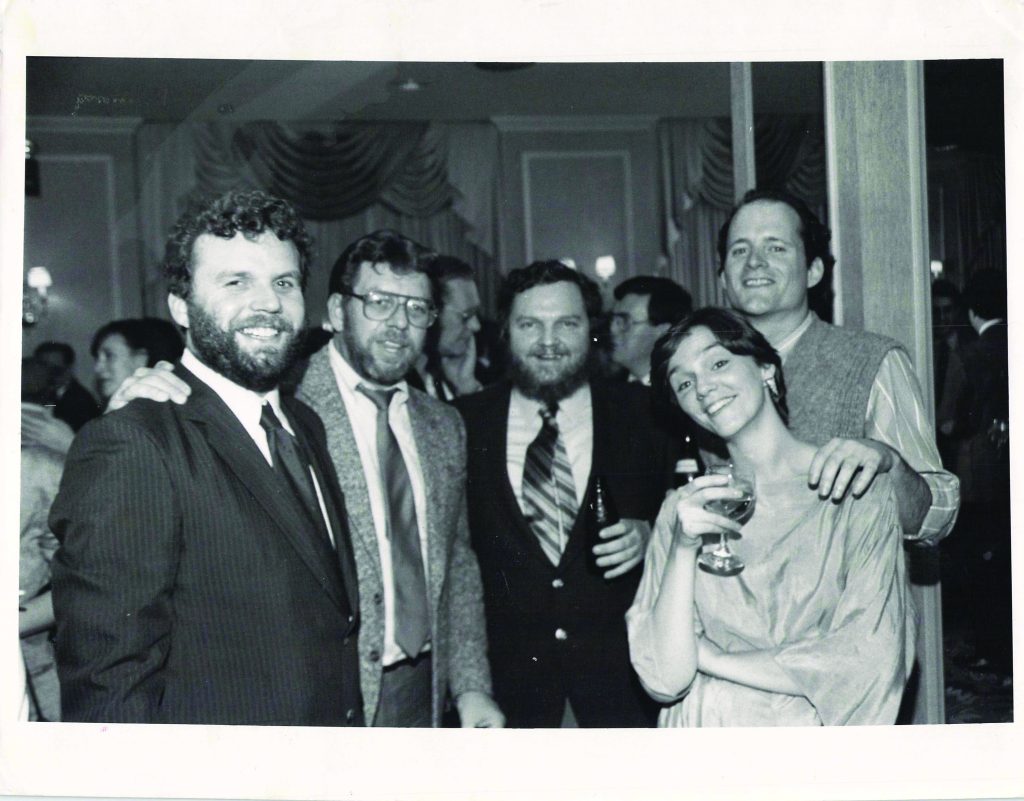
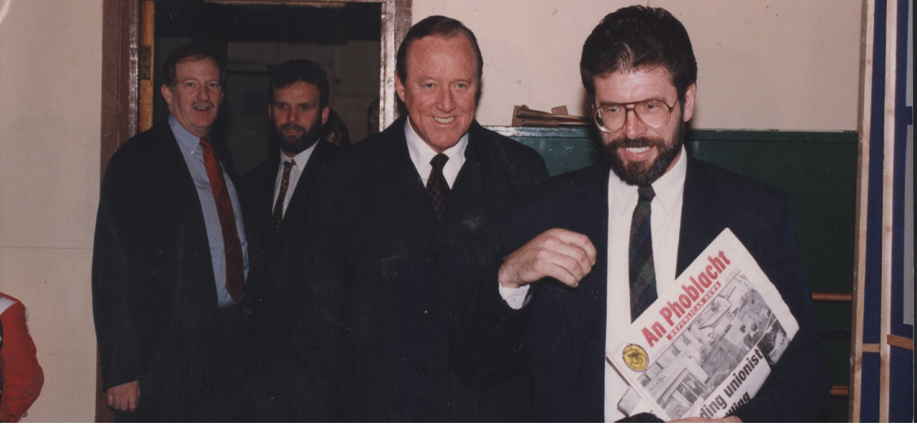
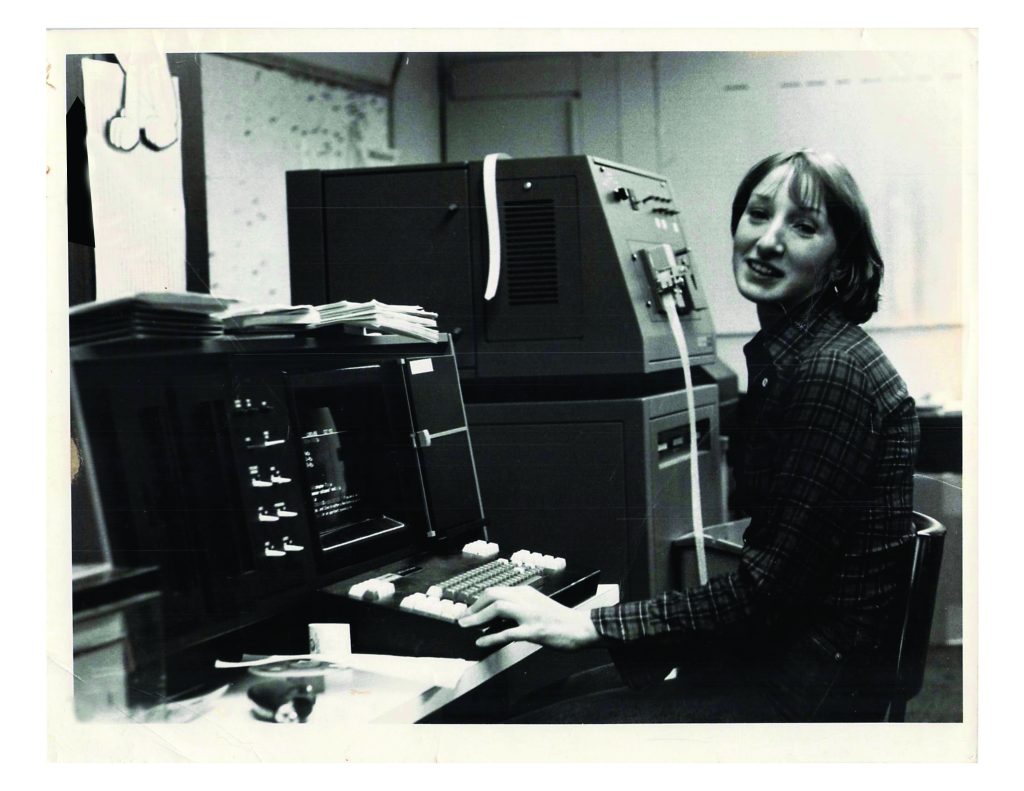
Niall and Trish, you’ve created a lasting legacy of celebrating the Irish in America throughout four decades and counting! ,Our sincere congratulations and gratitude for your vision.