
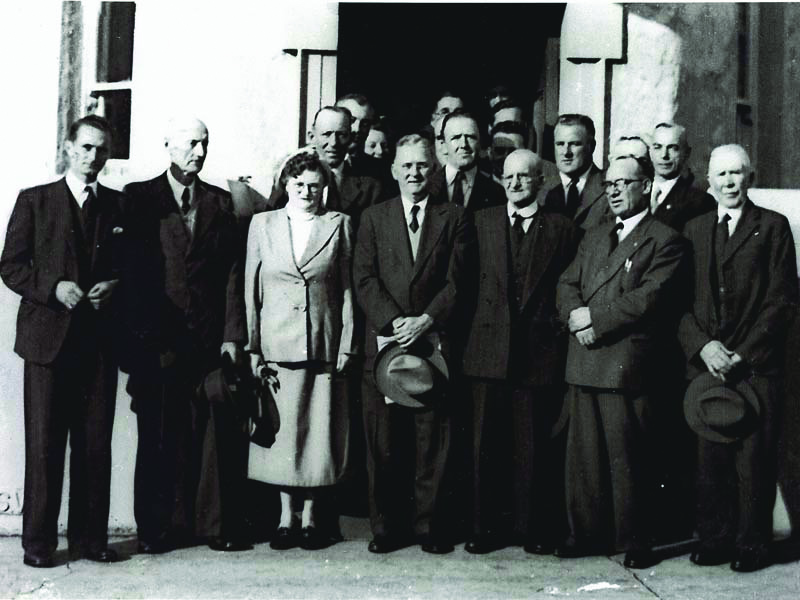
My grandfather John Bernard “Barney” Hynes and his brother, Thomas J. Hynes emigrated in their early teens from Lochrea, Galway, Ireland to Boston, Massachusetts in 1875.
They were children of the famine – sent to America by their parents because there was no future for them in Ireland. Barney got a job with the Elevated Railroad Company, and Tom went to Harvard where he spent countless hours on the athletic fields – as the grounds keeper. Barney worked for the railroad for 40 years and moonlighted at night singing, mostly at Irish wakes.
Tom managed to buy a rooming house on Massachusetts Avenue in Cambridge and actually made enough money to return to Ireland where he bought a pub and a farm in Lochrea.
Barney had five children. Tom, Sr., my father, born in 1895. John B. in 1898, and later, Mary, Jimmy and Joe.
For the first generation born in the U.S., it was work and a hard scrabble education: high school and college at night after a full day’s work, led to civil service work at City Hall, the Parks Department and the Courts for my father, John B. and Joe.
One day, Jimmy, who worked at the City’s Long Island Hospital, decided to show the new ambulance off to his friends at Costello and Kelly’s Pub. After more than a few pints, he returned the ambulance to the hospital, parking it at the top of a hill. He neglected to put on the brake and the new ambulance ended up in Boston Harbor.
When Mayor James Michael Curley went to jail in 1948, John B. Hynes, then city clerk, was appointed mayor. (The president of the city council should have been mayor pro tem but he was under indictment.) Following his five months in jail, Curley returned to office. In his book, I’d do it Again, he wrote: “I returned to my desk at City Hall the day after Thanksgiving and relieved Johnny Hynes, the temporary mayor during my absence. . . . In two hours I received sixty persons in my office and found jobs for them. Hynes was visibly upset when I told the press I had accomplished more in five hours than he had in five months, and his resentment deepened to the extent that he decided to run against me in the next mayoralty campaign. When I heard this, I drank a toast to him at a city hall luncheon:
‘Johnny can have my job any time,’ I said. ‘Whenever I quit.’”
Hynes beat Curley with 13,595 votes in a bitterly fought campaign and served three consecutive terms, from 1950 to 1960.
Although my father died in 1949 leaving a widow and five children, the extended Irish on both sides of the family tree were always there to lend their support.
One of the few home movies we have in color is Mayor Hynes doing an Irish jig in our living room at a family party. Notable in the film is the blue smoke and brown whiskey glasses.
In my generation, there was a transition to private Catholic schools and colleges. My older brother, John B. “Jack,” went to Notre Dame where his study was interrupted by WWII. In 1944, while flying a B-17 over Holland, he was shot down. He survived P.O.W. camp and returned to graduate from Notre Dame.
Today, John B. Hynes, Jr., (the son of Mayor John B.) is the elder statesman of the clan. Also a Notre Dame graduate, he has had a distinguished career as a journalist and T.V. newscaster.
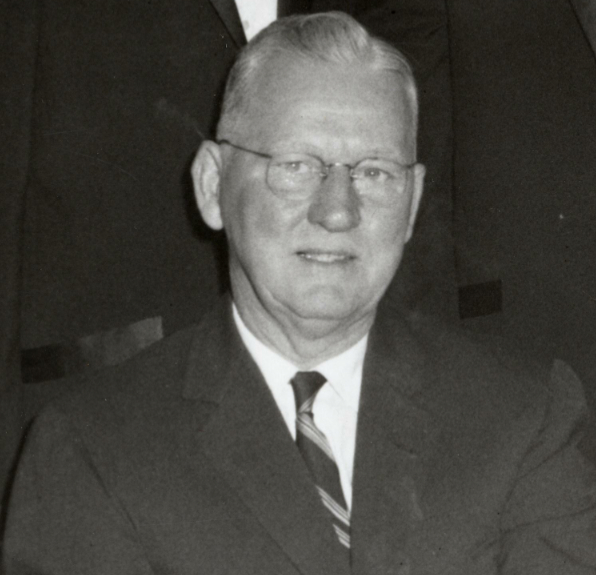
From impoverished beginnings and no education, to night school and elite colleges (the Hynes family has multiple degrees from Boston College, Notre Dame, Harvard, Emmanuel, Regis, Middlebury and M.I.T.), we have seen the evolution our family from blue-collar laborers to civil servants to politics and law to distinguished careers in media, business, science, education and real estate. Currently, John B. Hynes III, a Harvard graduate, is focusing on the development of the Seaport Square 24-acre site, which is nearing completion.
– Submitted by Thomas Hynes, Boston, MA
Please send photographs along with your name, address, phone number, and a brief description, to Patricia Harty at Irish America, 875 Sixth Avenue, Suite 201, New York, NY 10001. If photos are irreplaceable, please send a good quality reproduction or e-mail the picture at 300 dpi resolution to submit@irishamerica.com. We will pay $65 for each submission that we select.
Such a heartfelt story — it beautifully captures the strength and resilience of Irish families across generations.