
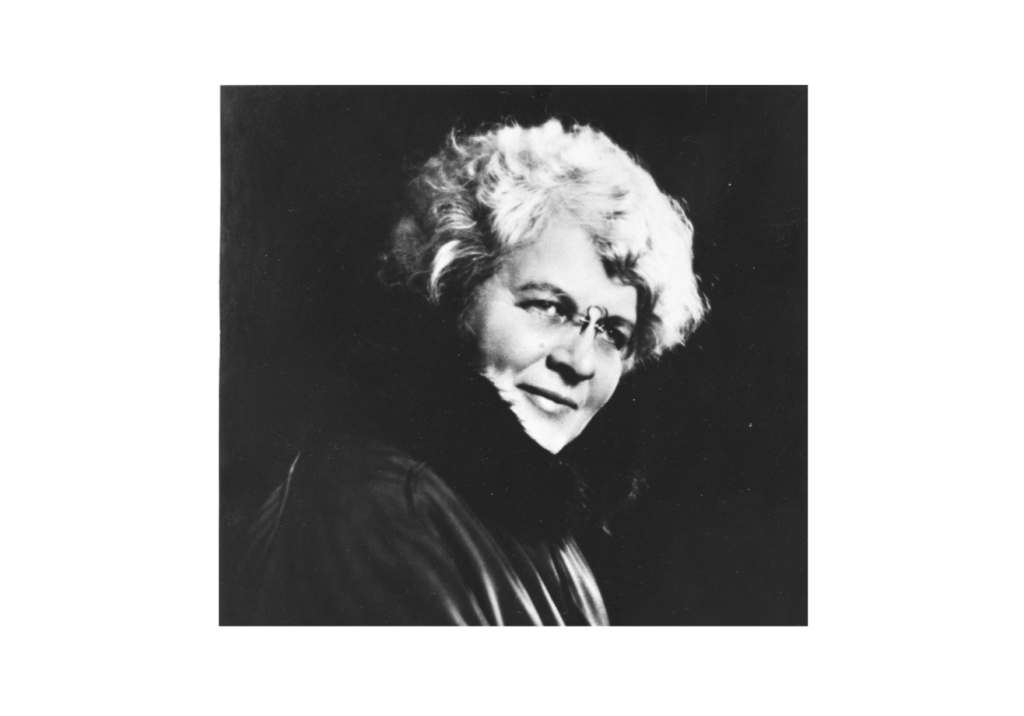
Even in recent decades, women engineers have at times felt like they’re trying to make it in an “old boy’s club.” But back in the era of Kate Gleason, a woman with engineering knowledge was remarkably rare.
Gleason was born in Rochester, New York, on Nov. 24, 1865. According to findagrave.com, her father, William Gleason, was from Tipperary, and her mother, Ellen Gleason née McDermott, was from Monaghan. The family owned a company (later known as Gleason Works) that produced gears among other tools.
Early in childhood, Kate Gleason was reading books about engineering and machines, reports asme.org. As an adolescent, she began taking an active role in the family company after her stepbrother died of typhoid fever.
In 1884, Gleason became the first woman in Cornell’s engineering program (Not until the mid-20th century did most engineering programs even open to women.). She was, however, unable to complete her studies, as her family’s company met with a period of financial trouble and needed her to return to work with them. Though no longer a student, she continued to learn engineering and gain related experience on her own.
As the 19th century drew to a close, Gleason Works began to prosper amid the ascent of automotive manufacturing and the corresponding need for gears.
Now working as the company’s chief sales representative, Gleason traveled to Europe and landed clients in France, Germany and the U.K. She later recounted: “In those early days I was a freak; I talked of gears when a woman was not supposed to know what a gear was.”
Gleason’s sister recalled that she could “talk knowledgeably about everything from gear engineering to animal husbandry.”
Being the only woman in her line of work actually helped the family’s company, as it made them more memorable and enhanced their brand recognition. Far from hiding who she was, she embraced her unique predicament and, on business trips, dressed in the most conspicuously feminine outfits she could find.
A 2015 article in the Rochester Business Journal said that men would sometimes try to test her mechanical knowledge, only to soon find out that she knew more than they did.
Among Gleason’s far-ranging circle of acquaintances was Henry Ford, who used to describe the Gleason bevel gear planer as the “best machine ever invented by a woman.” This was incorrect, though; Gleason’s father was the actual inventor.
When Gleason saw herself described as a “feminine mechanical genius” in The New York Times, she decided to address the inaccuracy and wrote a letter to the editor.
Though she clearly sought to give others the credit they deserved, Gleason had brothers who reportedly found her “overbearing and difficult to work with.” The siblings also reportedly disagreed about business decisions, according to a 1997 article in Gear Technology magazine.
These internal disputes ultimately led her to leave the family company in 1913. She then took a leading position at East Rochester’s Ingle Machine Company, whose once-ailing finances she turned around within a few short years. Later, she worked as president at the First National Bank of East Rochester.
Gleason — who once remarked that “the greatest fun I have in life is building-up, trying to create” — became involved with construction projects that incorporated mass production methods used at the Gleason Works. She proved especially adept at making concrete-based designs for affordable housing units.
In 1914, she became the first female elected to the American Society of Mechanical Engineers. She was also the first female elected to the eminently masculine American Concrete Institute.
A longtime supporter of a woman’s right to vote, Gleason made considerable contributions to the National American Woman Suffrage Association (The Gleason family was friends with women’s rights activist Susan B. Anthony, who was a longtime Rochester resident).
As Gleason got older, she grew more active with charitable endeavors. Among the recipients of her philanthropy were schools and orphanages, extending as far away as South Carolina.
Gleason died in Rochester on Jan. 9, 1933, at age 67. She never married or had children, viewing such pursuits as an obstacle to her professional life.
The fruits of that professional life endured in multiple ways. Aside from the crucial role she played in her family’s business, her solo contributions have proven long-lasting. For example, some of the affordable housing she designed is still in service all these years later. And, of course, there remains the example of her life as a woman so far ahead of her era.
Since 1998, the Rochester Institute of Technology has had the Kate Gleason College of Engineering — the nation’s first engineering school named after a woman.
And the family’s company, the Gleason Works, has since become the Gleason Corporation. It now has manufacturing plants on three continents and is among the world’s leading producers of gears and the machines needed to make them.
Leave a Reply