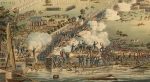
History has largely forgotten Patrick Ronayne Cleburne. Perhaps this is not surprising. Like many Irishmen throughout history, he fought on the losing side of a foreign war and, as we know, history is written by the victors. However, since Americans are presently given to Civil War retrospectives, it is fitting that we remember one of the Confederacy's greatest military … [Read more...] about Patrick Ronayne Cleburne: The Stonewall Jackson of the West
History Archives
Nellie Bly: “The Best Reporter in America”
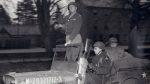
Nellie Bly’s biographer, Brooke Kroeger, captured the essence of his admirable subject when he wrote: “In the 1880s, she pioneered the development of ‘detective’ or ‘stunt’ journalism, the acknowledged forerunner to full-scale investigative reporting.” Born Elizabeth Jane Cochran on May 5, 1864 to Michael Cochran and Mary Jane Cummings, both of whom were of Irish descent, Bly … [Read more...] about Nellie Bly: “The Best Reporter in America”
Dorothea Lange’s Ireland
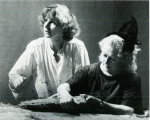
When photographer Dorothea Lange, best known for her haunting series of images from the Depression era, chose Ireland as her subject in the 1950s, she was not very happy with the way the finished product was presented in Life magazine. She was, however, deeply pleased with the way her photographic series portrayed the people and the land of Ireland. Lange had put pressure on … [Read more...] about Dorothea Lange’s Ireland
How the Irish Saved Civilization
Thomas Cahill, author of How the Irish Saved Civilization, talks to Patricia Harty. Thomas Cahill was born one of six children to a middle-class Irish family in the Bronx. He grew up in Queens, New York, attended a Jesuit high school on Long Island, and later became a Jesuit seminarian earning a pontifical and becoming proficient in Latin and Greek – language skills which … [Read more...] about How the Irish Saved Civilization
The Irish and Abolition
Observations of African-American and Irish Abolitionists During his career, O'Connell was elected Mayor of Dublin and a member of the British Parliament. However, he was refused his seat in the House of Commons because the law prohibited Catholics from serving in government. The British finally passed the Catholic Emancipation Act in 1829, thereby seating him in Parliament in … [Read more...] about The Irish and Abolition