
• Skip to main content
  • Skip to secondary menu
  • Skip to primary sidebar
  • Skip to footer
Irish America

Irish America

Irish America

  • HOME
  • WHO WE ARE
    • ABOUT US
    • OUR CONTRIBUTORS
  • IN THIS ISSUE
  • HALL OF FAME
  • THE LISTS
    • BUSINESS 100
    • HALL OF FAME
    • HEALTH AND LIFE SCIENCES 50
    • WALL STREET 50
  • LIBRARY
  • TRAVEL
  • EVENTS

In This Issue 1998

Mo’s Mission

By Marcia Rock
January / February 1998

April 24, 2024 by 1 Comment

Marjorie “Mo” Mowlam (1949-2005), was a British Labour Party politician who served as Northern Ireland Secretary from 1997-2001. She helped bring about the Good Friday Agreement, signed April 10 1998. Throughout her term as Secretary Mo proved a force to be reckoned with. All the while, she privately battled brain cancer, which was the cause of her death on August 19, … [Read more...] about Mo’s Mission

May / June 1998

… [Read more...] about May / June 1998

November/December 1998

… [Read more...] about November/December 1998

Flannery O’Connor’s
Irish Roots

By Joe Zenter

Originally published in March / April 1998, republished with edits in 2015

March 26, 2021 by 3 Comments

How Flannery O’Connor’s upbringing and her Irish Catholic heritage impacted her writing. O’Connor’s great-great-grandfather, Patrick Harty, came to Georgia in 1824 from County Tipperary, settling in Taliaferro County. His Irish-born daughter Johannah, who became Flannery O’Connor’s great-grandmother, married Hugh Donnelly Treanor in 1848. Hugh had also emigrated from … [Read more...] about Flannery O’Connor’s
Irish Roots

The United Irishmen and the 1798 Rebellion

By Colin Lacey

March / April 1998
October 22, 2020 by 3 Comments

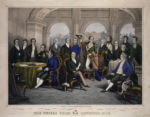
The Society of United Irishmen, founded in Belfast on October 26, 1791 by radical political thinkers, including Theobald Wolfe Tone, Hamilton Rowan, Samuel Nellson, Henry Joy McCracken and Thomas Russell, the organization's declared objective was "equal representation of all the people in parliament" and the establishment of a political system that would include all religious … [Read more...] about The United Irishmen and the 1798 Rebellion

« Previous Page
Next Page »

Primary Sidebar

Featured Video

Featured Podcast

News from the Irish Post

  • Funeral details confirmed for architect and tv presenter Hugh Wallace

    TRIBUTES have been paid to the architect and television presenter Hugh Wallace who has died at th...

  • Man extradited to Lithuania for child human trafficking offences

    A MAN has been extradited from Northern Ireland to Lithuania over child human trafficking offence...

  • Anniversary appeal 25 years after murdered Sandra Collins disappeared from Mayo

    AN ANNIVERSARY appeal has been issued today for information on the murder of Mayo woman Sandra Co...

  • Witness appeal after driver dies following collision in Cork

    GARDAÍ have appealed for witnesses to come forward after a driver died in a collision in Cork cit...

December 5, 1921

Following the conclusion of negotiations between Irish government representatives and British government representatives, the British give the Irish a deadline to either accept of reject the Anglo-Irish Treaty. The treaty established the self-governing Irish Free State but still made Ireland a dominion under the British Crown. The treaty also gave the six counties of Northern Ireland, which had been acknowledged in the 1920 Government of Ireland Act, the option to opt out of the Irish Free State and remain part of England, which they opted for. The Anglo-Irish treaty split many and on this day in 1921 Prime Minister David LLoyd-George said that rejection by the Irish would result in “immediate and terrible war.”

Footer

Follow Us

  • Facebook
  • Instagram
  • LinkedIn
  • Twitter
  • YouTube

Subscribe

  • Subscribe
  • Give a Gift
  • Newsletter

Additional

  • Advertise
  • Contact
  • Terms of Use & Privacy Policy

Copyright © 2025 · IrishAmerica Child Theme on Genesis Framework · WordPress · Log in