• Skip to main content
  • Skip to secondary menu
  • Skip to primary sidebar
  • Skip to footer
Irish America

Irish America

Irish America

  • HOME
  • WHO WE ARE
    • ABOUT US
    • OUR CONTRIBUTORS
  • IN THIS ISSUE
  • HALL OF FAME
  • THE LISTS
    • BUSINESS 100
    • HALL OF FAME
    • HEALTH AND LIFE SCIENCES 50
    • WALL STREET 50
  • LIBRARY
  • TRAVEL
  • EVENTS

Roots

Roots: The McCooey Clan

By Mary Egan

Fall 2025
November 1, 2025 by Leave a Comment

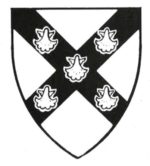
The McCooey surname has Armagh roots, deriving from the Gaelic name Mac Cumhaigh, meaning “son of Cú Mhaighe,” which translates to “hound of the plain.” This surname is an Anglicized form of a patronymic, where the “Mac” signifies “son of,” and the personal name Cú Mhaighe was common in the region of Armagh. Famous individuals with the surname McCooey include the Gaelic poet … [Read more...] about Roots: The McCooey Clan

Irish Roots: O’Connell, Connolly, Conlon and Connellan

James G Ryan

July 23, 2025 by Leave a Comment

The name Connolly is derived from several different roots. In Connaught and Monaghan it derives from the Gaelic O'Coingeallaigh. Both are anglicized to Connolly although the spelling form Connelly is often found in Galway. There have been several famous bearers of the name. In the early 18th century William Connolly (1660-1729) was an eminent lawyer and politician. His family … [Read more...] about Irish Roots: O’Connell, Connolly, Conlon and Connellan

Roots: The O’Sullivans Past & Present

By James G. Ryan

May/June 1996

May 9, 2025 by Leave a Comment

The O'Sullivan Clan of Munster has produced fine military leaders, sporting heroes, politicians, movie stars, songwriters, and even a space walker, as the following history of one of the most popular Irish names illustrates. The O'Sullivans or Sullivans are one of the most populous of the Munster families. In Irish O'Sullivan is O'Súileabháin. And there is no doubt that … [Read more...] about Roots: The O’Sullivans Past & Present

Roots: The O’Briens

By James G. Ryan

January/February 1996

March 14, 2025 by Leave a Comment

The O'Briens are one of the great Gaelic families of Ireland, and were the rulers of the ancient kingdom of Thomond, which takes in much of the modern county Clare and also the adjacent parts of counties Limerick and Tipperary. The family name is derived from Brian Boru (925-1014 A.D.) who was King of Thomond and rose to become High King of Ireland. Brian Boru is best … [Read more...] about Roots: The O’Briens

Roots: Byrnes and O’Beirnes

By James G. Ryan

September / October 1997

March 7, 2025 by Leave a Comment

The names O'Byrne and O'Beirne (or Byrne and Beirne) are often regarded as variants of the same name, much to the annoyance of the less-common Beirnes. In fact, the names spring from totally different sources. O'Byrne is derived from the Gaelic O'Broin, meaning "descended from Bran," an 11th century King of Leinster. The O'Byrnes were chieftains of what is now County Kildare … [Read more...] about Roots: Byrnes and O’Beirnes

Next Page »

Primary Sidebar

Featured Video

Featured Podcast

News from the Irish Post

  • Funeral details confirmed for architect and tv presenter Hugh Wallace

    TRIBUTES have been paid to the architect and television presenter Hugh Wallace who has died at th...

  • Man extradited to Lithuania for child human trafficking offences

    A MAN has been extradited from Northern Ireland to Lithuania over child human trafficking offence...

  • Anniversary appeal 25 years after murdered Sandra Collins disappeared from Mayo

    AN ANNIVERSARY appeal has been issued today for information on the murder of Mayo woman Sandra Co...

  • Witness appeal after driver dies following collision in Cork

    GARDAÍ have appealed for witnesses to come forward after a driver died in a collision in Cork cit...

December 5, 1921

Following the conclusion of negotiations between Irish government representatives and British government representatives, the British give the Irish a deadline to either accept of reject the Anglo-Irish Treaty. The treaty established the self-governing Irish Free State but still made Ireland a dominion under the British Crown. The treaty also gave the six counties of Northern Ireland, which had been acknowledged in the 1920 Government of Ireland Act, the option to opt out of the Irish Free State and remain part of England, which they opted for. The Anglo-Irish treaty split many and on this day in 1921 Prime Minister David LLoyd-George said that rejection by the Irish would result in “immediate and terrible war.”

Footer

Follow Us

  • Facebook
  • Instagram
  • LinkedIn
  • Twitter
  • YouTube

Subscribe

  • Subscribe
  • Give a Gift
  • Newsletter

Additional

  • Advertise
  • Contact
  • Terms of Use & Privacy Policy

Copyright © 2025 · IrishAmerica Child Theme on Genesis Framework · WordPress · Log in