• Skip to main content
  • Skip to secondary menu
  • Skip to primary sidebar
  • Skip to footer
Irish America

Irish America

Irish America

  • HOME
  • WHO WE ARE
    • ABOUT US
    • OUR CONTRIBUTORS
  • IN THIS ISSUE
  • HALL OF FAME
  • THE LISTS
    • BUSINESS 100
    • HALL OF FAME
    • HEALTH AND LIFE SCIENCES 50
    • WALL STREET 50
  • LIBRARY
  • TRAVEL
  • EVENTS

Today In History

Boston’s Great Civil War Sculptor

By Michael Quinlin
IA Newsletter, September 14, 2024

September 11, 2024 by Leave a Comment

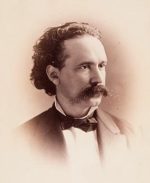
A portrait of Slig-born Sculptor Martin Milmore in Sepia.

Sculptor Martin Milmore of Boston (1844-1883), admired for his Civil War sculptures and for his classical statuary and busts of famous men throughout New England, was born in Kilmorgan, County Sligo on September 14, 1844, the youngest of five sons of parents Martin and Sarah Milmoe (nee Hart).  When the father died in 1851, Sarah emigrated with her five sons to Boston, where … [Read more...] about Boston’s Great Civil War Sculptor

January 11, 1994

January 4, 2023 by Leave a Comment

This date marked the end of the Irish Broadcasting ban on Sinn Fein. Known as the Section 31 Broadcasting Act, it prohibited members of Sinn Fein and the IRA from appearing on television or speaking on radio. The ban had been in effect since the 1970s. It was recently revealed that Taoiseach Garrett Fitzgerald had moved to remove the ban in 1981, but it remained in place until … [Read more...] about January 11, 1994

Striking Gold – Transcontinental Railroad Turns 150

By Mary Gallagher, Assistant Editor
May 10, 2019

May 10, 2019 by Leave a Comment

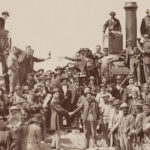
Irish contributions to American history received a special recognition this week. The 150th anniversary of connecting the First Transcontinental Railroad was commemorated in a two-day celebration in Utah May 9 and 10 at Promontory Point, the state landmark where the Golden Spike connecting the track’s east and west branches was struck on May 10, 1869. The railroad was six years … [Read more...] about Striking Gold – Transcontinental Railroad Turns 150

August 1

August 1, 2011 by Leave a Comment

Officially known in the Celtic calendar as Lughnasa and the first day of Autumn, August 1st marks the celebration of the old Celtic god Lugh. Gaelic tradition holds that Lughnasa was a common time for handfastings, or trial marriages of the time. It is believed that Lugh chose August 1st as the day for a harvest festival as a way of remembering his dead foster-mother. Today, … [Read more...] about August 1

July 25

July 25, 2011 by Leave a Comment

July 25th marks the feast of St. James in the liturgical calendar of the Roman Catholic Church. Dubliners celebrate this day by holding an annual drinking festival, which has been a tradition since the medieval era. Likewise, Irish pilgrims who choose to honor St. James and walk the Santiago de Compostela in Spain, often leave from St. James's Gate in Dublin, where the Guinness … [Read more...] about July 25

Next Page »

Primary Sidebar

Featured Video

Featured Podcast

News from the Irish Post

  • Funeral details confirmed for architect and tv presenter Hugh Wallace

    TRIBUTES have been paid to the architect and television presenter Hugh Wallace who has died at th...

  • Man extradited to Lithuania for child human trafficking offences

    A MAN has been extradited from Northern Ireland to Lithuania over child human trafficking offence...

  • Anniversary appeal 25 years after murdered Sandra Collins disappeared from Mayo

    AN ANNIVERSARY appeal has been issued today for information on the murder of Mayo woman Sandra Co...

  • Witness appeal after driver dies following collision in Cork

    GARDAÍ have appealed for witnesses to come forward after a driver died in a collision in Cork cit...

December 5, 1921

Following the conclusion of negotiations between Irish government representatives and British government representatives, the British give the Irish a deadline to either accept of reject the Anglo-Irish Treaty. The treaty established the self-governing Irish Free State but still made Ireland a dominion under the British Crown. The treaty also gave the six counties of Northern Ireland, which had been acknowledged in the 1920 Government of Ireland Act, the option to opt out of the Irish Free State and remain part of England, which they opted for. The Anglo-Irish treaty split many and on this day in 1921 Prime Minister David LLoyd-George said that rejection by the Irish would result in “immediate and terrible war.”

Footer

Follow Us

  • Facebook
  • Instagram
  • LinkedIn
  • Twitter
  • YouTube

Subscribe

  • Subscribe
  • Give a Gift
  • Newsletter

Additional

  • Advertise
  • Contact
  • Terms of Use & Privacy Policy

Copyright © 2025 · IrishAmerica Child Theme on Genesis Framework · WordPress · Log in