• Skip to main content
  • Skip to secondary menu
  • Skip to primary sidebar
  • Skip to footer
Irish America

Irish America

Irish America

  • HOME
  • WHO WE ARE
    • ABOUT US
    • IRISH AMERICA TEAM
  • IN THIS ISSUE
  • HALL OF FAME
  • THE LISTS
    • BUSINESS 100
    • HALL OF FAME
    • HEALTH AND LIFE SCIENCES 50
    • WALL STREET 50
  • LIBRARY
  • TRAVEL
  • EVENTS

Roots

Irish Roots:
The History of the Tobins

By Siobhán Tracey, Contributor
December / January 2003

December 1, 2002 by 4 Comments

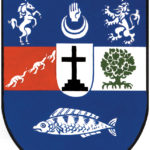
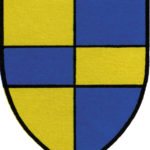
The Tobin Family Crest.

Tobin is not an indigenous Irish name, but the family can be regarded as having become completely hibernicized. Its Irish form, Toibín, is a gaelicized version of the Norman 'St. Aubyn.' Another interpretation is that the name was first called de St. Aubyn and the original bearers were from Aubyn, in Brittany, France. According to the renowned Irish historian and genealogist, … [Read more...] about Irish Roots:
The History of the Tobins

Roots:
The Keane / Kane Family

By Siobhán Tracey, Contributor
October / November 2002

October 1, 2002 by 2 Comments

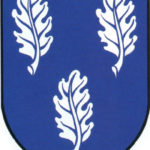
Keane and Kane are anglicizations of Ó Catháin from cath, meaning battle. There were two great septs of Ó Catháin in Co. Derry but in modern times, Keane, Kane and sometimes O'Kane are more common, Keane in Munster and Connaught and Kane in Ulster. Traditionally the two septs were quite distinct and it was believed that the prominent Clare Keanes were an offshoot of the Ulster … [Read more...] about Roots:
The Keane / Kane Family

Roots: The Unimportance
of Being Mulligan
By Hugh A. Mulligan, Contributor
October / November 2001

October 1, 2001 by Leave a Comment

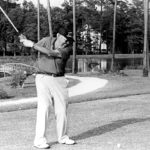
Irish literature and lore shows Mulligan little respect. The very opening sentence of James Joyce's acclaimed Ulysses introduces Buck Mulligan, a ribald braggart who, before many pages, is borrowing a quid to "get gloriously drunk so as to astonish the druidy druids," making an utter fool of himself in a "jester's dress of puce and yellow and a clown's cap" and identifying … [Read more...] about Roots: The Unimportance
of Being Mulligan

Roots: Caulfield:
The Clan of Confusion
By Elizabeth Raggi, Contributor
August / September 2001

August 1, 2001 by 1 Comment

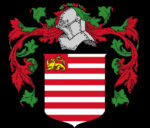
The name Caulfield is one about which much confusion arises. A name of several origins, few patronymics have acquired so many anglicized versions, the more common being MacCaul and MacCawell. Other variations include MacCall, MacHall, MacCarvill, MacCowhill, Callwell, Howell, Campbell and Gaffney. In parts of Galway and Mayo Caulfield has been used as the anglicized form of … [Read more...] about Roots: Caulfield:
The Clan of Confusion

Irish Roots: Cusack
The Warrior Clan
By Elizabeth Raggi, Contributor
June / July 2001

June 1, 2001 by 4 Comments

The Cusack name carries with it a fighting air. One of the most colorful examples is of one George Cusack whose parents wanted him to be a monk. He did not, so he ran away to fulfill every child's dream of becoming a pirate and was so ruthless, he was often known to throw his crew overboard during arguments. George may have gained his notoriety through his defiance, but … [Read more...] about Irish Roots: Cusack
The Warrior Clan

« Previous Page
Next Page »

Primary Sidebar

Featured Video

Featured Podcast

News from the Irish Post

  • Derry charity warns of men’s mental health crisis

    MEN'S ACTION NETWORK coordinator Michael Lynch has warned of a growing demand for men’s mental he...

  • Galway firm wins concrete contract for Ireland’s tallest building

    A CONCRETE manufacturer in Galway has won a lucrative contract on the construction of what will b...

  • Construction set to begin on Ireland’s new National Maternity Hospital

    THE construction of a new National Maternity Hospital is set to begin in Dublin next year. Govern...

  • Orange weather warning issued as Storm Austen set to hit Ireland

    AN ORANGE weather warning has been issued in Ireland as Storm Austen is set to hit the country la...

October 23, 1969

On this day in 1969, Irish playwright Samuel Beckett won the Nobel Peace Prize for literature. Waiting for Godot is his best known work, and perhaps one the most widely read theatrical plays. Beckett was born in Foxrock, Dublin on April 13, 1906. He studied French, Italian and English at Trinity College Dublin and excelled, allowing him to move to Paris to teach English. It was in Paris that he was introduced to James Joyce, who he became close friends with. Joyce’s works had a great influence over Beckett. Beckett’s other famous works include Krapp’s Last Tape, Endgame and Happy Days.

Footer

Follow Us

  • Facebook
  • Instagram
  • LinkedIn
  • Twitter
  • YouTube

Subscribe

  • Subscribe
  • Give a Gift
  • Newsletter

Additional

  • Advertise
  • Contact
  • Terms of Use & Privacy Policy

Copyright © 2026 · IrishAmerica Child Theme on Genesis Framework · WordPress · Log in