

Dublin: Ireland assumed the presidency of the European Community on the 1st of January making this city the center of Europe for six months.
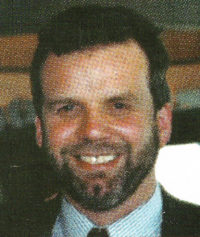
Irish prime minster Charles Haughey, who assumes the mantle of president of the EC was clearly taking the job to heart. One of his first orders was to forbid any road repairs on the capital’s streets until all the European dignitaries, who will visit here during his presidency, are gone.
For Haughey, it is clearly the climax of a career that has seen him flirt with a jail term on gunrunning charges at the onset of the North’s troubles, but eventually recover to scale the political heights to where he is now the undisputed leader of the country for the foreseeable future.
After a lifetime of trials and tribulations, few can begrudge Haughey his day in the sun-though there is precious little of that in Ireland this winter. The absence of sunshine is due to the omnipresence of a dank smog that blankets Ireland’s capital city when the weather turns cold and the open turf and coal fires of tourist lore become lethal agents pouring carbon monoxide into the atmosphere.
It has become almost a winter ritual here – when the weather turns cold, Dublin suffers an uncomfortable smog. Each year, the opposition politicians and newspapers complain about it, but the effect is usually not long-lasting enough to force the government to do anything about it-and so it goes on until next year.
Smog aside, Haughey’s government, by any yardstick, has made Ireland a better place to live in over the past two years. The climate of confidence is in marked contrast to the gloom and doom of just a few years ago. Unemployment is falling though, as yet, not significantly enough to effect the emigration numbers. But the “experts” assure us that that too will begin to drop by the end of this year.
The impact of membership of the European Community has been powerful in Ireland.
On the negative side, the effect of having huge grants available to boost almost any kind of employment scheme has made the Irish over-dependent on handouts and central planning. The lack of initiative at local level to do anything about employment or halting emigration is very evident.
On the plus side, the roads and telephone service, to mention just two areas, have begun to improve dramatically with the help of EC money. Anyone who remembers vainly searching for any usable public telephones in the past can now be assured that the phones do work and that the operator service is far more efficient than it was.
The roads, too, have been dramatically improved. While there are still many “main” routes that justify the term “cattle paths”-used by a prominent member of the Reagan entourage on his visit to Ireland in 1984- the majority of roads near major towns and cities have received facelifts.
The biggest negative of the European involvement in Ireland would seem to be the willingness to place almost childish faith in the beneficial effect of the relationship.
With Ireland due to become part of a united Europe, which will remove all trade barriers beginning in 1992, this tendency has become even more of a reality, with many commentators expressing the belief that all the social ills and problems will be solved by membership.
It could be a dangerous supposition. After all, the same rhetoric was used when Ireland first joined Europe, or the Common Market as it was known then, in 1972. The state of the country now should serve as a reminder that Europe is no panacea.
Much of Irish industry seems to be still far to weak to compete in an aggressive European market environment, yet with all barriers and tariffs down, that is what it will have to do.
The painfully slow, yet evident economic recovery, could be in jeopardy if that were to happen.
Having said that, however, it is clear that joining with Europe has resulted in a far greater degree of open-mindedness on the part of the Irish. The insular country of the past-with its peculiar preoccupations–no longer exists. For that alone, we can all be thankful as we face into the ’90s.
Editor’s Note: This article was originally published in the February 1990 issue of Irish America. ♦
Leave a Reply