
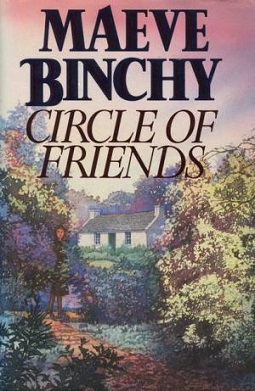
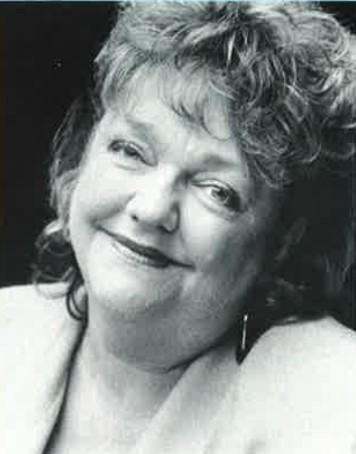
For someone on a rigorous public relations schedule, Maeve Binchy is a remarkably personable interviewee. The Dublin author arrived in New York on a brief but hectic promotional visit for her new book Circle Of Friends and although she is pressed for time and does speak quickly, there is an unhurried air about her.
I had never met Maeve before and felt that she conveys a friendliness and warmth that is as genuine as her unabashed sense of curiosity. Her books – Light a Penny Candle, Silver Wedding, Echoes and Firefly Summer – have catapulted her into bestseller status. Binchy is an active competitor with Erica Jong and Jackie Collins but the difference is her books are clean.
There are no erotic tracts, no lengthy discourse on the pyrotechnics of sex. Her books are essentially about people and the worldly relationships between people.
They’re not sanitized. Just clean.
“Well, you see, I’d like to think that you get to know the characters better in my books,” she explains. “And when people tell me they ‘know’ my characters, that’s the biggest compliment. It’s not because I’m desperately moral and I want to be holier than thou; I just write like I talk. And when I’m with my friends we don’t have these great long discussions about sexual activity. When we were 17 and 18, like any girls that age, we never stopped talking about it – who had done it, who had gone ‘all the way’ you know. But I’ve never met anyone like the characters in Jackie Collins’ books. No publisher has ever asked me to put sex in my novels, as if one would say Maybe we could put in a few scorching pages…eight pages of sex here, a few pages there. It just wouldn’t be part of the story.”
So now that we have that sorted out I recall reading somewhere that Maeve once took up lip-reading so that she could understand conversations at a distance. Was that true?
“I’m a very extreme woman,” she laughs. “I had a bad cold once and I thought I was going deaf so I took a lip-reading class. It turned out it was only a cold but really it’s quite useful to a journalist.” She recalls for example when Pope John Paul Il visited England she was covering the story for the Irish Times and she was able to grasp a televised private conversation between the Pope and members of the royal family.
“You need to know how people talk to each other if you are writing dialogue,” Maeve says. “That is very important, the rhythm of people’s conversation. It’s a hard study ” she pauses, somewhat amused. “People are always a bit intrigued by it.”
Circle Of Friends, a monster 565-page blockbuster, is set in a small Irish village. The principal characters are three local girls who grow up and go to University College Dublin, a move which hastens their post-adolescent development. One of the girls, Benny Hogan, is a bumbling big girl full of clumsy goodness. Are we entering into a form of autobiography here?
In another interview Binchy was asked about Benny.
“There’s a lot of me in there, she replied.
“I hated school and thought I’d hate university. School was competitive. I was never any good at gym. I got it into my head that college was all about young people and sex and pubs and reckoned if I was no good at gym, I’d be no good at sex and I’d be a hopeless failure. In fact, I had a great time. I learned that if you were nice and funny fellows would talk to you and you’d be popular even if you weren’t skinny and blonde and perfectly turned out. That’s Benny in the story.”
Now 50, Maeve says she’s “having a far better time” than in her younger years. “Too much anxiety then, until around 30,” she says. “Of course that’s something no young person is going to believe – and why should they?
“I remember the ’50’s very clearly,” she considers. “They were the most heightened years of in my life. The editor said he’d check over details like the cars, the records. I said you can if you like, because I know they’re right. I can remember the month ‘Unchained Melodies’ came out on the radio.
“But I don’t write with nostalgia and I certainly don’t wish to dwell on the past. Ireland has got much less insular, we’re much more confident in ourselves. In the ’50’s we were much more humble; now we expect Irish people to do well. But I don’t know what it’s like being a teenager any more and I wouldn’t, even if I had children. I just write what I know.” Accompanying her on the New York visit was her husband, Gordon Snell, an English author who writes books for children. “We met 18 years ago in London when he was with the British World Service and I was working for the Irish Times.” They married in 1977. Certainly, their public demeanor suggests a rare marriage of minds as well as souls although neither had written a line of fiction before meeting each other.
Is it difficult for two authors to live side by side?
“In our case we have no rows,” she responds. “We’re not competitors; we’re both published and as long as one is doing well, we can support each other.
“We work beside each other. On a big long table, using word processors. It’s a hard discipline and it’s a bit strange sometimes. Like, we say, ‘Hello, printing now.’”
Both authors apply a strict regime to their work schedules-up at 8 a.m. to work for five hours “on a good day.”
Last year they went to Sydney, Australia for a two month winter holiday.
“The invention of the fax machine has changed our lives as much as the wheel has changed civilization,” she laughs.
Although her success hasn’t left her short of cash – Echoes was adapted for television and Shane Connaughton, who co-wrote the screenplay for “My Left Foot, ” is currently adapting The Lilac Bus for film – Binchy continues to write her column twice-weekly for the Irish Times.
She likes to enjoy her work and she likes her readers to enjoy her work.
“It’s a great compliment to hear a lot of things people say about my books, especially when they don’t mean to be complimentary I’m still vain enough, delighted, to see people reading my books on the bus or the train. Of course that works another way – I saw a woman in Eason’s (Dublin’s principal bookstore) take one of my novels off the shelf, read through a few passages and then put it back on the shelf….”
She acknowledges that the majority of her readers are female. “I don’t know whether it’s an historical thing but women like longer books and they are much more interested in feelings and emotions. Men’s fiction tends to be shorter and more technical. Men have a kind of comradeship that doesn’t need words, therefore they’re not as interested in my books as women are.”
Whatever her prognosis, I once read and greatly enjoyed Light a Penny Candle without being inclined to take up another such tome. As such, I don’t qualify as one of her many true enthusiasts yet the author, celebrated-and rightly so is a warm, ebullient character who can speak in paragraphs and remember your name like you were the celebrity and she was the interviewer.
Without stooping, Binchy conquers.
Editor’s Note: This article was originally published in the April 1991 issue of Irish America. ♦
Leave a Reply