
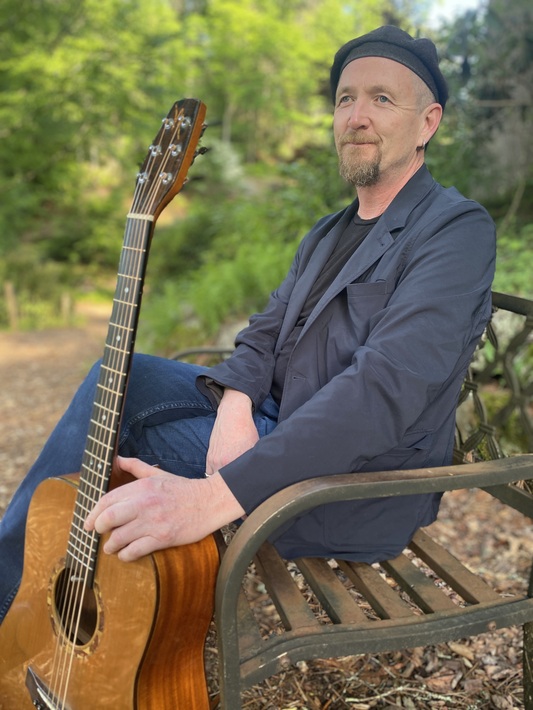
It’s been more than 30 years now since the trailblazing group Solas – with John Doyle on guitar – changed the way people around the world think about Irish music, along with legendary songwriter and performer Seamus Egan, fiddler Winifred Horan, vocalist Karan Casey, and accordionist John Williams, Doyle and Solas – meaning “light” in Irish – seamlessly blended Irish, folk, bluegrass, and other influences.
Along the way, they earned Grammy nominations and became “the finest Celtic ensemble this country has ever produced,” according to the Boston Globe.
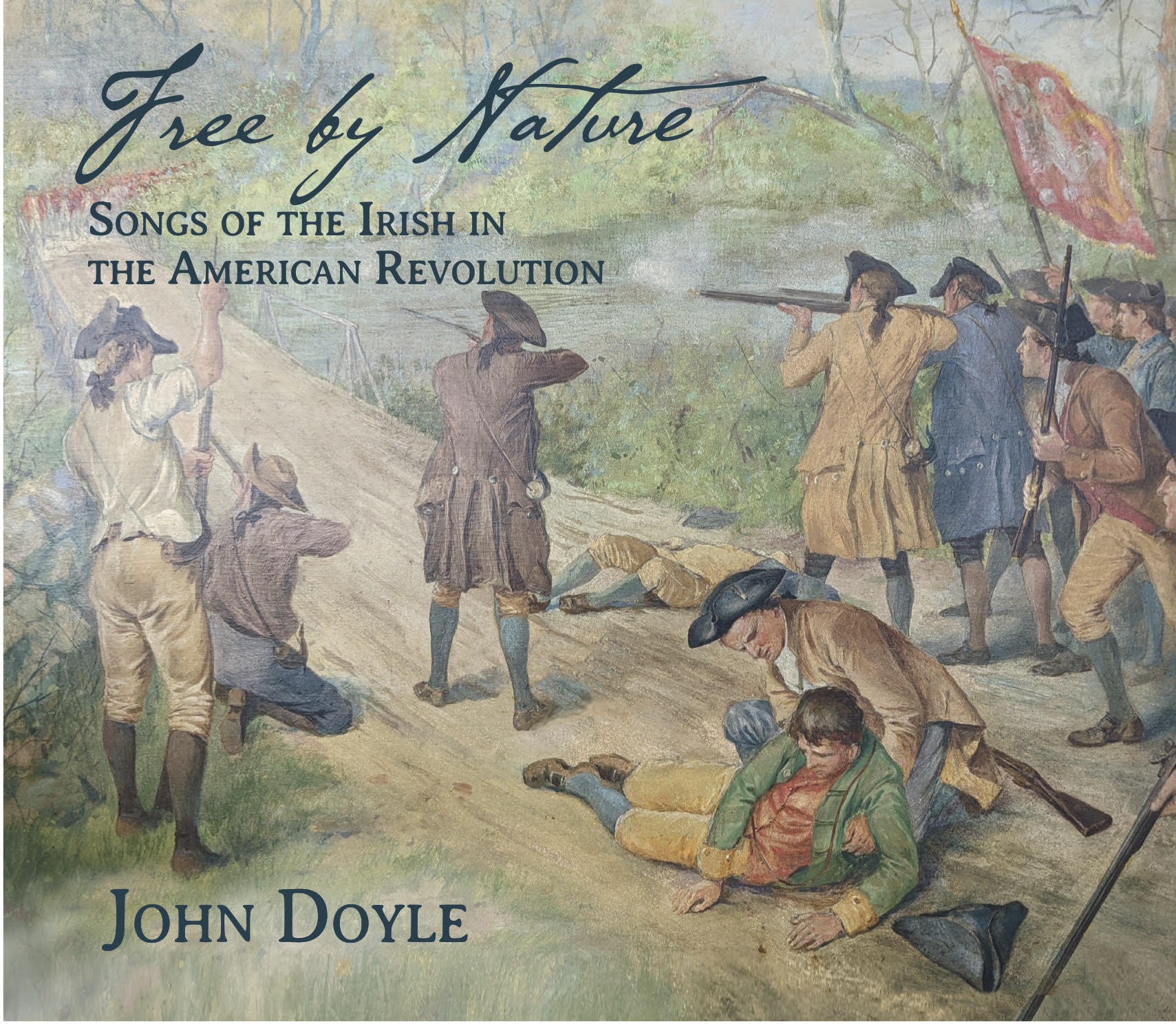
John Doyle has continued to dazzle audiences with his distinctive guitar strumming, whether collaborating with the likes of Mary Chapin Carpenter, Joan Baez and Liz Carroll or performing solo, as he does on his latest project, Free by Nature: Songs of the Irish in the American Revolution.
“I’ve always been interested in stories and songs of Irish emigration, almost certainly because I am an emigrant myself,” he tells Irish America. “The trials and tribulations of men and women who have had to leave their native country for various reasons – war, exile, hardship, famine, some for adventure, and others just seeking a better life. Their stories are intertwined with so many of the pivotal events in our history including the American Revolution.”
Doyle comes from a musical family in Dublin, where his father Sean was a noted singer. John played music professionally while still a teenager, and eventually formed the group Chanting House with celebrated singer Susan McKeown. He came to the U.S. in 1991. Today, he lives in Asheville, North Carolina, and loves spending time with his wife and daughter – when he’s not on the road performing, that is.
Your new album connects the Irish to America’s 250th anniversary. How long had you been thinking about that connection?
The Irish have been linked to the U.S for as long as the U.S has existed. They were a major part of the Continental Army, with some estimates that 25 to 30 percent of Washington’s army was of Irish descent or Irish-born, Catholic and Protestant. In Pennsylvania, the recruited soldiers there were unofficially known as “the line of Ireland” and fought hard for the cause.
Of course, many Irish soldiers fought on the British side as well, along with the Spanish and French who joined the fray. Part of the reason was that many surviving soldiers followed the Irish nobility into exile after the defeat of the Jacobite army at Aughrim in 1691 and became mercenary soldiers fighting for many countries, including England. They had stayed in these various countries for generations.
I began collecting Irish-related songs from the American Revolutionary period in 2025. As the 250th anniversary approached, I felt it was a good time to record and release the album in 2026.
What musician (or two or three) inspired you in your formative years?
So many. When I first started playing music, it unlocked something that I can’t quite define even now. The earliest players I tried to emulate were Bob Dylan, as my mother had numerous albums that we used to wear thin. Then Paul Brady, Arty McGlynn, Al O’Donnell, John Faulkner, Planxty, and the Bothy Band from the Irish repertoire. Martin Carthy, Dick Gaughan, Nic Jones, Richard Thompson (Fairport Convention and with Linda Thompson) from the English tradition. The list goes on and on.
What musicians (dead or alive) would you invite to a dinner party?
Lennon and McCartney. Turlough O’Carolan. Ray Charles, and J.S. Bach.
What is currently on your bedside table?
An Irish History of Civilization by Don Akenson. He has two fantastic volumes. I always have some book on Roman history. Earplugs.
Where & when were you born?
Where did you spend your youth?
I was born in Dublin, in the Fairview area, on the way out towards Howth and Clontarf. I pretty much spent my youth in Dublin, but for summer holidays we – I have three brothers, Colm, Brian and Tom – went to a little village called Coolaney, County Sligo, where my Dad’s parents were. On the very rare occasion, we would have a trip to France.
What was it like growing up there?
How did it shape you?
I imagine it was similar to how so many other kids who grew up in the 70s in an urban area did. We were pretty independent from an early age, and we were left pretty free to wander into good and bad things, as it were.
My mother was from Dublin, so we had lots of relatives on her side around a lot of the time and had lots of visits and holidays, etc. There were plenty of friends around, and our school was right beside us. Fairview Park was close by if you wanted to kick a football around, but we mainly chose the grounds of the primary school behind us to play football, tennis, etc. Just so you know, this was all concrete, so not an actual tennis court or football pitch – we made them all up.
What are your earliest musical memories?
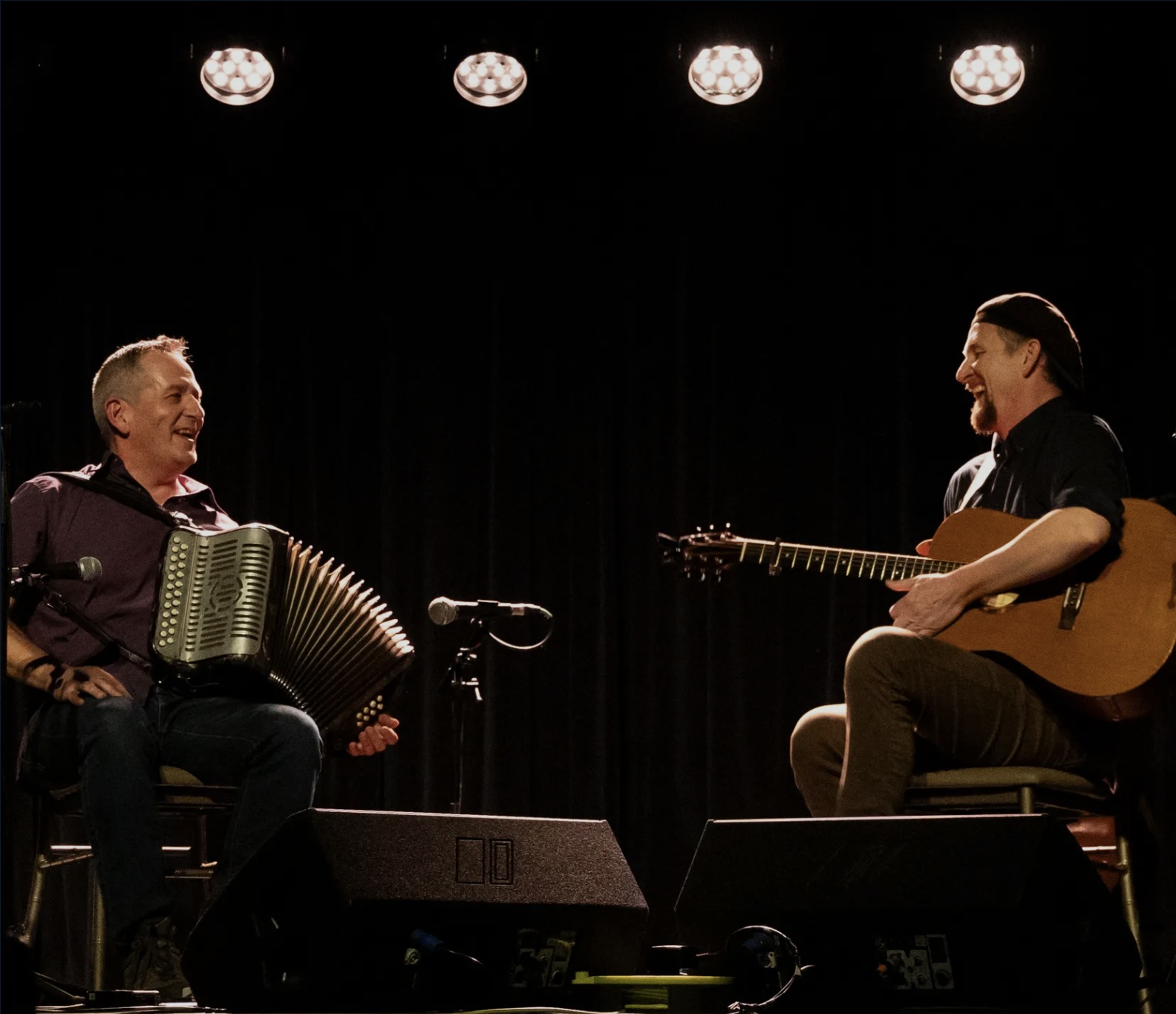
Going to a pub in Coolaney where my grandfather, Tommy Doyle, used to have a session. He played accordion. We would go down on a Saturday or a Sunday and sit there, have a packet of crisps and a mineral, and listen to him and his compatriots play. We didn’t know it at the time, but these were all luminaries of the Sligo/Roscommon/Leitrim area, like Josie McDermott, Fred Finn and Peter Horan, etc.
I remember thinking even then how ancient it all felt – a smoke-filled small room full of people who were not necessarily there to hear the music, but were there nevertheless because of it. I distinctly remember how the players were focused on the tunes, and on the camaraderie and banter they shared among themselves. And the older players like Josie McDermott had these tobacco-stained fingers from years and years of smoking. And Fred Finn had this shock of white hair with yellow running through it.
What were you like as a child?
I think I was pretty stubborn. One-track-minded. Or so they like to tell me. I don’t think I was a particularly happy child, and music was a great solace to me. When I first found that I could play and get lost in music, it helped me a great deal.
What do you believe your parents gave to you? As a musician? As a person?
A sense of humor. The idea that you could laugh at almost anything, which lessens the burden – an important lesson, I think. The importance of family and communication. An appreciation for history, literature, music, of course. My Dad was a career Garda, but he really missed his calling as a Yeats scholar, and as a singer, as he is such a remarkable singer and collector of songs. My mother kept the family together, no small feat with four boys close in age, and gave us the invaluable gift of loving kindness.
Any other musicians in the family?
All my brothers are singers or musicians, though not all are professional. My grandad played accordion. My Dad plays accordion and sings. My uncle Donal in Donegal plays accordion. My eldest brother Colm does singing gigs all over Scandinavia. And the four of us all sing together when we get the chance (and are together on “Johnny’s Gone for a Soldier” on my new recording).
Best advice you ever received?
At most, only fifty percent will ever like your music. It doesn’t matter what anyone thinks about it. It’s not about them…it’s about creating something that didn’t exist before. I got this advice from a friend, Martin Egan, many years ago when I was paralyzed by what other people would think of me and my music.
What do you do when you’re not performing?
I record. I work on songs. I hike – Asheville is great for that. I love kayaking and fly fishing when I get the time.
A perfect day?
A good pot of strong tea and toast with my wife’s homemade jam or marmalade. Hanging with my family – brothers, parents, wife, and daughter. Holiday dinners with my family and friends are always hilarious and some of my favorites.
Favorite meal?
I have always loved pesto. And Bolognese. Chicken parmesan – Thai food.
Prized possession(s)?
A rosary beads from my grandparents – the instruments I have. I have quite a few from luthier Kevin Muiderman that would be hard to replace (except by him); a Lowden dreadnought I got in the early nineties; a Jordan McConnell guitar; and a couple of Fylde ones that are pretty spectacular too – some rare songbooks from my friend Mick Moloney, who’s passed on.
Favorite place in Ireland?
America?
In Ireland, that would be County Sligo – as it’s my spiritual home. I was very close to my grandparents and felt at home there more than anywhere else. It’s also a very beautiful area close to the sea.
In America, Asheville, of course, is also very beautiful. I always feel a sign of relief when driving back to Asheville and get the first sight of the mountains in the distance. I have an affinity for the Southwest too, I guess because it’s so very different from Ireland and Asheville, and it seems to have a spiritual depth that is appealing.
Most profound change you’ve seen in Ireland?
I’ve been away for thirty-five years now. Many things have changed. There’s a prosperity to the country that certainly was not in existence in my youth. Dublin is such an international, thriving business center now. This year is the first year that more people have moved back to Ireland from America than have emigrated. Food has vastly improved.
What do Americans not get about Ireland and vice-versa?
I think some Americans have a Disneyesque image of Ireland. It’s a modern country. Traditional Irish music is not mainstream. It’s still quite eclectic, and people have to seek it out. The Irish language is not ubiquitous, and it’s always in danger of extinction. The north of Ireland is still under British rule but is not the hotbed of violence that it once was. There are plenty of other sides to Ireland besides the drinking culture.
Regarding America, the Irish don’t always get how massive the country is. That there is so much to see and do outside of the attractions of NYC and Florida – so many micro-cultures that are wonderful to get to know. I have found that people are inherently incredibly friendly and welcoming.
Your hidden/unexpected talent?
I bake pretty good brown bread. My guilty-pleasure TV show is The Great British Baking Show.
Feelings about social media?
On the plus side, you can keep up with a band of followers and maintain a fan base, which feels productive. As a musician in this new world of social media, one tends to have to do many of the things that used to be doled out among many people – from creating to recording to promotion – to make a living. It’s a double-edged sword in that one can do it all oneself, but it takes away from the time for pure creativity.
Overall, I think social media is a minus for a myriad of reasons. It engenders incivility. Not being in the present creates a false sense of image (positive and negative), and often places all of the work of marketing music on the artist. Streaming platforms have only made it that much harder to make any income from music and writing. And I don’t think it’s good for the soul.
What is one piece of advice you would give to your younger self?
Enjoy every minute of the day. Be more present. Time moves very quickly. Negative thinking gets you nowhere.
Leave a Reply