
Tim Pat Coogan, author of The IRA: A History, talks to Patricia Harty.
“I really think the Irish-Americans are crucial to this. I’m historian enough to know there would be no independent Irish state without Irish-American pressure in the 1920s. The cabinet records are there and the ambassador’s records are there to show how much Irish Americans were involved.” However, “one of the tragedies of that period,” he says, and the reason why he called his book on de Valera Long Fellow, Long Shadow, is that “one of the long shadows that he left is over Irish-American activities. Because he split them. [The principal leaders of Clann na Gael, John Devoy, Daniel Cohalan and Joseph McGarrity split. McGarrity sided with de Valera, and Devoy and Cohalan on the side of the treaty. McGarrity persuaded de Valera to use the title ‘President of the Irish Republic,’ Cohalan and Devoy as I.R.B. supporters, recognized Michael Collins, the head of the I.R.B. as automatically ‘President of the Republic’]. They never really united, and there’s this dichotomy, to this day.
“It’s laughable,” he says, “to compare the Irish-American clout to, say, the Zionists. Look at the attitude. There’s different history and different reasons for it. But we really should learn from them. And really, Irish-Americans shouldn’t be thinking how can we help, they should just get on to their congressmen the way they would on any other issue.
“There’s a lot of collecting for all sorts of charitable and cultural causes in Ireland. And they get a lot of beef. But where’s the muscle? Where’s the real political organization? If the Irish-Americans were organized, they’d have this Northern thing settled in jig time.”
Coogan’s impatience at the seeming inability of those involved to find a solution stems from the fact that he finds the situation so painful. He writes in the introduction that “even the ‘lesser’ traumas of the Six counties have a searing effect: finding someone or some family you have known suddenly implicated in a shooting, a jailing, a kneecapping, a robbery or an arms smuggling. The pitch of intensity is far higher, the sense of personal involvement is incomparably greater.”
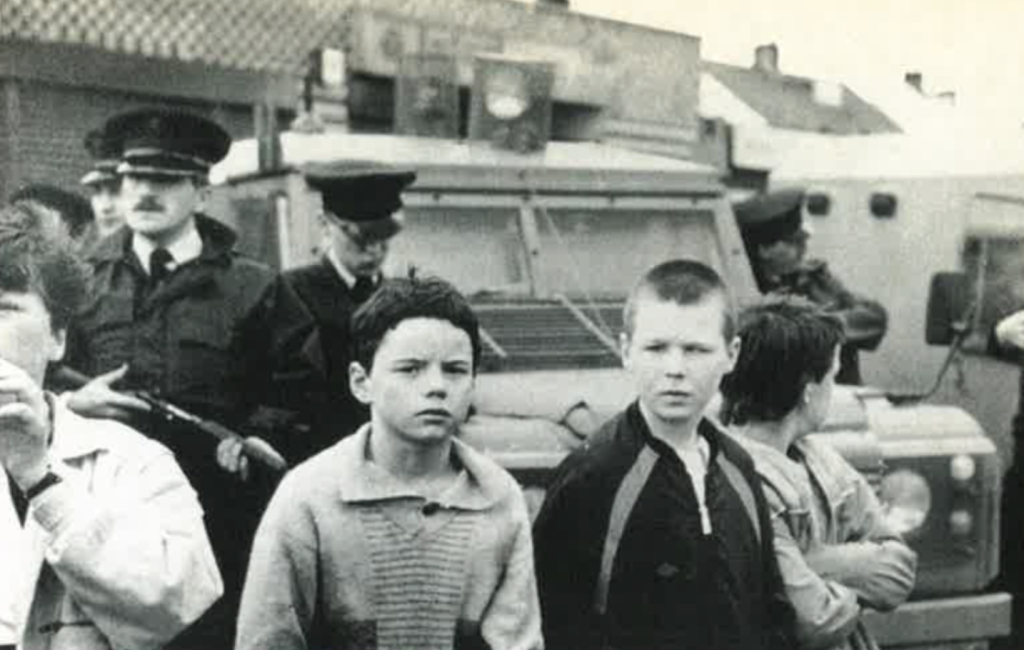
He tells me of Sean, a young fellow from a Catholic area whom he has known since he was “a twinkle in his mother’s eye.” Sean, he says, “was a very quiet lad, didn’t want anything to do with trouble,” who finally decided to join the ‘RA, his decision triggered by the fatal shooting of a teenager with a rubber bullet by a member of the security forces. Much as he tried to dissuade him, even telling him that “he’d be useless as a guerilla and he’d stick out like a sore thumb.” Sean’s answer was “there’s nothing else I can do to change it.” He had no faith in any events that would bring about change. Sean’s career as a guerilla didn’t last long. He was arrested for possession of weapons. “He was sentenced last week,” Coogan says with a sigh. “I don’t know what the sentence is, but he was looking at 15 to 24 years.”
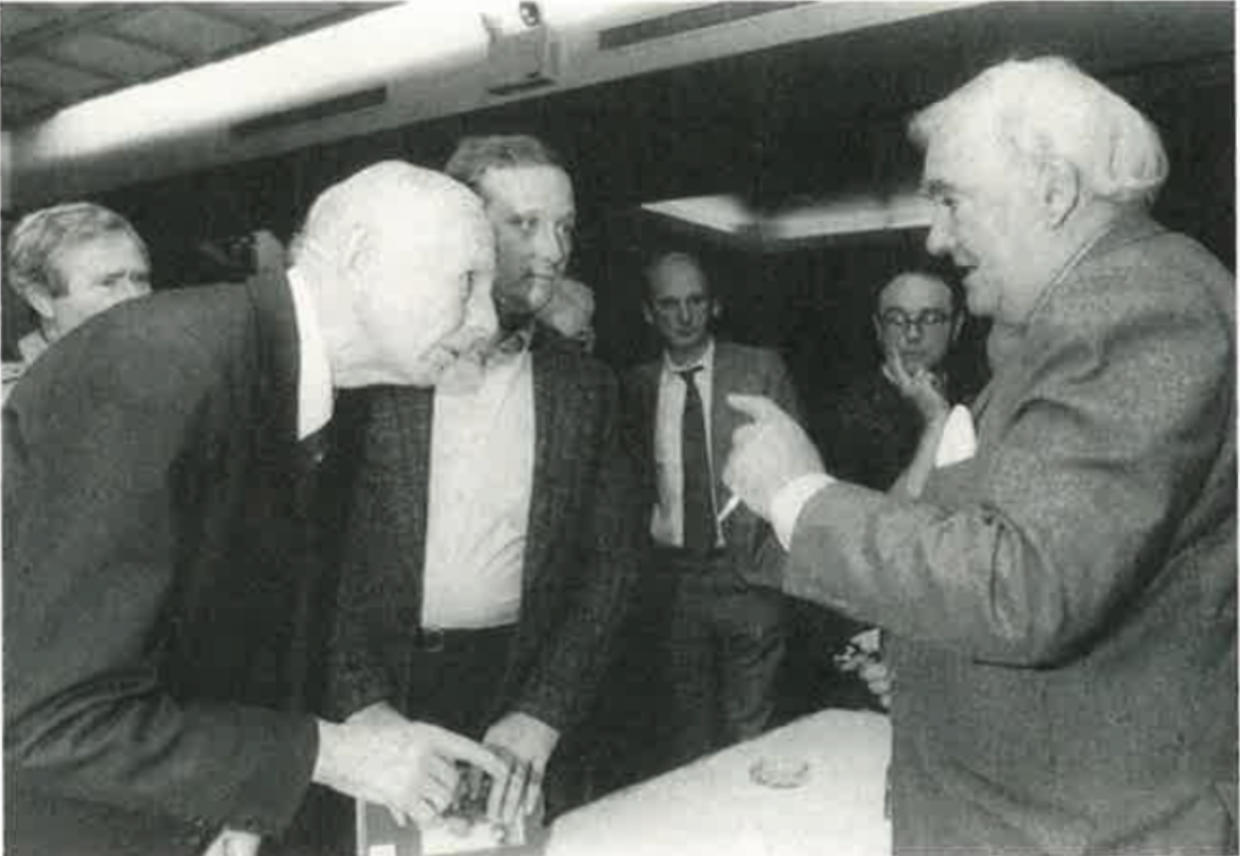
It was during the research for a short chapter on the IRA for his first book, Ireland Since the Rising that Coogan first met Sean’s family and other Northern Republicans, and found that the people he met “were surprisingly likeable for what I’d been led to believe were all thugs and murderers. And very dedicated.”
When he began his book on the IRA in 1966, he was writing about a past phenomenon in Irish history, but by the time the book appeared the North was exploding and the IRA had ceased to be “an extinct volcano.” The book, which now has four additional updates and is longer than War and Peace, appeared in June 1970, and the following month, the Falls Road curfew occurred. “The British government changed. The Labor Party went out, the Tories came in, and the traditional Tory policy of aligning themselves with the Unionist view of things asserted itself, and we had this ransacking of the Falls. That’s when you began to find people saying, ‘I’m joining the Provisionals’ — they’re not going to do that to me and get away with it — middle-aged men, with families.”
The Provisionals emerged officially from the split between the Official IRA in January of that year. “And then the following year, of course, the fat really hit the fire with the introduction of internment in August. And then January ’72, they had Bloody Sunday. That was also the year of the suspension of Stormont.
“The IRA started taking off and the old tradition came alive. Because young people such as Gerry Adams decided that you could never bridge the sectarian divide because the Paisley influence would have always been manipulated so that any bonds of unity would fall into the fires of the sectarianism he would stoke up. So they just went to war. That in microscopic thought is how the IRA took off.”
Coogan compares the situation to South Africa. “The Boers and the North of Ireland Protestants have a lot in common. Very courageous people, pure but limited in vision. And they also have an instinct for supremacy as part of their political culture, as opposed to their religious culture. And they just couldn’t conceive of allowing the civil rights marchers to march.
“There is a photograph in the book which I think says it all. It shows some of Paisley’s supporters, who arrived in Armagh in the early days of the civil rights marches. Paisley came first and then this cavalcade of cars pulled in — the boots of their cars were loaded with rocks, stones, and cudgels with nails driven through them. They let those marchers have it, and the cops did nothing to stop it. They actually stood and watched, and in some cases joined in. And after a bit of that, the younger people said, ‘to hell with this,’ and the IRA started taking off.”
As a journalist, Coogan covered the many tragic events that the ensuing years brought to the people of the North. “I suppose my nerve ends had been seared through the hunger strike and the dirty protest [carried out in the prisons]. I wrote about that at the time and saw the agony of the people. I’ve known so many people who got shot on both sides. And I’ve seen the havoc it’s brought on families and the terrible bitterness that it’s drummed up in the community.
“Curiously,” he says, “one of the places you’ll find the most bitter anti-Republican feeling is in Dublin, where it’s part of the establishment — what used to be called the West British element.”
This “rightist pro-British, pro-Unionist line,” he says, also permeates the television station, aided by Section 31’s operation [law banning Sinn Fein from the airwaves], “that and a breed of broadcasters grown up with it. They see nothing philosophically wrong with censorship, they don’t band together against it. And they bring people on who replicate their own views.”
Does this “colonial fringe” perhaps explain some of the Irish media’s crucifixion of President Mary Robinson for her visit to the people of West Belfast, and John Hume for talking to Gerry Adams? “That’s right. That’s going on all the time. Take the Sunday Independent, which is a kind of platform most of these people inhabit. They go on with this visceral hatred for any sort of Irish Nationalism. There was an opinion poll taken that showed that 72 percent of the public agreed with these talks and wanted peace and the fact that these two men [Hume and Adams] could do it should be encouraged. So they changed their tune a bit, but at every reverse that the IRA or the peace process seems to suffer they come out of their holes again, they’re quite obviously willing to wound any time. They’re not that important in themselves, they’re really second-rate people, third-rate in some cases.”
Asked about Articles 2 and 3 of the Irish constitution which lay claim to Northern Ireland and may be put on the “peace talks” bargaining table, Coogan says, “Frankly, I think they should never have been put in the constitution. De Valera was very pig-headed to do it. He was advised not to. And then, having done it, he neither went by fair nor foul means to get the North back. He was living in an optical illusion kind of world, trying to convince the IRA that because he had put this Republican smear on his new constitution, which of course he had to, because he had to get rid of Michael Collins’s constitution, that this in some way brought about a 32-county Irish Republic, when in fact it was recognized that the Border only extended to 26 counties. But the reality of the fact is now — to give it away — you’d have a very divisive referendum in the South, which mightn’t even carry. This would be serious. I could well envision Irish-Americans coming back to agitate and propagandize and take part — it would accelerate the drift of opinion of Irish-Americans away from Dublin. But on top of that, it would be taken as an absolute betrayal by the Nationalists of every stripe in the North of Ireland.”
It’s a bit of “a shibboleth,” Coogan says, adding, “when I hear Ian Paisley talking about Articles 2 and 3 I really feel a bit sick. Because the thing that is lost sight of in all this is the role of Unionist politicians.” Those politicians, he says, of both the Official Unionists and the Democratic Unionists, “have excited dementia and misled these people — using that kind of incitement phraseology in terms like the ‘Pan Nationalist Alliance,’ meaning Hume-Adams and the Irish government. And that kind of rhetoric has led to the deaths of the 13 Sinn Fein councilors that Hume was engaging in talks.”
Coogan makes a distinction between Protestant and Unionist culture. “Unionist culture,” he says, “depends on supremacy, and on this link with England. In one way it’s very tragic, because they know in their hearts and souls that that to which they wish to be united doesn’t want them.
“At the same time,” he continues, “they have to be made to feel that the South is welcoming towards them, that Protestant liberty is not threatened in any way. That if they wish to maintain a British link, they can have it, let us say dual citizenship or the right to vote in British elections, or whatever it is that would placate them.” But, he adds, “It would be a lunatic that would envisage Dublin ruling Belfast or trying to dragoon them in any way. Not in the near future, anyway.”
To the wild-card suggestion of a united Ireland ruled from Belfast, which might placate the Unionists, he says that apart from the fact that “you would have the Cork and Kerry men up in arms,” one of the reasons “that wouldn’t happen is that despite the fears of the Unionists, and this is one of the tragedies, the South just doesn’t go North, they have no particular interest in it.” Whereas in the North, he says, there’s a tremendous interest in Irish culture, especially the language and the music. “You get real fervor into the music, and of course, really good ballad sessions,” and “they think there’s a great, really mystical, thing about going to the Gaeltacht.” He points to the fact that the last three Gaelic football All-Irelands have gone to the North to Donegal, Derry and Down.
On the saying that “it’s closer from the Bronx to Belfast than it is from Bublin to Belfast, in terms of Nationalist thinking,” he “absolutely” agrees. “Irish-American thinking is concerned with that radical strain of nationalism, which is conscious of being Irish, and a bit disturbed about what they can do about the conflicting signals coming from Dublin.”
Turning to the role that Irish Americans can play now, Coogan feels that two issues stand out. “There should be a visa given to Gerry Adams,” and “Get a peace envoy to Northern Ireland.”
On the visa issue, he says that “the British government are exerting a very unfair influence on the State Department.” And as an example of how their influence is exerted, Coogan points to the Jimmy Smith extradition case now going on in California. “The judge wanted the British government to give her the files on the Stalker affair [on the shoot-to-kill policy carried out by the security forces]. Sir Patrick Mayhew, on behalf of the British government, said that this was too sensitive to be supplied. You wouldn’t know what hands it could fall into.” But on the other hand, he says, “when they want to keep a man out of America they write to the president and they supply very sensitive information to him and say that Adams is a terrorist. They adopt a two-faced attitude.”
As to why they are working so hard to keep Adams out of the country, Coogan feels that it’s for the same reasons that he is kept off the Irish and English airwaves. “They’re afraid of him because he’d be a very personable and persuasive advocate of his cause.”
On the envoy question he feels it’s that same fear. “It would immediately be front page news, so obviously they have something to hide and it’s wrong.” Jimmy Carter has been suggested as a possible envoy, and had expressed his interest, and Coogan feels that given his track record in the Middle East and in Afghanistan that “If they were serious about a settlement, they should let him in.”
Illumination, he reasons “is the first stage of the solution to the problems,” and a Carter visit to Ireland would help that. Carter would, he says, “bring it home to people that this is a serious international issue. He would be a facilitator and a mediator and he’d prioritize the issue.”
On why Clinton backed off on his campaign promises regarding both the envoy and Adams’ visa, Coogan says that people don’t understand just how powerful the British influence is in this country.
“The State Department, though they deny it vigorously, are very influenced–it is a fact, a reality — that British and American interests are identical, and look to me to be identical for the next 50, 60 years, in the Middle East, in banking, in insurance — there are all these ties. And there’s no doubt that they downed that envoy project every chance they got. And our half-hearted, faltering approach in the face of that isn’t good enough. You really want a more full-blooded, full-frontal approach. Particularly now, when there’s a real prospect of peace.”
One of the saddest points that hits home upon reading The IRA: A History, which really is a history of Ireland that starts with the plantation of Ulster in 1609, is the missed opportunities for peace that have presented themselves over the years and have always been blown away by Unionist agitation and the fact that the British conservative government uses the Unionist vote — “playing the Orange card” — to hold on to a majority in Parliament. Despite this, Coogan feels that John Major is serious about a solution and not, as some cynics would say, trying to stave off a bombing campaign in London, particularly during the Christmas shopping season.
The bombing campaign, particularly the Bishopsgate bombing,” he sees as all the more reason why Britain would decide to withdraw. “The Paddies can slaughter each other in Ireland, but cutting across the Irish sea — bombs in England — brings it nearer.”
With regard to the Bishopsgate bombing, he says, “I know of my own knowledge that the insurers told the British government that if they didn’t pick up the tabs, that they’d honor their bills — it was in the small print, no doubt — but they’d see to it that the premiums that they’d have to charge the following year would drive these people out anyway. And the second thing was that official representations were made on behalf of Frankfurt and Tokyo to the British government as part of this move to a European Monetary Union, there’s a new European bank being set up. And that’s gone to Frankfurt. It’s not going to the City of London. They know that the IRA are the main force which brought this about.”
Why would Britain want to stay in Ireland given that it costs them $3.2 billion a year? Because “It’s the last vestige of the empire,” and, he adds, “there is the rarely discussed question of Scots Nationalism. That flares up and goes down. But there’s no doubt that Scotland would take the Irish example and go through the gap. And here you come to the issue of oil. The North Sea oil would go with them. That’s what you’re up against.”
What about the IRA? Does he think that they’re growing weary of the struggle? “Older people are tired all right, but Tiochfaidh ar la [IRA slogan meaning Our day will come]. The reason the war goes on is the voice from the prisons. They’re not going to give up. They trust Adams. They trust that he won’t sell them out and what they fought for. I mean, even though they’ve inflicted terribly, they’ve endured terrible things too. The Catholics have suffered terribly in Northern Ireland. The younger people are not tired, they’re very willing to go on. I have spoken to British military officers recently, and their opinion, never mind the IRA’s opinion, is that the IRA can’t be defeated militarily.
“They’ve built up this lethal machine, it’s the most powerful guerilla force, certainly, in the Western world. It’s been built up at terrible cost to themselves and to other people. And they’re not going to give up now when they see the horizon light, nor are they going to be put off by threats of Catholic assassinations and reprisals. They’re actually at the sharp end of this famous Protestant backlash. They’re a lot nearer to it than anybody else. And they do appalling things. That was shocking — that Shankill fish shop bombing [10 people were killed in a bungled attempt by the IRA to get the leaders of the Loyalist hit squads]. It was appalling. It was ghastly.
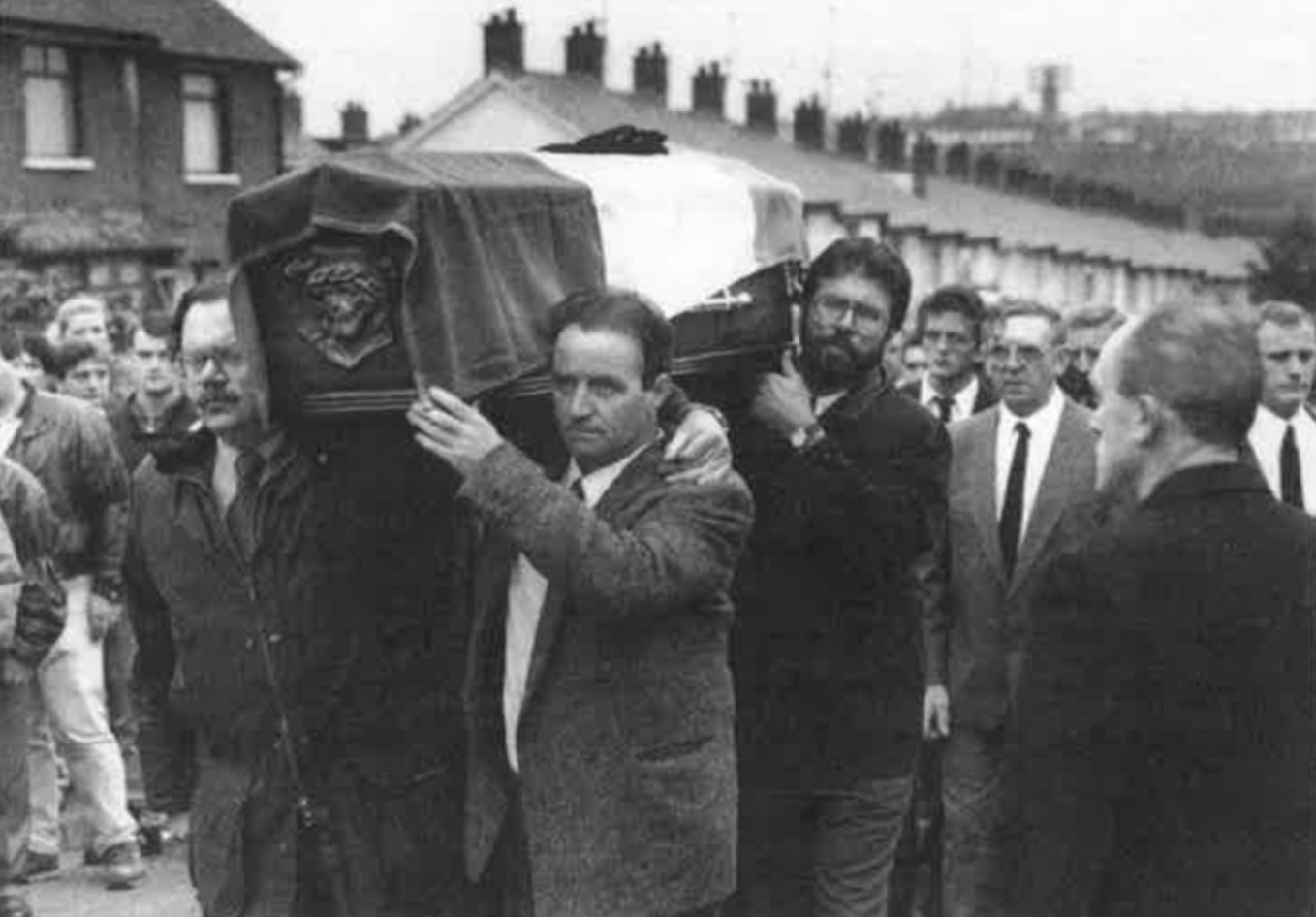
Gerry Adams came in for a lot of criticism for carrying the coffin of the young IRA man killed in the blast. Why would he do something that was so obviously a bad PR exercise in terms of world media? “After all those assassinations, the nerve ends of the Catholics in those districts are rubbed raw. And if Gerry Adams wants to lead them to a peace table, or to defeat Joe Hendron [SDLP member who won Adams’s seat], as he will do, if he lives to the next Westminster election — then it will be very difficult for the British to serve exclusion orders on him if he wants to attend Westminster — he knows he’s got to show he’s on the side of his people. It was something he had to do. He condemned it [the bombing]. Gerry Adams, when he carried that cross — he wasn’t carrying the coffin, he was [figuratively] carrying the crucifix. And it was very interesting that it was on the Monday after the explosion that the British chose to announce that they were giving the Select Committee to the Unionists as part of the deal [Major cut a deal with the Unionists in return for their votes when he needed a majority vote on the Maastricht Treaty, though he denied it at the time] for their support in the tight vote. So that was a cynical manipulation too. That was a fleur de mal, if you like, laid on the freshly dug graves of Belfast. And as long as the Unionists can politic like that, and as long as the Tories can make use of the Orange card it will go on.
“It’s time,” Coogan says, “to reshuffle the pack.”
The IRA: A History is published by Roberts Rinehart. Tel. (303) 652-2921. $27.95. 510 pages.
Editor’s Note: This article was originally published in the January/February 1994 issue of Irish America. ♦
Leave a Reply