
• Skip to main content
  • Skip to secondary menu
  • Skip to primary sidebar
  • Skip to footer
Irish America

Irish America

Irish America

  • HOME
  • WHO WE ARE
    • ABOUT US
    • IRISH AMERICA TEAM
  • IN THIS ISSUE
  • HALL OF FAME
  • THE LISTS
    • BUSINESS 100
    • HALL OF FAME
    • HEALTH AND LIFE SCIENCES 50
    • WALL STREET 50
  • LIBRARY
  • TRAVEL
  • EVENTS

Irish Scientists Discover Genetic Basis for Memory Formation
By Patricia Harty, Editor-in-Chief
February / March 2014

January 13, 2014 by Leave a Comment

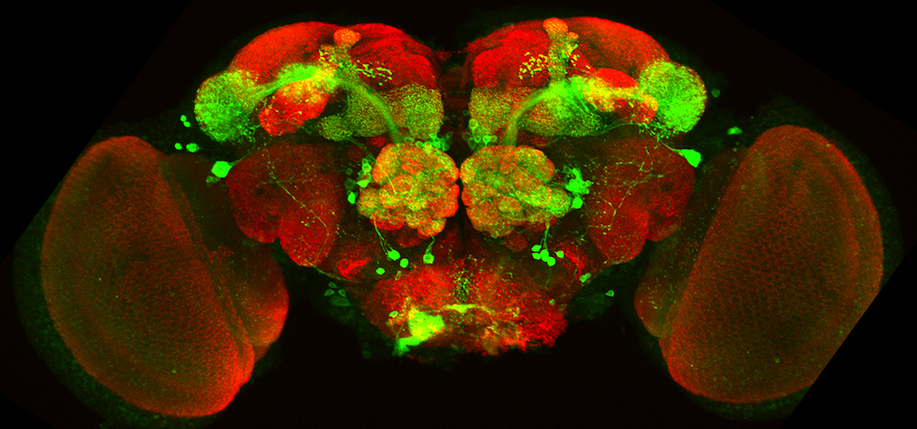
Scientists from Trinity College Dublin have shown for the first time that two genes involved in many neurological diseases act together to regulate specific aspects of protein production in nerve cells and allow the development of a simple form of memory called habituation. These findings have implications for our understanding of memory formation in general, and will also aid ongoing research in related diseases.
Habituation occurs when we are repeatedly exposed to a stimulus and our response is lessened over time as a result. Two everyday examples include our ability to stop hearing ambient noise when concentrating on a particular task, and the fact that we stop feeling the clothes we are wearing once we are dressed.
The scientists behind the discovery worked with fruit flies to explore the fundamentals of memory and learning and to investigate the molecular function of the two genes, called ‘Atx2’ and ‘FMRP’. Atx2 is associated with Motor Neurone Disease and Spinocerebellar Ataxia type 2, while FMRP is known to impact mental retardation and Autism Spectrum Disorder.
The Trinity scientists, led by Professor of Neurogenetics Mani Ramaswami,  showed that flies that normally learned to ignore a familiar, unpleasant smell, failed to do so if they had defects in either gene. They proposed two potential explanations for defective protein regulation based on their results. Mutations that cause a loss of function in both genes lead to a failure to reduce protein production when associated proteins are not required, while an increased or altered function of the genes leads to a ‘hyper-repressed’ state in which the stimulation of specific protein production is prevented when these proteins are required.
Dr. Jens Hillebrand, Research Fellow in Genetics at Trinity and co-lead author on the paper, added: “It is nice to be able to potentially explain why FMRP and Atx2 diseases in humans are symptomatically different, even though the two proteins have rather similar normal functions.”
 

Reader Interactions

Leave a Reply Cancel reply

Your email address will not be published. Required fields are marked *

Primary Sidebar

Highlights

News
Articles and stories from Irish America.....
MORE

Hibernia
News from Ireland and happenings in Irish America.....
MORE

Those We Lost
Remembering some of the great Irish Americans who have passed.....
MORE

Slainte!
Discover Irish ancestry, predilections, and recipes.....
MORE

Photo Album
Irish America readers share the stories of their ancestors....
MORE

More Articles

  • New $20 Million Transatlantic Research Collaboration to Deliver High-Value Jobs and Economic Growth ...

    New $20 Million Transatlantic Research Collaboration to Deliver High-Value Jobs and Economic Growth ...

    Taoiseach Micheál Martin TD, First Minister Michelle O’Neill, and Deputy First Minister Emma Little-...
  • Irish American Partnership Launches Digital Skills Education Program to Support the Work of U.S. Spe...

    Irish American Partnership Launches Digital Skills Education Program to Support the Work of U.S. Spe...

    The Irish American Partnership has developed and invested $100,000 in SparkStart Digital, in partner...
  • Hibernia | The Irish Father of the American Band

    Hibernia | The Irish Father of the American Band

    During 1992, the centennial of Patrick Sarsfield Gilmore's death, many cities across the United Stat...
  • Hibernia

    Hibernia

    Chicago's Irish Heritage Center As bidding around the table became tense, one Irishman whispered ...

Footer

Follow Us

  • Facebook
  • Instagram
  • LinkedIn
  • Twitter
  • YouTube

Subscribe

  • Subscribe
  • Give a Gift
  • Newsletter

Additional

  • Advertise
  • Contact
  • Terms of Use & Privacy Policy

Copyright © 2026 · IrishAmerica Child Theme on Genesis Framework · WordPress · Log in