
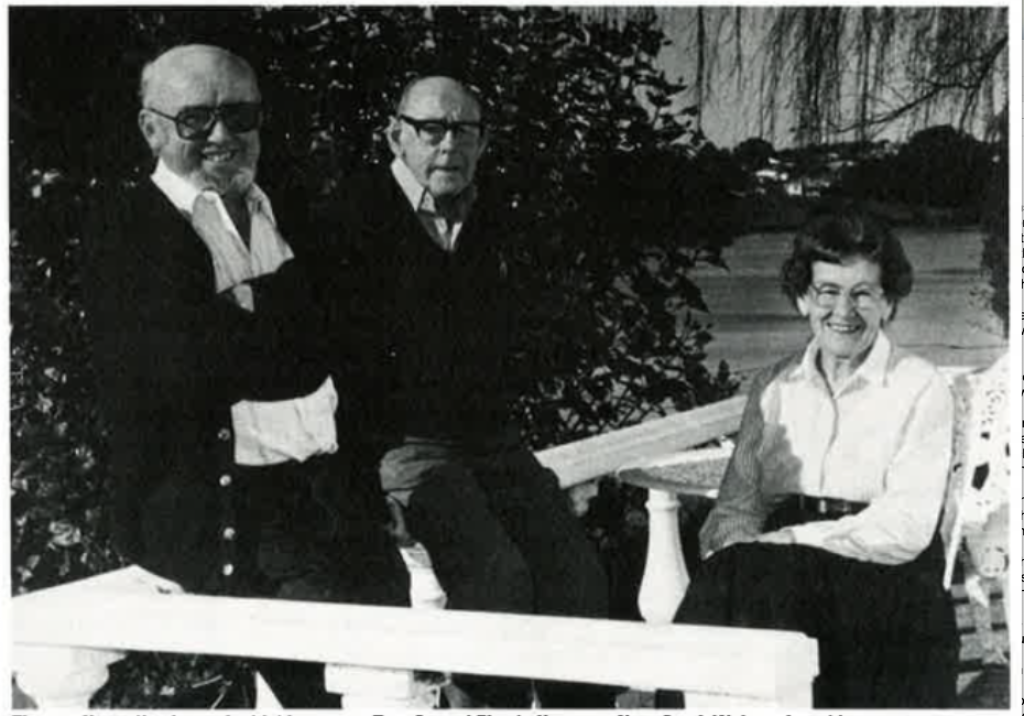
June, 1992: Patricia Harty talks to Australian writer Thomas Keneally about his book NOW AND IN TIME TO BE: Ireland and the Irish.
Thomas Keneally is a widely-recognized for a wide body of work of a historical and political nature including The Chant of Jimmy Blacksmith, which explores differences between the white and aborigine cultures. Confederates examined the consequences of the American Civil War on a group of individuals, Schindler’s List looks at the Holocaust. And in To Asmara he focuses on the conflict between the Ethiopian government and Eritrean secessionists.
At first glance his latest book Now and in Time to Be, with its stunningly beautiful photographs by Patrick Prendergast looks like another coffee table book on Ireland.
Surely a puzzling departure? However, one will not be disappointed. Keneally takes us on a deeply personal journey through the land of his ancestors, that “never but always known place,” linking the past to the present, the Australian experience to the Irish, history to the here and now, in what becomes a rich and oft-times humorous wander around Ireland. I met with Thomas Keneally in Manhattan’s Irish hotel, Fitzpatrick’s, and talk turned to among other things, the Irish in Australia and the year-old Australian Republican Movement, which Keneally launched July 7, 1991 and of which he is president.
Patricia Harty: Can we talk about the Irish in Australia?
Thomas Keneally: I believe [the Australians] are the most Irish English-speaking nation in the world. Simply in statistical terms, we’re an enormously Irish nation and not many people see it. I think that the perception of Australia is of a British colony and that is increasingly not the case.
Your Prime Minister Paul Keating caused quite a stir when he called for Australia to become a republic. Is he recognized as being Irish-Australian?
Oh, very, very much. In fact conservatives and monarchists alike write off his behavior as being “Irish.” Every time republicanism has raised itself as a reasonable proposition in Australia, it has been written off by the Anglo-Saxon establishment as being typically Irish and therefore must be suspect because “we all know what the Irish are like.”
In the ’70s whenever I made a statement about an Australian republic it was written off to Irishness. When I refused a CBE [Commander of the British Empire] in 1978 it was written off to Irishness. And so the Irish were at the base of the long tension between being a British colony and having an indigenous identity. But the very fact that they were Irish also delayed things because the Irish also wanted to join the mainstream, and in Australia if you want to be a QC [Queen’s Counsel i.e. lawyer] or serve as a judge or be an officer in the Army – you have to take an oath to the monarchy of Great Britain.
The American Irish didn’t have this problem, but for Australian Irish, part of their drive to the top included having to take oaths – with whatever mental reservations the Christian Brothers and the nuns had taught them to put into play – to a monarch whom they didn’t really ever identify with. But British settlers did look on the monarch as the core of Australian identity.
Of course, we were trumped with all the mythology and the specialized version of history that we get from Irish priests, nuns, and grandparents and so on. But by the time I was a kid we were not delayed in our entry into the mainstream of Australian life because we were being pushed from below by Czechs, Balts, Yugoslavs, Greeks, Italians. And the Anglos, both the Celts and the Anglo-Saxons decided that the Greeks and Italians and so on were people more unspeakable than we Irish were. So, the idea of republicanism has taken a long time in Australia.
The Labor party is very Irish, right?
They were involved in Labor because they were involved in the trade unions.
They’re very good at running a party machine, the Irish, and so they ran the Labor party in New South Wales and in a number of other states, and they are still enormously significant in Australian politics. [Robert] Hawke’s entire cabinet was of Irish descent; Hawke [Prime Minister previous to Keating] himself was the exception.
It would be massively true of Keating’s cabinet too, and Keating himself, of course, is a typical Irish politician.
Why do you feel it’s important that Australia becomes a republic?
Well, our Constitution is a problem in that it says whoever is sovereign of Great Britain is, by that fact, head of state in Australia. And it is not appropriate to a nation to have its head of state dictated to it by events in another country. That’s firstly. Secondly, I feel that the recognition of aboriginal sovereignty is very much tied up with the fact that all land in Australia was considered to be crown land. The crown sold land to Australians.
What about the aboriginal question?
The question of what kind of sovereignty the aboriginals have over Australia has to be addressed. The changing of the Constitution will produce a flexibility which has never existed for dealing with that question.
And with other questions, like due process and common commercial law, the constitutional impact is hard to quantify but it could be prodigious.
The other thing is that because we have to get on in Asia it is essential that we not be seen to be what, in fact, we’ve been up to now, a white supremacist nation. They look at us down there in the Southwest Pacific and look at our coins and the fact that there is a picture of the Queen in every Australian embassy and they think, who are these people? You know we’re saying we want to be part of Asia, at least a player in Asia and the Pacific Rim, but all our symbolism is of Northern Europe.
I have no doubt that Australia will become a republic, but what’s going to happen with the North of Ireland? Will we be able to rid our coins of this Queen?
I think it will happen. I don’t know what shape Europe will take, but they cannot have any pride while they tolerate that situation in the North. Australia was like Ulster for the first 150 years of its existence. Or even longer, up to the time I was a young adult. And it was the broadening out of the country through what was in Australian terms an enormous quantity of immigration, the letting in of people to whom this question just wasn’t an issue.
Some phenomenon like that would help Ulster, but where’s it going to come from? There’s not going to be massive immigration from elsewhere. The schools are going to remain the same, despite all the good people who are interested in reconciliation, the fact that there are only 11 or 12 integrated schools in the North, that’s going to continue the two separate cosmologies, two separate maps of the world.
So you’ve got two peoples living in a very small province barely the size of a big cattle station in Australia, and you’ve got all these wonderful human resources. People from both sides have proved themselves incredible immigrants in the New World, but at home they might as well be inhabiting two different planets.
And I don’t know what’s going to happen to cause the sort of multicultural melding that occurred in Australia and America. But ultimately the British have to get out. And that line (the border) to an outsider is a ridiculous line. That border and the two mindsets are ridiculous.
But you know, I was raised in one of those mindsets. I had a grandfather from North Cork who wouldn’t sell a Sydney Morning Herald to an Orangeman. This is 13,000 miles from the center of the tribe.
The Orangeman wrote and complained to the Herald, who threatened to take away my grandfather’s license; but they couldn’t do it because his was the only store on the east side of the Macleay River in New South Wales.
One day a woman came in and said, “Look at poor Mr. Piggot walking across the bridge in the heat to go to town to get his Herald.” And my grandfather said, “I hope the bastard dies.” So I was raised in one of those mindsets.
It’s a kind of amusing story but it’s a scary story too.
And I don’t know what’s going to happen with Ulster. I don’t know how much pressure Europe is going to put on Ulster or on the Brits and on the Irish.
Are there clear distinctions in Australia in terms of education? Do Catholics go to the Christian Brothers schools, etc.?
Fortunately, Australia is doing its work with all of us and making us into united Australians the way people in the North have never become united Irishmen. But the school system was very heavy when I was a kid. The priest wouldn’t give you the sacraments if your kid went to a state school. You could be a bagman of the right wing of the New South Wales Labor Party and have innumerable mistresses, but as long as you sent your kids to Catholic schools, you got the sacraments.
And therefore it was genuinely a monolithic parochial school system.
That began to erode when the inevitable pluralism struck and became the dominant aspect of the society. The seminary that I went to is now empty, it’s used for conferences and so on.
Priesthood amongst men and women is still there but it’s passed on to other professions, such as social work.
Do you consider yourself a Catholic?
You know, even though I’ve been, in my day, a devout Catholic, now I see my role in Catholicism, if I have one at all, as being to honor those poor bastards like my people who had to hear Mass in roadways, with lookouts and so on, and to honor people like my wife’s great-grandfather who was transported at the age of 24.
That’s a sad story. I read it in your book “Now and in Time to Be” in which I thought you captured the wistfulness of the returnee. When did you first go to Ireland?
In 1970. I found Cork very provocative, you know, because the convicts who were sent to Australia were put on an island in the harbor prior to departure. And so Cork always interested me. My grandfather came from North Cork.
The 1798 prisoners were treated with extraordinary savagery.
After the ’98 Rebellion, a lot of men from Wexford and Wicklow were transported to Australia in a series of ships, the first of which was called Minerva. Aboard it, the rebel leaders included General Joseph Holt, who commanded the resistance in Wicklow after Vinegar Hill. He was a Protestant farmer and he joined the rebels after his house was burned down by the militia.
The British authorities in New South Wales attempted to suppress the rebels with horrendous floggings. Holt was forced to witness the thousand-lash sentence of two Minerva convicts called Fitzgerald and Galvin.
The Irish rebels never lost the Wolfe Tone dream – that Napoleon could be persuaded to send French troops to New South Wales, just as he had to Killala. In 1804, west of Sydney, they staged their own Vinegar Hill on a small antipodean hill that still bears that Wexford name.
What sadness there is in that doomed Australian echo of ’98. It produced similar results – floggings and hangings, far from the rule of law, ordered by authorities as paranoid of French intrusion as the British in Ireland had been six years earlier.
Holt himself was not involved in the second Vinegar Hill. He had been removed to the ultimate gulag. Norfolk Island, six hundred miles out in the Pacific.
Not all prisoners from Ireland were political prisoners. My wife’s great-grandmother was sentenced for theft. It was for stealing children’s clothes, which is a redeeming aspect and it was a minuscule amount of material.
What year was that?
About the late 1830s.
A lot of the theft, I think, consisted of stealing milk from a cow, for instance.
Livestock. But the Irish had the problem that they were occupied and therefore theft wasn’t theft.
They were taking what was their own.
Yes.
You mention in the book about seeing a place in Ireland and recognizing it straight away as “a never but always known place.”
The love of place, and — that business of the Irish Empire, how powerful it was in inducing in all of us a sense of that dim, misty little place up in the northwest of Europe, ten of which would fit in New South Wales. People got a very powerful sense of what it was like. So you go back and you know what’s waiting round the corner. It’s astounding.
A lot of people in the diaspora mention that. For example, every Irish Australian I’ve met who’s been to Ireland says, “I walk around the corner and I see all these Australian faces,” but they’re not Australian faces, of course.
I had a very powerful view of an alternative empire. And I don’t know how I got it now. I can’t remember being set down and told A, B, C and D about the British or about Penal days. It was like absorbing it by osmosis. It must have been just the way people talked.
The North. It’s a great problem. It’s a terrible trauma. And the fact that the trauma is not overtly recognized is an indication of the sort of stress Ireland is still under. I find it hard to believe that the nation, Irish people, don’t behave as if they’re traumatized, but, God, it’s the only country in Western Europe which, despite all the follies of 19th and 20th century history, has only a bit more than half the population that it had. You know, that didn’t happen to the Germans despite their militarism. It didn’t happen to the Brits despite all the blood they spilled on their empire. It didn’t happen to the French who were invaded in both World Wars. But it happened in Ireland. I look at the Irish now and wonder how they can be so composed.
I was having a drink the last time I was there out in Achill Island. A little kid came up and started playing around us. And his mother came over and said, “He plays up when his father’s away.” Her husband worked in construction in Germany. And came home every six months. That’s better than never coming home, I suppose, but everyone in Ireland seems to live with that reality of severed families, and families seem to mean a lot to them.
And one wonders how they can absorb such continual hemorrhaging. But if you try to commiserate with them, they’re not interested.
I’ve heard that in Australia you can still hear a lot of “Irish jokes.” The sort that portray us as the drunken, stupid Paddy.
Throughout the ’70s and “80s, the Irish joke was a common phenomenon. It was sort of a last vestige of the old supreme Britain ethos in Australia. But there were some positive ones. You know the one about the man who applies for a job on a building site and he’s asked what’s the difference between a joist and a girder. And he says, “Well, Joyce wrote Ulysses and Goethe wrote Dr. Faust.”
But, yes, there was a lot of anti-Irish behavior. When I was a kid, we were told not to put any identifying mark on our public examinations, lest they fall into the hands of some Mason or Orangeman and be failed. If we got a question on Italian unification we were never to call the Pope the Holy Father. We were not to give away any indication, you know. But if we didn’t call him the Holy Father in religious class, we got killed. We lived a servile kind of existence, which was an echo in the far Southwest Pacific/ Indian Ocean of the double existence of the Irish themselves.
What brought about the change? When did the Irish in Australia start raising their heads and identifying themselves?
I suppose you can say that in Australia we became very prominent.
Because of the other ethnic groups coming in?
Yes. And the religious orders in Australia have this ability to sniff out opportunities that may not have existed in Ulster, to inject people straight out of the working class into the professional class. They were so ambitious. It was either a bishop or a neurosurgeon. There was certain discrimination but the Brothers kept on giving you an update on what state and federal departments you could apply to with some hope of equity and where not to apply. So, to give the Brothers their due, they had this image that we could all become enormously successful and still say the Rosary. And of course, the more successful you become, the less you are likely to say the Rosary.
But they did an incredible job. And in fact, at the end of the process you were not denied scholarships because you came from a Catholic school, and you were not denied access to opportunity. That worked.
When it stops working in Australia, then we’ll be in trouble.
So the great thing that happened in Australia was that the Irish question became irrelevant. A lot of people don’t want to lose the identity that goes along with tribal religion but they’re going to have to.
You’ve got people like [Ian] Paisley speaking in 16th, 17th century theological terms.
No one else in the English world uses that terminology any more. Cromwell did, and late 17th century Protestant preachers at Trinity used such language.
I was writing Now and in Time to Be when the Boyne 300th Anniversary [The Battle of the Boyne] was on. God, there was a lot of unspeakable crowing made of that.
In comparison to what we didn’t do for the 75th anniversary of the 1916 Rising.
I can’t imagine being able to justify random bombing. However, that whole revisionist streak I don’t agree with, I mean, the famine happened.
Where does that denial factor come from?
You can’t acknowledge something as massive as the famine followed by the evictions, cheating people out of their land and so on. It’s too massive to encompass, and so I think revisionism is a response. It astounds me as an outsider to read history which seems to blame the famine on the exuberance of either the Irish or the potato.
The potato is that well known exuberant, volatile plant, and the cause of the famine. And it’s the fault of the Irish for being eight million instead of a more manageable population. It’s a little bit like blaming the Jews for the Holocaust.
Robert Kee the historian is very anxious to tell you that most of the Irish weren’t involved in 1916 and that’s true. But he’s written off all resistance as somehow fatuous and bumbling, from Wolfe Tone to Robert Emmett, as if it had no ability at all, and as if they were barking up the wrong tree.
Even though history is dominant in Ireland, and even though people think in terms of 800 years at a bite, I don’t see how giving due honor to the people of 1916 is necessarily a wrong thing. There does seem to be a tension between remembering your past and giving aid and comfort to the North. There does seem to be that fear, which Yeats expressed about in his play, Cathleen ni Houlihan: “Did my play bring men out to die?” That’s not an accurate quote, but that’s virtually what he says.
I think the Irish did themselves great credit by debating the whole celebration of 1991 in the press for about two months before it happened. I mean, you couldn’t imagine the Brits or the Americans debating on George Washington.
What was the British reaction to the idea of an Australian republic?
Their (British] withering contempt for us has become apparent in the last couple of months, particularly in the Daily Telegram, and in the tabloids.
If you do anything to upset the Brits, it is not long, it is not more than one or two sentences before they begin to mention convictism. Before they begin to use the words like “the treatise of British prisons.”
But, there is a streak in the Australians that wants to be thought well of. In the 19th century, early 20th century, there was the disdain of convictism. After the Australian Republican Movement went public, a nice couple from Western Australia who were traveling in Britain, felt it necessary to write a letter to the Times saying that not all Australians were like us, that there were many respectable Australians who cherish their origins. Their reaction was to square things with the Brits. So that’s very strongly in Australia, too, that desire to be thought of as polite and well-behaved people.
It’s sent up in a song called “Whitehall Bediddle”: “We shall all be civilized/Neat and clean, and well advised /Won’t Mother England be surprised?”
There is in the Australians a yearning to be neat, clean and well advised and to be seen as that, and not to be seen as the Treatise, either the Convict Treatise or the Immigrant Treatise.
But we are seen this way by people at the Daily Telegraph, and by the readers of tabloids, and we might as well give up trying to please. And Ireland knows about those kind of things.
What about the Fenians in Australia?
My grandfather was a Fenian and he was transported to Australia. On their way out on the ship The Huguenot they were fighting for political status. There was this struggle to be allowed to wear their own clothes — all the stuff the hunger strikers were at least nominally committed to. Then in West Australia there were civilian Fenians who were pardoned by Gladstone. The Duke of Cambridge talked Gladstone out of pardoning the military Fenians.
John Boyle O’Riley was a military Fenian who escaped on a whaler and ended up in America where he engaged John Devoy and John Breslin, a New York journalist in the purchase of a whaler — The Catalpa which made a voyage across the Atlantic and Indian Oceans and put into Bunbury, near Fremantle. On Easter Monday 1876, all of the military Fenians still serving sentences, except for one prisoner who was believed to have too close a relationship with the penal superintendent, escaped aboard the Catalpa.
I’m sure in 100 years somebody will be sitting discussing Bobby Sands and saying, you know, they fought to wear their own clothes and …
Yes, that’s right. On the other hand there’s a lot of Catholic neurosis, I fear, in the hunger strikes. Thomas Ashe [president of the Irish Republican Brotherhood, was the first of the hunger strikers in 1917] wrote a poem in prison: “Let me carry your cross for Ireland, Lord,” which I’ve actually seen on holy cards in Australia.
On the other hand, it’s an act you can’t argue with. It’s an act which has its own authority, which shouldn’t be diminished or belittled.
What was your reason for writing this book?
I welcomed the exercise of traveling round Ireland and of having to make up something a bit coherent about it. I mean, it’s not really a coherent book, all I confess to at the end of the book is a series of bemusements. But the bemusements had a wry sense of humor.
I feel that your book is a sort of tribute to your ancestors.
I’m a big ancestor worshiper. When I was researching Schindler’s List I found that there were a lot of Jews who didn’t necessarily believe in the theology of Judaism but who performed the ceremonies for the sake of those who weren’t there. And it was in that spirit that I went to Ireland. I went to Mass for my great-grandmother. She was born in County Clare. And she used to refer to the Catholic Church in New South Wales as “the catedral.” She couldn’t say her aiches, you know.
She used to call me “Jackie. All right, Jackie?”
It’s a great sadness that she’s buried so distant from everything, in West Kempsey Cemetery.
Is there another Irish book?
Well, a Christian Brother who taught me, an Australian named Jimmy McGlade, writes to me at least once a year asking whether I am ready yet to produce a great work on Meagher of the Sword.
I’d love to make a film. I’m not a producer, but I think there’s a great feature movie in Michael Collins. I’m reading Pat Coogan’s biography which confirmed what a great tragic, charismatic figure Michael Collins is. Again, he was attacked for not being revisionist enough in some ways. But one of the interesting things in Ireland, this isn’t an original idea, is the belief that people seem to have in the good violence of the post-1916 – I was very interested in Tim Pat’s book about the fact that Cathal Brugha wanted to machine gun cinema audiences.
So, you know — it’s a great human problem, the problem of when does resistance become the only morally justifiable option.
Specifically because I’ve never been in that situation, I don’t know what I’d do. I think I’d write the songs about the fellows who did it.
Where did the title of the book come from?
It comes from Yeats’ poem “Easter 1916.”
“I write it out in a verse—
MacDonagh and MacBride
And Connolly and Pearse
Now and in time to be,
Wherever green is worn,
Are changed, changed utterly:
A terrible beauty is born.”
Now and in Time to Be
In the North Coast Licensing Court held at Kempsey, New South Wales, Australia, in May 1889, Timothy Thomas Keneally who has worked well and more or less soberly for a wagon transport company since his arrival in this relatively remote coastal town three hundred miles north of Sydney, applies for the license of the Pelican Island Hotel.
Pelican Island itself is set on a beautiful flood-prone river called The Macleay. Some of the people who drink there are warders from the local Trial Bay prison. This is an experimental gaol, a model prison set on an exquisite beach on the Pacific coast, where prisoners are to be redeemed by building a breakwater. The other customers he hopes for will be dairy farmers and fishermen.
He isn’t given the license outright, he is awarded it provisionally. His affianced, the Licensing Court is told, Kate McKenna of County Clare, is on her way from Cork to Sydney aboard the ship Woodburn. When she arrives and marries Timothy, he will be declared licensee in full.
The marriage takes place at Pelican Island in August, 1889. Kate is only five feet tall, but has a reputation as a no-nonsense, fight-a-tiger-with-a-twig woman.
Some might call her a virago. She bears nine children, the youngest my father, eighty-three years old as I write. He would marry a New South Wales country girl, my mother, whose ancestors came from Donegal.
As usual for the grown children of immigrants, he knows little of Kate’s motives for traveling such a distance to marry a man she had courted in Ireland.
A village scandal, though that seems unlikely? Love? The glory of a pub license in such a far place? (They called the pub The Harp of Erin, and my father — their youngest child — would always be nicknamed Harper, according to the Australian habit of shortening everything and turning it into a nickname.)
Was she tormented by the last sight of these cliffs across the spotlit sea south of Cobh? Again, her Australian children never ask that question. They seemed to presume that the cooking of their dinner in Pelican Island and, later, in Kempsey, New South Wales, was the one possible destiny on earth open to her.
Now for the first time we encounter a phrase which will recur frequently in this book: Without being too sentimental….Sentiment is the malaise of the returning pilgrim of Irish connection.
The sensible native Irish are offended by it. Nonetheless, without being too sentimental, I have to say that the loss in some senses must have been a grievous one for her. For what does cause someone from so far away, both in terms of geography and blood descent, to come to Ireland and feel at once her sense of wistful and ecstatic recognition? Is it a matter of grandparental propaganda, murmured in the ear of childhood? Is it things forgotten but absorbed into the fibre?
We people of the diaspora, whether from Australia or Michigan or the plains of Canada, get back here, returning ghosts, utterly confused and in need of guidance; and we see a place like Ballycotton, and recognize it straight away as a never but always known place.
The above excerpt is from Now and in Time to Be by Thomas Keneally. Published by W.W. Norton, New York.
Leave a Reply