
The 20th anniversary of the civil rights protests in Northern Ireland is concluded, leaving the memory of hopeful time followed by a legacy of violent strife. Joseph Patrick Doherty offers a uniquely personal perspective on the dreams and hopes that were.
1968 was a memorable year.
The riots in Paris, the Tet offensive in Vietnam, Soviet armies advancing on a Prague Spring and the deaths of Dr. King and Robert Kennedy from assassins’ bullets evoke stunning memories. 1968 was a year of jubilation; it was also a time of defeat and disillusionment. For many, it was a turning point — a year of decision-making and the beginning of awareness of a vast, changing world. Two decades later, we return again and again with a searching eye and probing mind to that yesteryear.
In Ireland, and particularly in our “troubled” northeast, protest and social transformation and signs of peace were much in evidence.
Distrust, resentment, doubt and despair — and yes, dreams — affected a growing, energetic generation. Much of the significance of the social turbulence was lost on me, but I became a part of ’68 and its aftermath. My story is not unique. It is a story of the beginning of a new era in contemporary Ireland and a limited explanation of today’s tragic events.
Twenty years ago, I was a 13-year-old Belfast kid typical of ghetto youth in segregated, impoverished, nationalist Catholic Belfast. The future seemed uncertain, yet, as our lives were laid out, as unchangeable as had been the lives of our parents and their parents before them.
On January 20, 1955, with my birth cry, I had committed my first offense against the state.
You see, I was born an Irish Catholic in Protestant British-controlled northeast Ireland. Naturally, I was unaware of my political illegitimacy and disenfranchised role in this Anglo-created society.
But, being a member of the underclass, I gradually developed an awareness of deep social inequalities, of discriminatory practices, judicial imbalances and police batons.
In my seventh year, I was introduced to British racial bigotry full strength. An Irish American Catholic was killed in Dallas, Texas; it brought much sorrow to our ghetto. “Jack Kennedy was one of our own,” people said.
Kennedy’s victory as the first Catholic president had been a joyous occasion, as were the successive victories of Dr. Martin Luther King, Jr. against racial discrimination. But I was bewildered as unionists — those who embraced British rule in the North — jeered at our prayers for Kennedy; I was heartsick at their blind and unwarranted hate.
As I grew up, the reality of Unionist-British rule began to take shape in my young mind. I cautiously took notice of the abnormalities of everyday life around me. “A Protestant government for a Protestant people” was the Unionist cry. Not empty rhetoric either. Too young to appreciate the intricate complexities of Unionist quasi-apartheid rule, I could not help but observe our differing environments. They, the Unionists, controlled permanently all aspects of government and, in turn, all other facets of society. Partition of the country and gerrymandering insured the Unionists a permanent majority, and they managed and manipulated the commerce, the media, the law, the courts and all security forces. In other words, it was their government, their factories, their law and forces of law. We Nationalist Catholics lived in a separate, outcast world. Our ghetto existence guaranteed poor housing, high unemployment, and inadequate socio-educational facilities.
Even before the present war, the police, heavily armed, would patrol our neighborhoods and seemed alien to our surroundings. We did not have police stations or precincts. Instead, sandbagged barracks sprawled across the cities and countryside. No police authority in Europe had such weaponry or extra-judicial power at its disposal as had the British occupying forces.
Beneath the alienation and physical violence of our subjugation were the psychological despair and indignity of second-class citizenship.
Being despised, spat upon and taunted because of my nationality and religion nurtured my will at a young age to resist systems of injustice. My concern and compassion for South African blacks, West Bank Palestinians, and Soviet Jews came from a personal abhorrence of racist violence and discrimination.
Even within the family, Unionist repression had its effects. My father and mother urged me to leave Belfast; they did not want me to repeat their failure to provide a secure future for their children. My father insisted that I concentrate on trade classes in school to prepare myself for emigration to a foreign shore. “No work here for Nationalist Catholics,” he’d say despairingly.
“No chance in life with this government. Look at your cousins. Even an education is useless,” were my father’s words of regretful advice. “Go to America, Canada, to your Aunt Ann in Sidney. Work hard. Bring a family up decent with dignity,” he’d preach. Most Nationalist youth were pained by these sermons.
But in 1968, my last year of school, hope replaced despair, as our parents began to think that perhaps emigration was not the only answer, perhaps real political change at home was possible. I began to take notice of the growing movement for political change, but I was confused about these matters called “civil rights” and “civil disobedience.” The grown-ups, however, seemed caught up in the whole movement. One could not help but feel the deep emotion, the cautious hope, and the anxieties during those months.
We were gaining political ground with newly founded organizations such as the People’s Democracy and the Northern Ireland Civil Rights Association. Formidable leadership took the headlines: Bernadette Devlin, Michael Farrell, John Hume. Their youthful, positive, non-violent energy gave us the inspiration we needed to move forward. The days of the old Irish rebel were closing as an enlightened reformation of the state was dawning.
But as the world watched, basic demands for civil and political reforms were met with the full violence of the state police. The use of banning orders as well as the arrest and beating of peaceful marchers showed the reactionary and predictable response of a regime that was undemocratic and politically bankrupt. The violent reaction of the Unionist government only reinforced our surge forward. The people were now on the move.
Why such a lack of responsibility or accountability by the government on such basic and reasonable demands for reform? These demands were not revolutionary or impractical. There were no calls for the downfall of British sovereignty or revengeful cries about 800 years of British misrule and oppression. Nationalist Catholics submissively stated their acceptance of British rule. All we asked was equal citizenship within the system. What we received was violence and intransigence in meeting with our demands for reforms.
Unlike the United States, we in northeast Ireland had no Lyndon B. Johnson to send in federal troops to uphold constitutional law. We did not have a constitution or a bill of rights or a government willing to address the issues of discrimination and injustice.
“Those who make peaceful revolutions impossible,” said Jack Kennedy, “will make violent revolutions inevitable.” Patient attitudes were running out, and I became part of that upcoming impatient generation. Each peaceful march was met by more brutal state violence.
Because time was running short for gradual transitional change, the condition for later violence was being established. The reluctance of London and Dublin to take steps to alleviate the deteriorating situation paved the way for an all-out confrontation that continues to plague Ireland and Britain to this day.
Twenty years have passed. Not much to celebrate. These years have brought suffering and sadness to many. Heartache, despair, and death engulf communities on both sides of the Irish Sea. The daily demonstrations of violence highlighted on our television screens hide the true issues underlying our 800-year-old problem. The oppressive nature of the British presence is denied, covered up, and painted over for international consumption.
Britain’s unwillingness to accept its responsibility for creating partition and an undemocratic, unjust and immoral statelet in northeast Ireland points to the ultimate solution it must face. The Act of Union, 1801, the Home Rule bills of the late 1800s and early 1900s, the Act of Ireland Bill, 1921, the restoration of direct rule in 1972, and the recent Anglo-Irish Accord are all failed British initiatives, failed because they were premised on continued domination of Great Britain. Clearly, these initiatives have not worked. This failure directs us to Britain’s final and only option: a phased British withdrawal.
There are no other alternatives. We must look to the reality of that day. If not, twenty years from now, another generation will inherit the hate, the distrust, the fears. Can we afford the pain?
We look back to 1968 as the year of great hope. That generation marched and sacrificed that future generations might live in a peaceful, just and egalitarian society. We are a diverse people in the roads we take to achieve that freedom. But, ultimately, our paths will meet in a free and united Ireland.
Hopefully, in the year 2008, 20 years on, our children will benefit from all our sacrifices.
History will judge our pain and our faults.
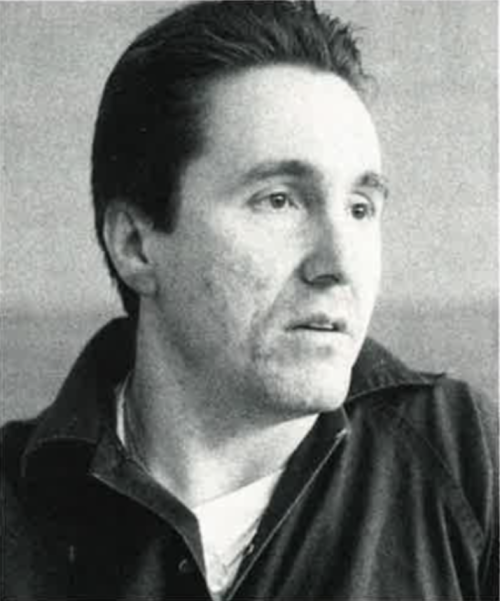
Joseph Patrick Doherty has spent the past six years imprisoned in the Manhattan Correctional Center, New York City.
Leave a Reply