
Though it is often overlooked, Louisiana played an early and important role in the story of the Irish in America. Michael P. Cahill reviews the Irish – as well as the Anglo-Irish, Scotch-Irish, Franco-Irish and Spanish-Irish – influences in the Mississippi Delta.
It is no secret that the Irish have played a major part in the history of the United States. It is, however, often overlooked that while Britain was colonizing the eastern seaboard, other European powers were establishing themselves in Florida, Louisiana and the West, and that the Irish — as in Europe, the Americas, Australia and New Zealand — also had a role to play in the history of these future territories of the United States.
The story of Louisiana, in particular, which was ruled by the French, Spanish, and Americans before achieving statehood in 1812, is well-populated with the sons and daughters of Ireland.
The first men of Irish descent to come to Louisiana to stay were probably the MaCarty brothers, who arrived in 1730. Their father was Bartholomew McCarthy, a captain in the Albemarle regiment, who left Ireland with the Wild Geese in 1691. He entered the French naval service, became a Knight of St. Louis and rose to serve as Major-General of Division in charge of the department of Rochefort. In the process, his name was deanglicized to Macarty.
Of his five children, Jean Jacques de Macarty, born in Nîmes, Languedoc, in 1698, and Barthelemy Daniel de Macarty, a younger son, both served with the French marines. When they arrived in Louisiana, Jean Jacques was a captain and Barthelemy a lieutenant. Jean Jacques was made a knight of St. Louis and Barthelemy rose to a captaincy in 1732, served with distinction in the Indian campaigns, became Aide Major of New Orleans, and later commanded the important Fort Chartres on the Mississippi River.
Both brothers married French women in Louisiana. Barthelemy had eight children. One of his four sons, Jean Baptiste de Macarty, was an early supporter of the American cause and a valued member of the Legislative Council. His four daughters all became renowned New Orleans socialites. The most famous was Marie Celeste Elenore Elizabeth de Macarty, who wed Esteban de Miro, Louisiana’s fifth Spanish governor. “She it was, more than her worthy husband, who reconciled Louisianians to the Spanish government,” wrote Creole historian Grace King. “She was young, beautiful and all Irish by her quick wit.”
Jean Jacques married a wealthy widow and had five children. His two sons each went to France to serve King Louis’s XVI in military forces and became Knights of St. Louis. The younger son, Augustin Guillaume de Macarty (1745-1793) returned to New Orleans, married and had two sons. His elder son, Augustin Francois de Macarty, born in 1774, served as Mayor of New Orleans during the early American era and his son, Barthelemy de Macarty, was appointed Secretary of State by William C.C. Claiborne, Louisiana’s first American governor.
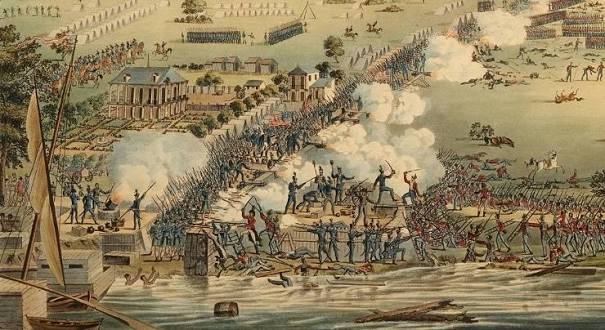
The Battle of New Orleans in 1815 was fought largely on the estate of Augustin Francois de Macarty, and his house served as Andrew Jackson’s field headquarters. Thus it was that 124 years after his great-grandfather fled Ireland to escape the English, the ancient enemy shows up virtually on Augustin Francois’ doorstep, shooting Congreve rockets through his windows. Among the curiosities of this battle were that it was fought after the peace treaty had been signed, that the British commander, Sir Edward Michael Packenham – the Duke of Wellington’s brother-in-law – and the parents of the American general, Andrew Jackson (and Jackson himself according to some theories) were born just a few miles apart in County Antrim, and that some of these same British regiments who were humiliated at New Orleans — suffering over 2,000 casualties to the Americans – defeated Napoleon at Waterloo later that year.
The Louisiana colony was a drain on the French treasury, which was further pressured by the Seven Years War. To avoid losing it to England as war booty, Louis XV secretly donated Louisiana to King Charles III of Spain in 1762. The deal was made public in 1764 and a Spanish governor with a small contingent of troops arrived to take command in 1766. Embittered by their abandonment by France, hurt by a financial crisis, and enraged by the prickly governor and his snobbish wife, the citizens expelled the Spanish governor in 1768. Though the insurrection was not without its comic aspects and was motivated by as much by economic self-interest as patriotic fervor, it was – with apologies to Messrs. Adams, Jefferson and Washington — the first American Revolution.
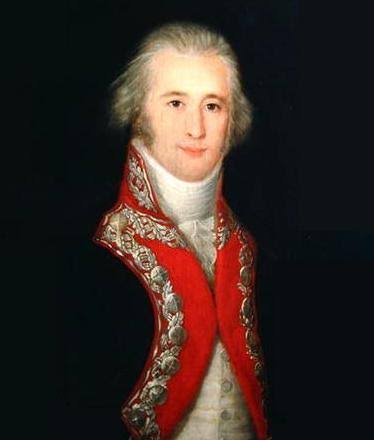
While some colonists discussed the possibility of forming a republic, Spain called for drastic action and, in 1769, a large force of troops arrived at New Orleans led by Charles III’s favorite troubleshooter, Lieutenant General Don Alessandro O’Reilly.
Alexander O’Reilly was born in Baltrasna, County Meath, the son of Thomas Reilly, a lieutenant in “Reilly’s Dragoons,” a brigade of the Spanish army. He became a Spanish infantry cadet at the age of 10 and was commissioned a lieutenant during the War of the Austrian Succession. During the Seven Years’ War, he served for two years in the Austrian army, then joined a French unit in 1759, distinguishing himself at the Battle of Minden. Returning to the Spanish army as a lieutenant colonel, he led a regiment in the capture of Chares and Pancorro in Portugal.
Promoted to brigadier general, he took part in the siege of Villareal. Promoted to major general at the end of the war, he led the Spanish forces that reoccupied the British-held Havana in 1763. Recalled to Spain in 1764, he became Inspector General of the Infantry and established a military academy at Avila, where he hoped to train officers in Prussian warfare methods. His successes, Irish birth, and foreign ideas led to great resentment among Spain’s officer corps but his place as a favorite of Charles III was cemented when he rescued the king from a rioting mob in 1765. He was promoted to lieutenant general in 1767, and King Charles decided he was the man to deal with the Louisiana problems in 1769.
Arriving with an overwhelming force of soldiers, O’Reilly gathered evidence on the events of the previous year. He soon invited the 12 leaders of the rebellion to his residence, explained that they would be charged with sedition and treason and had them arrested. They were found guilty and, at the end of the two-month trial, five of them — one was already dead — were executed by a firing squad supervised by Lieutenant Juan Kelly.
“Bloody O’Reilly” was the chief villain of Louisiana history until the arrival of General Benjamin “Spoons” Butler with the occupying Union forces in 1862. Such a judgement was hardly fair. He was a military man under order to deal with a serious matter. He saw to it that the widows of the executed men were well provided for and that the other six conspirators were out of prison within a year. All other participants in the rebellion were granted amnesty. He had the citizens take an oath of fealty to the Spanish king and changed the system of law and government but saw to it that French customs were respected and governed with general moderation. His administered ably, ordered an overdue census, and instituted a policy that granted land to any settlers, provided they could farm productively, regardless of their nationality.
O’Reilly sailed away from Louisiana in 1770. Made a count, he commanded a 1774 expedition against Algiers, which his subordinates botched.
He became commander general of the province of Andalusia and the governor of Cadiz, but fell into disfavor upon the death of Charles IIl in 1788 and retired to Catalonia. Recalled to oppose the French in 1794, he was given command of the army of the East Pyrenees, but died en route to his troops.
Alessandro O Reilly, for all his renown, stayed in Louisiana for only seven months, but another Irish Spanish soldier who arrived two decades later came to stay. Captain Antonio Patricio Walsh made the jump from the militia to the planter class and established a plantation, “Caecilia Vale,” in West Feliciana parish, above Baton Rouge. Many of the early Irish in Louisiana could be generally be classified as Wild Geese,” but the opportunities of the port of New Orleans soon began to attract others of a business background.
Though often Scotch-Irish or Anglo-Irish, they were called and considered themselves simply “Irish” and few harbored any fondness for England. By far the most prominent of these were Oliver Pollock and Daniel Clark.
Daniel Clark was born in Sligo in 1766. He later claimed descent from the old kings of Ireland and his family supposedly gave up their holdings and influence rather than their religious beliefs. He followed his uncle, Colonel Daniel Clark, to New Orleans in 1786. He worked with the Spanish government and was soon a wealthy merchant prince. In his spare time he served as American consul to Spanish New Orleans, was elected a territorial delegate to Congress, got mixed in Aaron Burr’s western schemes, courted a granddaughter of Charles Carroll of Carrollton, and fought a duel with Governor Claiborne. He is best remembered today, however, for the legal battle over his estate which followed his death in 1813. It lasted 65 years and went through 30 separate trials, and went to the Louisiana Supreme Court five times and the United States Supreme Court 17 times.
Almost without doubt, Oliver Pollock is the most unsung hero of the American Revolution.
Born in 1737 in Coleraine, County Derry, he came from a Scotch-Irish background. (The family may have been Presbyterian, but both of Oliver’s marriages were performed in Catholic churches — the second by Bishop John Carroll — and at least one of his eight children were baptized a Catholic.)
He and two brothers and a nephew went with their father, Jaret Pollock, to Philadelphia.
Another brother stayed behind in Donagheady. The family moved to the Scotch-Irish settlement at Carlisle, Pennsylvania, but Oliver soon returned to Philadelphia and became a trader. In Havana, he was introduced to Alessandro O’Reilly by Fr. Butler, S.J. He moved to New Orleans in 1768 and married Margaret O’Brien there.
One of the main problems O’Reilly faced in Louisiana was a food shortage exacerbated by the necessity to provide for his 2,000 troops.
Then, as things looked dark, who should sail into port but Pollock with a shipload of desperately needed flour. O ‘Reilly was so grateful to his old friend that he granted him unlimited trading rights on the Mississippi River. This virtual monopoly made Pollock perhaps the wealthiest man in North America within a decade. Along the way he was the one who developed the S sign.
Pollock’s own Irish brand of Anglophobia fit in well with that of his Spanish and French neighbors. Within weeks of the Declaration of Independence, he secured 10,000 pounds of much needed gunpowder from the Spanish to send to the Americans. First an unofficial and then an official commercial agent for the Americans and liaison with the Spanish, he sent supplies to defend Pittsburgh and Wheeling and financed George Rogers Clark’s successful sweep through Ohio, Indiana and Illinois in 1778. In 1779, Pollock became aide-de-camp to Spanish Governor Bernardo de Galvez and helped persuade his friend to commence his “Glorious March” against British West Florida.
Between August, 1779, and May, 1781, Galvez, accompanied by Pollock, led an international force made up of Spanish regulars, Islenos, French Creoles, Cajuns, Germans, free men of color, Indians, and Americans to capture the British outposts of Manchac, Baton Rouge, Natchez, Mobile, and Pensacola. Pollock’s aid to Clark and Galvez had helped drive the British from the northeast, Florida, and all along the Mississippi River. The Americans defeated the British at Yorktown, but the war may well have been won at Baton Rouge, Mobile and Pensacola.
Pollock had contributed at least $300,000 to the American cause — more than any other individual during the Revolution.
Oliver Pollock’s reward? He served a stretch in debtor’s prison. He eventually repaid his debts, built another fortune, and was remembered with gratitude by Thomas Jefferson, but he lived his final years in total obscurity. He died in Mississippi in 1823. No portrait of him exists and the exact site of his grave is not known. “I dwelt in an Obscure Corner of the Universe alone and unsupported,” he wrote. “I have labored without ceasing. I have neglected the Road to affluence, I have exhausted my all and plunged myself deeply into debt, to support the Cause of America.”
A predominantly Catholic American city with an established Irish community like New Orleans would become a magnet for Irish immigrants. The first formal St. Patrick’s Day celebration there occurred in 1809 and the long overdue Irish St. Patrick’s Church was dedicated in 1833. The deadly New Basin Canal was dug by more than 10,000 mostly Irish laborers from 1832 to 1838. The city absorbed boatload after boatload of famine refugees from 1845 to 1855 and New Orleans was 20 percent Irish by 1850. The present-day St. Patrick’s Church – built by Irish architect James Gallier — was completed in 1851. In the single month of August 1853, during a yellow fever epidemic, there were 1,100 interments in the first of three Irish St. Patrick’s cemeteries. By the Civil War there were 25,000 inhabitants in the district known as the “Irish Channel” alone.
Though it is often overlooked, Louisiana and New Orleans played an early and important role in the story of the Irish in America. And vice versa.
Editor’s Note: This article was originally published in the January 1989 issue of Irish America. ♦
Leave a Reply