A Message From An Taoiseach
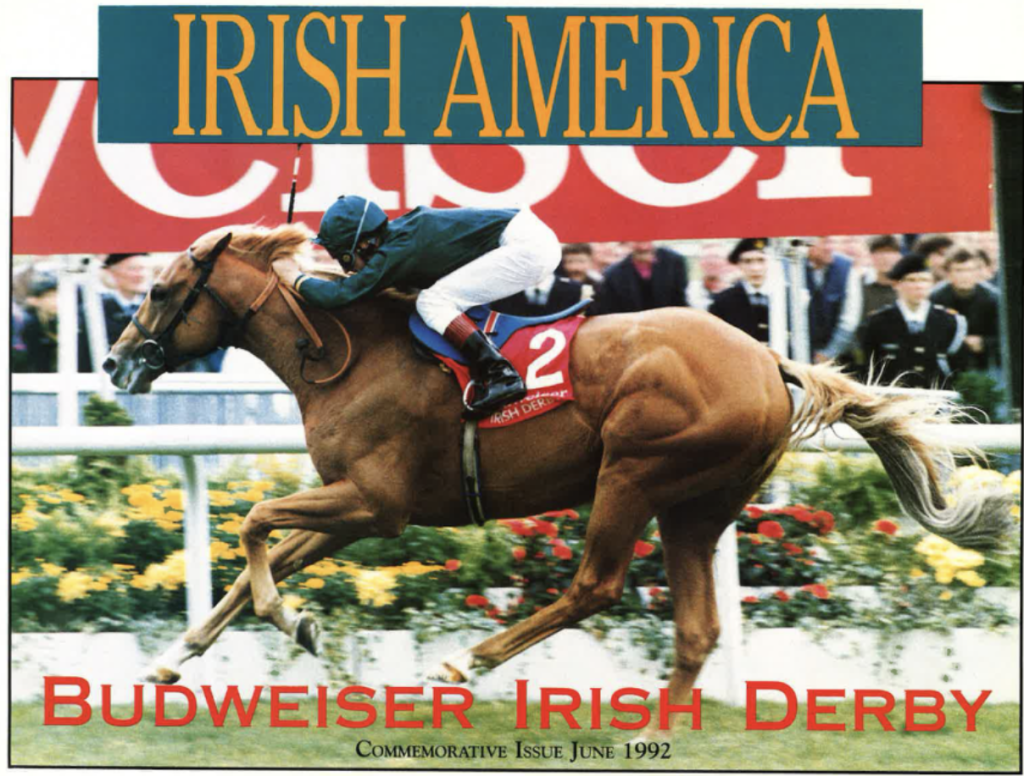
The Budweiser Irish Derby is a great sporting occasion, the centerpiece of the Irish horse-racing year and a wonderful advertisement for Irish racing and the Irish bloodstock industry.
It attracts thousands of spectators to the ancient Curragh of Kildare, a place where horses have been raced since pre-historic times; and has a television audience of millions. It is an event of the first importance in terms of the whole European racing scene and in recent years it has been won by some great horses. I have no doubt that this year’s race will be, like its predecessors, a thrilling and memorable contest.
That Irish America magazine should devote a special issue to the race is rapidly becoming a tradition in itself and is further evidence of your publication’s great and lively interest in the ties that bind our two countries together.
I am happy to take this opportunity of extending greetings and best wishes both to the magazine itself and to all its many readers.
– Albert Reynolds, An Taoiseach (Prime Minister)
And They’re Off! Budweiser Irish Derby Continues the Tradition
Sharistani. Sir Harry Lewis. Kahaysi. Old Vic. Salsabil. Generous. Their names read like a “Who’s Who” list of the famous.
And in fact, they are.
They are the finest thoroughbreds in Europe who have clinched first-place honors and the coveted Waterford trophy at the $1 million Budweiser Irish Derby. World-renowned, the Budweiser Irish Derby reflects Ireland’s love affair with horse racing.
Indeed. When the starting bell sounds at 3:30 p.m. on Sunday, June 28, the historic Curragh turf track in County Kildare will erupt in volcanic noise as the thousands of international celebrity racing fans roar their support in a synchronized cheer as their picks exit the gates.
For it is this moment that the all-star field of trainers, jockeys, and horses have trained and waited for – the sweet taste of victory at the Curragh, one of the top four derbies in the world. It is one of the richest classic races in Europe and carries a minimum purse of 600,000 Irish pounds, or about $1 million.
This year’s race, the 127th running of the Derby, will be showcased on ESPN in an hour-long, same-day special. The Derby will also be delayed-broadcast to almost 50 additional countries.
“The Budweiser Irish Derby is a signature sponsorship which brings together the rich tradition of horse racing with that of our flagship brand, Budweiser,” said Michael J. Roarty, executive vice president-corporate marketing and communications for Anheuser-Busch. “The beauty of Ireland, as well as the country’s love for racing, will be showcased before millions of viewers worldwide.”
Anheuser-Busch, sponsor of the Derby since 1986, recently announced it will extend its sponsorship of the world-class thoroughbred classic for three years, through the 1994 running of the event.
“The Budweiser Irish Derby is recognized as a major international sponsorship success story,” Roarty said.
According to Roarty, the decision to continue with the sponsorship has also been helped by the growing success of Budweiser throughout Europe and Ireland, where the brand has become firmly established after just five years.
Anheuser-Busch’s involvement with the Emerald Isle extends far beyond horse racing, into Irish cultural and special events. Most recently. the world’s largest brewer came to the rescue of Ireland’s bobsled team during the 1992 Winter Olympic games in Albertville, France, by providing the necessary funding for the team to compete.
Earlier this year, Roarty was inducted into the Irish American Hall of Fame by Irish America magazine. The Anheuser-Busch executive, who was named Irish American of the Year in 1991, was cited for his outstanding achievements and contributions to Ireland and the Irish American community.
Shaping the Winning Team
“He’s one of the good guys, the very best guys,” says Frank Cashen, President of the New York Mets, and a long time friend of Michael Roarty, the Anheuser-Busch Executive Vice President and Director of Corporate Marketing and Communications.
Cashen was echoing the universal feeling about the man who has come to represent for many the positive face of American corporate involvement with Ireland.
The proud son of Mayo and Donegal parents, Mike Roarty’s involvement is also deeply personal, a commitment to doing good while spreading the corporate message. A few short years ago, Budweiser was almost unknown in Ireland; now it is one of the best known brand names in the country. With the Budweiser Irish Derby now seen by television viewers in 55 countries the name recognition has spread worldwide.
On a personal level, Mike Roarty, one of the most powerful executives in America, is deeply in love with Ireland, with the soft laughter, the music, the easeful life style. He has also introduced a range of individuals, including corporate chieftains, Hollywood stars and top entertainers to the delights of the Emerald Isle. His legacy in Ireland is the Budweiser Irish Derby and there are few who can claim such a real achievement.
The following is an excerpt of a recent interview with Michael Roarty by Niall O’Dowd.
Anheuser-Busch have made a concerted effort to implement an Irish American marketing strategy. What was the thinking behind that?
Part of our job is to examine the demographics of our consumers, the female, Black, Hispanic components and so on. Of course with over 40 million Irish Americans we recognized the importance of that collective group. The huge range of activities among Irish groups across the country gave us a forum to reach out to Irish Americans. It also helps that Budweiser is available in Ireland.
This will be the seventh year of the Budweiser commitment to the Derby. What was the basis for the original decision?
We actually made that decision in 1985 when the sweepstakes sponsorship had just run out, and the organizers were seeking a corporate sponsor for the first time. That was about the time Guinness our good partner in Ireland were discussing combined marketing opportunities with us. So it was a wonderful coincidence, and the timing could not have been better.
Anheuser-Busch recently announced a three-year extension of the Budweiser Derby. What was the reasoning behind the decision?
The Budweiser Irish Derby has been incredibly successful and is recognized as a major international sponsorship success. It is what they call a signature sponsorship as it is called the Budweiser Irish Derby and thanks to television it has given world recognition to our flagship brand as well as a powerful boost to Budweiser in Ireland. We are very happy to continue our sponsorship.
How is Budweiser doing in Ireland?
Incredibly well. Our people have done a marvelous job on distribution. We are the only American beer brewed and bottled in Ireland and our market share continues to grow. There has been a great response from the Irish consumer.
What about Anheuser-Busch’s other Irish activities?
Over the years we have had the opportunity to support hundreds of Irish events, the Comhaltas series of traditional Irish concerts here in the U.S. for example. We have supported Phil Coulter, the Chieftains and we have been very involved with the American Ireland Fund, the Irish Chamber of Commerce USA and several other philanthropic groups.
What can young Irish Americans do to help preserve their culture and heritage?
As an Irish American I hope that they will always be mindful of the heritage of their ancestors, to know that we too suffered our discriminatory phase and that that knowledge will help them understand others. I would love to see them become involved in some way in Irish activities and cultural pursuits. I think it’s wonderful to see little kids become aware through Irish dancing, for instance, or for young people to know the music of Ireland. We strongly recommend to our Irish American friends that they go see the country where their ancestors came from and I believe that that helps them have an appreciation of their culture. I know many Americans who are not one hundred percent Irish who, nonetheless, take great pride in the Irish part of their heritage.
What did being named Irish American of the Year and being inducted into the Hall of Fame mean to you?
Personally, it was probably the most important thing that has happened to me, with my mother still being alive that means so much to me. I hope my children will remember to tell their grandchildren about it.
How is this year’s Derby shaping up for you?
Well, I’ve just been elected an honorary steward by the chief steward which is an honor that is very rare, so I’m very excited about that. President Mary Robinson will be gracing us again. I really believe she is a tremendous asset to Ireland. There will be lots of celebrities from both countries. I hope all my Irish American friends who travel or who watch it on ESPN really enjoy the event, it really is a very special occasion.
Shaping the Winning Team
The Irish Derby has a definable American angle almost from its origins which makes it unique among European sporting occasions. Owen McConnell reports.
There has always been a special American connection to the Irish Derby going right back to former New York Tammany Hall figure “Boss” Croker whose horse Orby became the first ever winner of the Irish and English Derbies.
When Croker brought Orby, the Epsom hero, to the Curragh that distant day in 1907, he gave a powerful boost to the fledgling classic which was naturally having a tough time competing with the far more established English races.
Croker, of course, was known for flouting convention, and when Orby stepped on the Curragh turf he was establishing a precedent. Almost a century later, the American seed that was sown on that long ago day has ripened and there is no other major sporting event in Europe that can claim such close filial relationship with Uncle Sam.
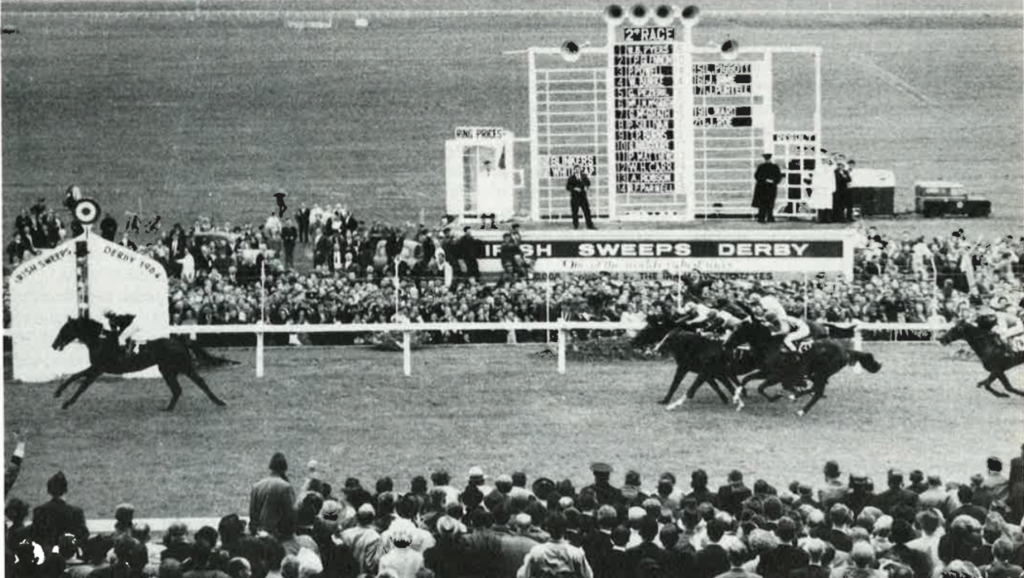
In more recent times the connection was provided through the Irish Hospital Sweepstakes, the brainchild of Joe McGrath, whose greatest contribution to Ireland was persuading the Turf Club to transform the Irish Derby into the Irish Sweeps Derby.
The Irish Sweeps Derby, was one of the great institutions, not just in Irish sport, but also in Irish and American life through the annual sweepstakes which made millionaires of a lucky few. Thus there was always an annual story in the Irish and American media about a widow or two in Michigan, or Montana, a farmer in West Cork, or a retired schoolteacher in New York who had made their fortune by picking the winning horse in the Irish Sweeps.
The race was about more than the winners though. The Irish Sweepstakes was about a network of ticket sellers here in the United States, past masters of derring-do, who sold their wares despite the fact that lotteries were then mostly illegal in the U.S.
Thus, there was always a delicious sense of the forbidden about buying a ticket for the Irish Sweeps in those days, mixed with a degree of altruism brought about by the knowledge that a certain amount of the ticket proceeds went to help Irish hospitals.
Even still at Irish America we will receive the occasional call from a worried Trish American wondering why the sweepstake seller hasn’t contacted him or her this year. It is best to let such people down gently, as the connection to Ireland the ticket represented was a heartfelt one.
Then there was the world-wide photograph of the winning drawing, dozens of Irish nurses, lined up in their starched white linen uniforms all holding aloft winning numbers. The image was an endearing and ever present one to generations of Irish Americans.
In time of course, the Irish Sweeps Derby went to the great stretch run in the sky and there was sadness tinged with nostalgia that a great Irish and American institution had passed on.
We could hardly envisage then, as the Derby tottered on the brink of becoming a second class event, hardly noticed amid the grandeur of English Derby Day at Epsom or the elegance of Prix De L’Arc Day at Longchamps that another American savior was on the way to restore the Derby.
At first glance Budweiser and the Irish Derby seemed an odd match — until one realized that Budweiser has an enormous commitment to sporting events, horse-racing included, in the U.S.
There was also the proud Irish tradition at the St. Louis brewery itself, where the maxim had long been, “The Germans brew it, the Irish sell it.” Both Dennis Long, former president and Michael J. Roarty amply illustrate the latter fact.
The first Budweiser Derby was certainly a revelation for tens of thousands of Irish racegoers used to the staid, tradition-bound nature of Irish and British racing.
Razzmatazz, marching bands, American visitors, glitz, glamour and pizzazz, all took the Curragh by storm — and racegoers loved it. The increasing attendance figures every year point clearly to the success of the customer satisfaction approach which Anheuser-Busch took.
The Irish of course, are as fascinated by celebrities as anyone else, and when John Forsythe, Jeri Hall, Gene Autry, the Aga Khan and others have graced the enclosures the locals have been agog with excitement.
With Budweiser now extending their commitment to the race the American beat will continue for this most famous of classics, and Irish racegoers can enjoy the very best of both sporting cultures as represented by Budweiser and the Irish Derby.
The Horse in Celtic Mythology
The Celts — and these included the Irish – believed in life after death.
But the Otherworld to which their dead go is not the gloomy place inhabited by the pale shades of the classical tradition. Rather it is a place where full-blooded people live in happiness. In this vision death is seen not as a termination but as a continuation of this life, if at a more exalted level. Even the principal diversion of heroic life, warfare, frequently disturbs the peace. This Otherworld is a place of plenty and the warriors fight among themselves for the prize portion at the Otherworld feast. Over this feast the God of the Otherworld presides. One such god is Manannán mac Lir, literally Manannán Son of the Sea. Man-annán’s transport by land and by sea is provided by horses. His residence in the Otherworld lies under the sea and in a twelfth-century Irish text called Acallam na Senórach or The Colloquy of the Old Men we read how his magnificent horse is used to transport one of the mythical band of warriors, the Fianna, and two other men to this place.
The three men, the story goes, are in a boat at sea when a storm arises. They fear for their lives. Suddenly they see a warrior on a dark grey horse reined with a bridle of gold moving on the waves. For the space of nine waves he was submerged but he would rise on the crest of the tenth, managing all the time to keep his body dry. He will rescue them, he promises, if they will serve him. This they gladly agree to do. So he takes them out of the currach and on to the horse and they accompany him safely to the Otherworld.
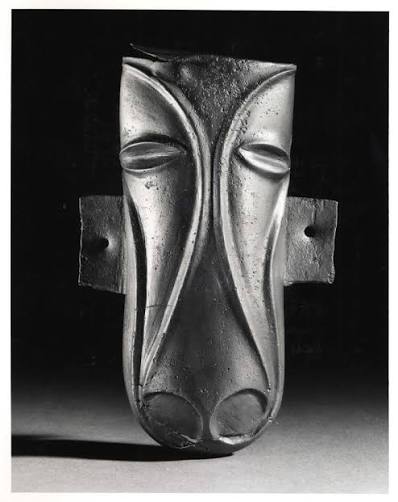
Other tales in Irish tradition similarly describe how a marvelous horse carried people by sea to the Otherworld. In the story of the Death of Fergus, Esirt takes the poet Aed to his own Otherworld country. They reach the sea and a wonderful, colored horse comes galloping over the waves and takes them on its back over the ocean to the Otherworld. As the story about Manannán mac Lir illustrates, there is sometimes an element of compulsion in the offer of transport to the Otherworld.
Elsewhere in Irish tradition we learn that anyone touching one of these magical water horses sticks to it and the animal immediately plunges into the water with the victim firmly attached. So deeply rooted in Irish tradition is the association of the horse with the sea and the Otherworld that current Irish language usage sometimes translates “waves” as Groigh mhic Lir, literally the horses of (Manannan) mac Lir. An echo of this ancient tradition is also contained in West of Ireland folklore.
A poor man’s equine stock, we Icam, is miraculously upgraded when a marvelous stallion emerges out of the sea and covers his mare. In the famous ancient Irish story about the Cattle Raid of Cooley, Táin Bó Cuailnge, the storyteller likens the hero Cú Chulainn’s horse to those Otherworldly giants, the Fomorians, who were reputed to have invaded Ireland. The Fomorians were sea-farers who in later Irish tradition came to be regarded as centaurs, that is half-horse and half-man.
Their king was Eochaid Echcend, literally Eochaid Horsehead, whose name, as we shall see later, helps to throw light on the horse’s eminent position in Ireland. Somewhat nostalgically, the storyteller in Táin Bó Cuailnge reflects that Cú’s horses were the last of the Fomorians.
The Otherworld is not exclusively located in water. It may be underground, it may be a house or palace which appears or disappears with equal suddenness, it may be a hill or it may be reached through a cave. In most cases there is a fundamental link between these versions of the Other-world and horses. In a tale about the destruction of Dá Derga’s hostel, which is in reality an Otherworldly dwelling, the hero Conaire is lured to his doom there by three men riding horses which cannot be over-taken. The three horsemen, the Tri Deirg, have red hair, red accoutrements and are mounted on red steeds — red is the color usually associated with death in the Celtic world. “We ride,” says one of the horse-men, “the steeds of Donn Detscorach, though we are alive we are dead.” In Irish mythology Donn was ruler over the dead.
In another tale we learn how an Other-world ruler, Giolla Deacair, carries off some of the Fianna to his dwelling. He releases a scraggy ugly grey horse among the horses of the Fianna and it proceeds to fight and maim them with ferocity. It requires fourteen men to mount it before it can be moved. Once mounted, these men find that they cannot dismount, and they are carried off to the Otherworld.
Two Irish legends of the twelfth century and a legend recorded in the eighteenth century make it clear that the horse in Irish tradition is not limited to providing transport to the Otherworld. The horse himself begins to embody the Otherworld. these stories the hero is warned before he returns from the Otherworld that if he dismounts from the horse he will die or suffer extreme old age.
In other words while he is mounted on the horse he enjoys an Otherworldly existence even in this life. Once dismounted, he ceases to have this privilege. In one of the stories, the hero Oisin’s girth snaps when he comes to the land of the living and he falls from the horse and immediately suffers the ravages of extreme old age. In another of the stories the warning is heeded and the hero remains on the horse’s back. Safely mounted there, he is, in essence, in the Otherworld, despite his terrestrial surroundings, and may return at will to his Otherworld dwelling, provided he does not dissociate himself from the Other-world by dismounting.
Such a key role in relation to the Other-world could only be given to the horse in Irish literature and folklore which spanned a thousand years if the horse enjoyed inordinate public esteem in real life. Because of the horse, the people believed, the impossible became possible, the chariot to which the horse was harnessed also reflects the prestige associated with the horse. In the earliest Irish tales, horses are to be ridden but are harnessed in pairs to chariots. In the popular imagination, as represented in these ancient tales, chariots drawn by horses had sacred properties. It could be argued that there was more than one reason for this. For example, chariots made use of the wheel which, since its invention in Mesopotamia some four thousand years before the Irish legends were written down, had made great advances in travel and working methods possible. The Celts as a result came to regard the wheel as sacred. The most outstanding Irish goddess, Medb, had as her messenger Mac Roth, literally Son of the Wheel. He is a supernatural figure who travels in a horse-drawn chariot made of white and lustrous gems. To those who travel in this chariot the night is as bright as day. In it, Mac Roth flies through the air and completes his journey around Ireland within a day. St. Aed mac Brice goes one better than these pagan aeronauts and flies through the air in a one-wheeled chariot. The chariot, in this way, is seen to have supernatural connotations in Irish tradition. But the main reason why the chariot acquired sacred properties in the popular imagination was not the extraordinary powers of the wheel but the association of the chariot with the horse that drew it.
The characters in the ancient Irish tales did not think in terms of mounting on the horse’s back in order to benefit from its power and prestige.
True, the horse could be used to convey them from place in a manner which was faster and much more convenient than travel on foot. But this was achieved by attaching the horse to a vehicle which would intervene between the passengers and the animal. Harnessing a horse to a chariot did not encroach on religious susceptibilities to the same extent as riding him would initially have done. The ancient Irish, figuratively, took off their shoes before daring to approach the sanctuary of the horse.
The sense of wonder produced by a vehicle which made extraordinary feats of speed possible and enabled its driver to level or override natural obstacles in his path found expression in a passage in Tain Bó Cuailnge, the flagship of early Irish prose literature. The passage deals with the use of the chariot in the highest pursuit open to a young man in a heroic age. warfare. This chariot which belongs to Cú Chulainn is not an ordinary vehicle. Its axle is made of silver.
The chariot pole, when broken, is replaced with a branch cut from a sacred tree. A Rolls-Royce among chariots, powered by horses, emerges from the description: “Every inch of the chariot bristled. Every angle and corner, front and rear, was a tearing place … [lt] bristled with points of iron and narrow blades, with hooks and hard prongs and heroic frontal spikes, with ripping instruments and tearing nails on its shafts and loops and cords … He [Cú Chulainn] had the chariot driven so heavily that its iron wheels sank into the earth. So deeply that clods and boulders were torn up, with rocks and flagstones and the gravel of the ground, in a dyke as high as the iron wheels, enough for a fortress wall!”
The tale of Táin Bó Cuaiinge is built around the common pursuit of the aristocratic ruling caste in the first few centuries of the Christian era – cattle raids. Warfare, consisting in large part of cattle raids, was the preserve of this elite, raising its participants almost to the level of gods.
Young men wishing to become warriors had, therefore, to pass stiff tests to prove their fitness for the new level of existence.
Appropriately, the horse-drawn chariot symbolizes this state and plays a part in inauguration ceremonies relating to king-ship, such ritual tests frequently took the form of mounting the chariot. Cú Chu-lainn during his initiation as a warrior in Táin Bó Cuailnge is required to do this.
But he goes further. He makes use of the vehicles supplied to him, to serve notice that he is not going to be an ordinary warrior. The way he does this is by breaking seventeen of the chariots as unworthy of a warrior of his potential. Only when he receives the most prestigious chariot, that of the king Conchobor, does he desist from his destructive orgy. Later he makes use of the chariot, again that of the king, to indicate that even his king will not constrain him. He drives out in the chariot and symbolically takes possession of the king’s domain by encircling it three times.
Entering the chariot has the same purpose for Cú Chulainn as mounting the horse had for the characters in the tales mentioned earlier. By virtue of it he can enter the Otherworld. His chariot-driver is none other than Manannán mac Lir, the God of the Otherworld who, as we have seen, provides transport with horses over the sea. When cast in the role of charioteer, Manannán is known as Laeg mac Riangabra, literally Laeg son of Sea Horse.
As well as travelling to the Otherworld in a chariot, Cú Chulainn also returns in one.
The chariot is vitally important to him. It symbolizes the fact that he has been to the Otherworld and that he is armed with its life and power. It is his most important weapon.
Towards the end of Táin Bó Cuailnge, rising from his sick bed he finds himself without any of his accustomed weapons. He raises his chariot on to his back and kills three men with it. With the chariot, the wounded warrior, despite his debility, had the Otherworld in his hands.
Editor’s Note: This article was originally published in the June 1992 issue of Irish America. ♦
Leave a Reply