
Thoreau traveled “much in Concord”-but that doesn’t suit anymore. We have the jitters. We’ve got to be where the action is. And the action runs from Las Vegas tinsel to Amsterdam’s redlight district. In between is an almost infinite variety of lures-all based on a carefully crafted image, more or less reflecting a reality.
Why do people leave home, anyway!
To escape routine, for a “break” from business, for health, to appreciate another culture-the purposes are various but the response is to a lure created by an advertising agency. Where once travel was a medical recommendation for emotional or health needs, travel in our time is amost a way of life.
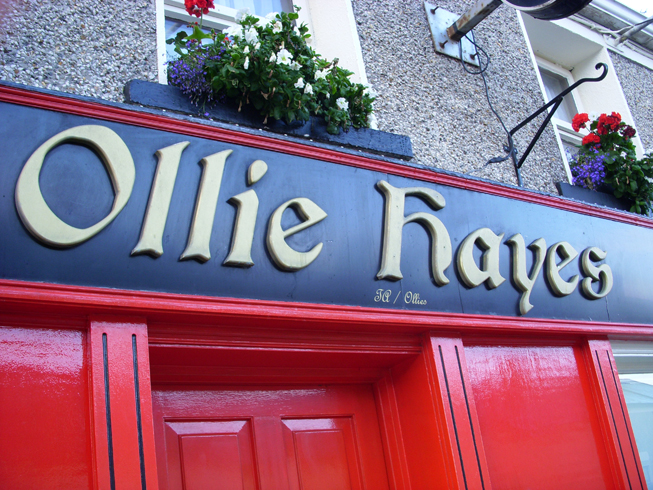
What lures travelers to Ireland? Ethnic connections, an image of Elysium, literary associations, the Irish character? My favorite airline and surely the best, or one of the two or three best in the world – has just advertised a special lure: The Pub Tour.
Put yourself, dear reader, into the mind of the advertising agency faced with the commission to produce a lure to entice people to Ireland. Opera? No, that’s Italy. Painting? No, that’s Holland, Spain or some others. Antiquity? No, that’s Rome or Greece. Lemme see.
Ireland? I’ve got it! Pubs!
Cakes and ales in their place, please.
And jollity, let there be plenty of it-especially on tours! But when one thinks of the range of appeal for touring Ireland, well, ahem, er, ah, did you say pubs?
One lure (and there are many others) with a wide appeal for all Americans would surely be the historical relations between the two countries. These have been poorly exploited.
A shocking example of this oversight occurred during the U.S. Bicentennial in the negligence of the Irish government to take advantage of the opportunity to honor the 18th-century Irish-born designer of the Great Seal of the United States or to profit from any of the many other remarkable connections between the U.S. and Ireland.
The birthplaces, habitats, and towns of the men and women who were signers of the Declaration of Independence; were founders of the publishing houses in the U.S.; were generals in the Revolutionary and Civil War; who established hospitals, schools, colleges; were statesmen or other distinguished contributors to the success of the United States – all go unnoticed.
Though, were they marked, the American tourist would depart with an enlarged respect for that little island in the western ocean, and would have good cause for a return visit to explore other riches on offer.
Travel has become a hard currency earner-the yen, mark, even the dollar. It is also a highly competitive business, not only because of the cost, but more so, because people have only so much time to spend.
Thus the “lure” is a critical factor in the traveler’s choice of destination. It must be multi-faceted in its appeal, promising “all this and heaven, too: the romance and uniqueness of another culture, its mystery, its institutions and “monuments of unageing intellect,” its people and their way of life, its art and human achievements.
In short, for ultimate satisfaction, the traveler must feel, however minimally, that he or she has extended his/her understanding of the infinity of human life. The ideal in tourism is to create a hunger that can be assuaged only by return visits.
Which is not to say that there is only one model for tours. Even the tour that is organized principally for the accommodation of lawyers, doctors, business, or other specific groups, will be the more memorable, hence the more valuable, for the inclusion of more than sensate pleasure.
In all tourist promotion the repeat sale is critical. A traveler can have a “good time”-in the beach or pub sense in any number of places. In fact, the motivation for a “good time” emphasizes novelty: hence if a repeat experience is sought it will likely be elsewhere.
Successful tourism promotes return. If time or finances frustrate return, the unsated enthusiasm of the traveler becomes the most persuasive advertisement for others.
Touring should not be a dreary experience. Travelers expect to, and should, enjoy themselves. They hope to have left their cares behind but, though relaxed, they have not abandoned their imagination. They do respond to the excitement of new insights and understandings presented, as Pope recommended, “things unknown proposed as things forgot.”
Ireland has a rich product to sell-its history and the character and achievements of its people. No other country has so great a network with so much of the world as has Ireland.
No continent is terra incognita to an Irish footstep: trader, soldier, missionary, colonial civil servant, political prisoner or bondsperson, the Irishman or Irishwoman has been there.
Because of the Irish omnipresence, Ireland has a worldwide marketing potential that has not yet been realized.
Where marketing is based on anything less than a sophisticated understanding of the product, it can stoop to gimmickry and trivialization of the product.
Tour marketing is not easy. The “lure” defines the agency preparing it, as well as the public to whom it is directed. It can even unwittingly confirm a demeaning stereotype of the country being promoted.
There is also the subtly reflexive aspect of the lure, a fact that other countries seem to respect in their advertising. That is, the lure projects inwardly as well as outwardly. It is not merely an appeal to a public. It is, in its very nature, an exemplification of the country’s own price and values.
One’s self-measure is often unquestioned by others. The implication of a reeling good time may not be the most desirable advertisement for Ireland.
Editor’s Note: This article was originally published in the January 1990 issue of Irish America. ♦
Leave a Reply