
For those who still believe that good, rich, dry wine remains the exclusive domain of the French, Italians, and Spanish, it’s about time they wake up and smell the bouquet. Today, Irish Americans are producing fine wine up and down the Napa and Sonoma valleys, and if things continue, the wine books will need to be rewritten to include a chapter on Irishmen in the vineyards.
Winemaker Mike McGrath believes it is the “Irish farmer in him” that enables him to pursue a career in winemaking. Two of his great-great-grandfathers migrated to the United States between the years 1850-1860; his mother’s family from the town of Killarney and his father’s from County Cork. After serving his winemaking apprenticeship in the vineyards of Australia, Mike McGrath became winemaker at the tiny but well respected Villa Mt. Eden Winery in the Napa Valley. Located in the town of Oakville, Villa Mt. Eden is far off the beaten path but worth the trip, as many find its cozy tasting room reminiscent of wineries that sprang up during the bohemian 1960’s.
Mike McGrath supervises the production of nearly 28,000 cases of wine per year, which includes the company’s Napa Valley Chardonnay, Carneros Chardonnay, Cabernet Sauvignon, Reserve Cabernet Sauvignon, Zinfandel, and Chenin Blanc.
Villa Mt. Eden’s 1985 Estate Bottled Cabernet Sauvignon is a distinctive red. It has rich, strong flavors, with a dry, smoky finish that lovers of better reds will appreciate. This wine is well crafted, as its blend features ten percent Merlot and ten percent Cabernet Franc grapes for balance. This extra depth mixes gracefully on the palate when served alongside red meat dishes. It retails for about $11.
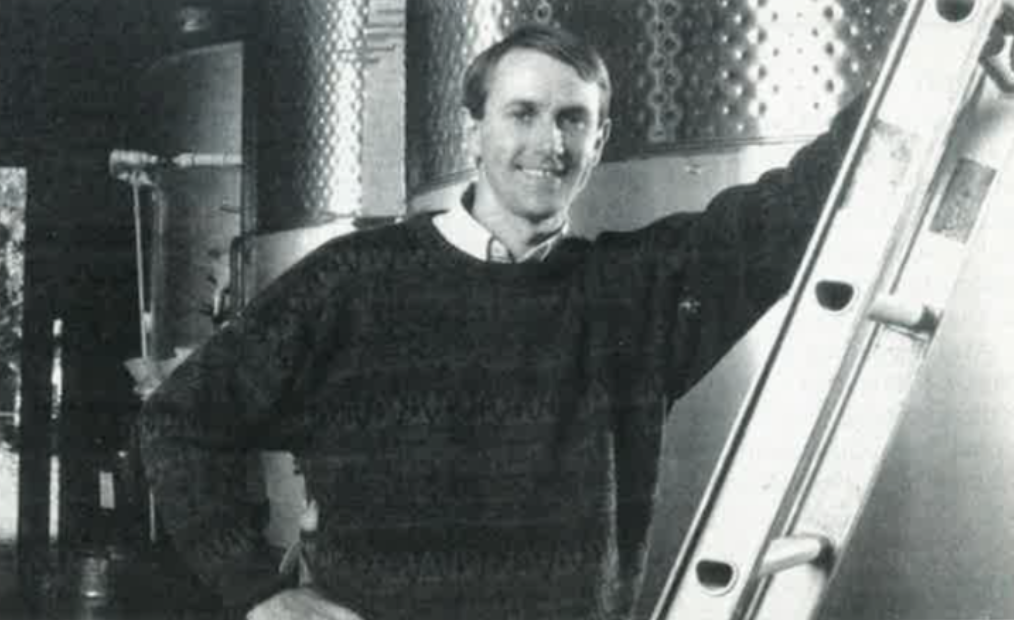
The name Robert lantosca docs not strike one as being particularly Irish, but Bob’s mother’s family came to the States at the turn of the century.
At the age of twenty-three, Bob came to California from Arizona to become a winemaker and got his experience by taking whatever job he could at various wineries and vineyards. Initially he worked at trying to solve irrigation problems and gradually moved into cellar work.
At Dry Creek Vineyard he became cellar master and was involved in literally every facet of the wine business: tasting, ageing, and lab work. It was also there that he met his wife, Julia. “We made beautiful wine together,” he recalls. In 1984 Bob’s career took a gigantic leap forward as he was hired as assistant winemaker at the Sonoma outpost of the legendary Spanish champagne house, Gloria Ferrer.
There Bob designed the tank configuration and the bottling room for the 11.5-million-dollar sparkling wine concern and contributed to the making of the 1986 Gloria Ferrer Brut. In 1987, he was named winemaker.
“Being a winemaker,” Bob states, “means being a chemist, a botanist, a farmer, a mechanic, an accountant a hundred different things!” And in Bob’s case, it also means drawing on a bit of the Irish poet within him. “When a sparkling winema
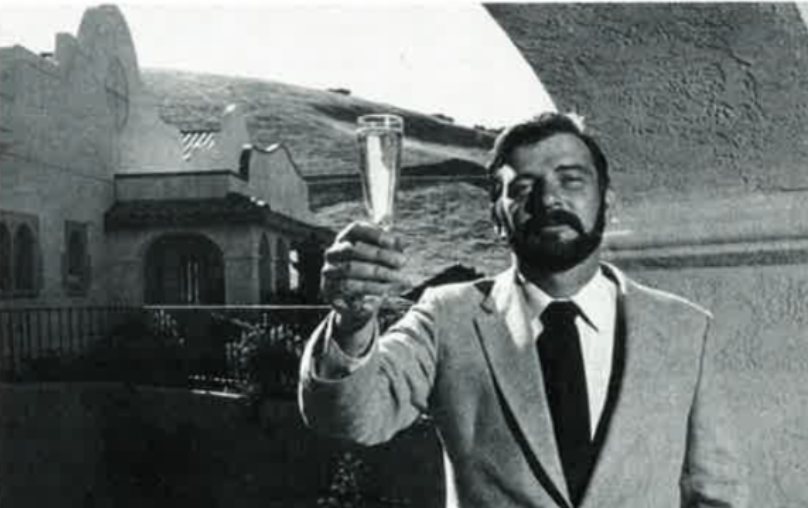
ker tastes the different wines, and guides them to maturity, finally blending them into one magic formula that will become the sparkling wine, it’s like sculpting with your palate.” And Bob has proven to be a talented sculptor, as this wine has won over twelve prestigious awards, including seven gold medals, and sells for just $13.
A man with the colorful name of Jack Cakebread, sounds as if he’d be more at home in a bakery than a vineyard, but such has been the case for this former photographer turned winemaker. Working in the agriculturally rich Rutherford Bench area of Napa Valley, Cakebread Cellars has been turning out delicious cabernet sauvignon, sauvignon blanc, chardonnay and a well-made red, Rutherford Reserve, since 1975. Cakebread’s great-grandfather came to the U.S. from County Cork during the wave of the Great Migration.
Jack, a native Californian, also served as a World War Il pilot with the Strategic Air Command in North Africa.
Jack, who spent two years planting his vineyard during evenings after work and on weekends with his wife Dolores, still oversees all aspects of the winery with his sons Bruce, a University of California, Davis ecology graduate, and Dennis, a CPA. Together they have created an operation that is a combination of high-tech sophistication and family-farm simplicity.
Their solution to a drainage problem demonstrated the family’s technical resourcefulness. The Rutherford water table is very high and to keep the level from getting too great, which would rot the vines, Jack personally designed a computer-controlled, subterranean drainage system. This system automatically begins draining the excess water once it reaches a certain level and delivers it to the vineyard reservoir, where it is stored until needed for future irrigation. The reservoir is also home to ducks, geese, frogs and bass, while on the winery grounds a small flock of sheep keeps the weed level low.
Cakebread’s 1988 sauvignon blanc is a masterful wine. Unlike many of the overly delicate sauvignon blancs on the market today, this wine has excellent structure and an intense grapey flavor. It can be enjoyed by both connoisseurs and wine novices. Serve it slightly chilled with any moderately spiced fish dish, such as seafood salad or as an aperitif.
Cakebread wines are not only widely distributed here but can also be found in Norway, Japan, Singapore, Germany, Hong Kong and Canada.
Tim Murphy of the Murphy-Goode Estate Winery has been growing grapes in the Alexander Valley since the mid-1960’s.
He now produces a variety of premium wines, concentrating on fume blanc, chardonnay, merlot and cabernet sauvignon.
His 1989 chardonnay, which is a sharply flavored, intense wine, has a distinctively lemony undertone and crisp finish. “The ’89 harvest taught us a lesson we tend to forget in Sonoma. It can rain a lot during harvest and we can still make great wines. We were extremely anxious after a weekend storm dropped six inches of rain just as our grapes were reaching peak maturity.” Fortunately, this didn’t effect the quality of the grapes or the wine.
Murphy-Goode’s chardonnay should be served slightly chilled. It will add sparkle to mildly flavored dishes, such as chicken in lemon sauce, and is also recommended for casual sipping. At about $12 per bottle, many admirers of the vintage are making additional purchases to store for future consumption.
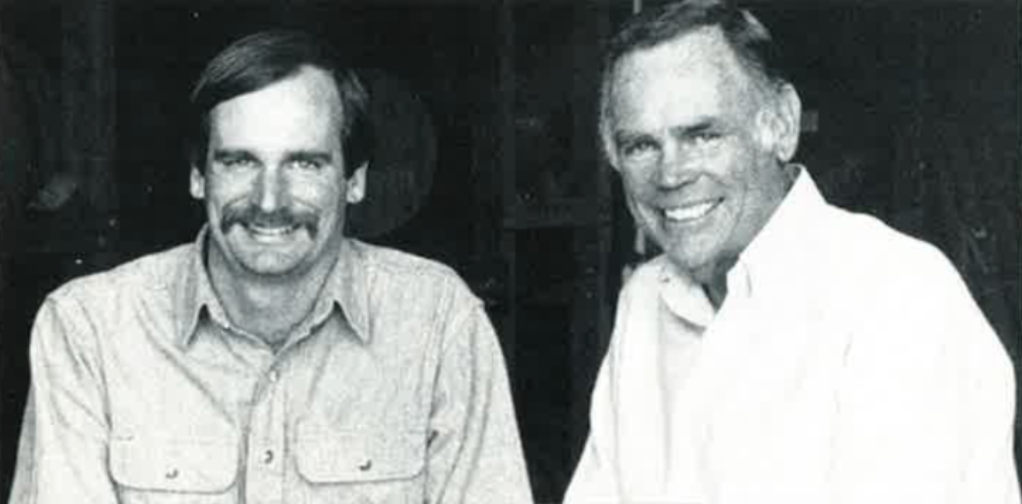
Brian Fitzpatrick of the Fitzpatrick Winery and Lodge, in Somerset, is one of today’s leading organic farmers and also considers his Irish roots to be a top priority. “One’s name needn’t be Rothschild in order to make good wine,” the burly young Irish-American states, and a look at the number of awards Fitzpatrick wines have won proves his point.
Brian’s great-grandfather, William, left Ireland during the Great Famine at the age of seventeen, settling in Patterson, New Jersey. His family still owns a home in his ancestral village of Aghaboe in County Laois. As a testament to his heritage, Brian has a flair for giving his wines romantic names. He named his sauvignon blanc, Eire Ban (ban being the Irish word for white). This is a mellow and flavorful wine, a good selection when serving any roasted fowl, as it has a pleasant degree of sweetness and is medium-bodied. It is also good to have on hand when the meal consists of a pasta and cream sauce.
For chardonnay lovers, seek out Fitzpatrick’s El Dorado. I found the 1984 vintage to be a bit heavier than most of the competition and I liked this wine’s sharp, striking taste, It stands out from the crowd of chardonnays that have recently invaded liquor store shelves and restaurant wine lists. His Sierra Dreams is another carefully blended, mellow table white that’s good when chilled and served as an aperitif wine.
In addition to running the winery and vineyard, Brian is also a very active member of the California Certified Organic Farmers Association; a group dedicated to eliminating the use of potentially harmful pesticides and herbicides in agricultural production. Fitzpatrick relies on scientific soil analysis, beneficial predators and organic sprays and composting to cultivate his vines.
Fitzpatrick Winery, however, also encompasses a whole lifestyle.
On its grounds is a bed-and-breakfast inn and widely varied activities fill the calendar. The Fitzpatrick Winery event lineup lists massage therapy workshop nights, regional cooking parties, and multiple music and art festivals, such as the great potato harvest festival. He also publishes a newsletter twice a year with his wife, Diana. It not only updates friends on doings at the winery but also covers legal and social aspects affecting the alcoholic beverage industry.
Robert Keenan is a third-generation Irish American, whose grandfather came to this country around 1865. Gradually, the family made its way to San Francisco, where Robert was born. A World War II Navy fighter pilot, who later made his fortune running his own insurance agency, Keenan was able to retire in 1981 and pursue gardening and winemaking full time.
Keenan planted his first vines on a 176-acre site that actually was home to a winery a hundred years earlier but had been totally reclaimed by Mother Nature. After removing stumps, boulders and brush from fifty acres he planted his first vines and also began building a new winery using the antique stone walls that remained from the original as a base.
Keenan’s 1986 Napa Valley Cabernet Sauvignon was the top medal winner for its category in 1989 and was also ranked as the world’s fifty-second best wine by The Wine Spectator, a trade tabloid. The 1987 Robert Keenan Napa Valley Cabernet Sauvignon is a rich, chewy red with a slight touch of tannin. It is very drinkable, displaying good fruit and balance, a natural for red meat dishes. Keenan’s 1988 Napa Valley Chardonnay is a fruity and flavorful white that’s delicious when served chilled. This white has a deceptively golden color that surprises one with a sharp bite when swallowed, separating it from the run-of-the-mill chardonnays that cram store shelves these days.
At the Thomas Fogarty Winery, Dr. Thomas Fogarty claims his grandparents were kicked out of Tipperary in 1850. This practicing cardiovascular surgeon professes that winemaking is “a little science and alotofar,” and keeps a fully equipped laboratory on his winery grounds.
Starting as a home winemaker, Dr. Fogarty now has twenty-three acres under production and plans to eventually cultivate fifty acres. He strictly monitors the quality of the grapes grown from the different areas of his property in the Santa Cruz Mountains, matching them diligently to craft the perfect blend. His Napa-Carneros Pinot Noir is the cream of his of the crop. It is a bold yet elegant wine offering strong burgundy flavor followed by a crisp dryness. I liked it alongside ribs and roast beef. Fogarty’s Santa Cruz Mountains Chardonnay is a well-balanced, slightly fruity wine with a lemony aftertaste. I particularly recommend it when serving grilled or baked chicken or veal. The adventurous Fogarty also produces a Gewurztraminer, a German variety not widely grown in California. It is a fruity semi-sweet white that works well with fish and turkey.
Vineyards may not flourish on the green hills of Ireland, but if one is seeking a wine with a bit of Irish flair, he just needs to look in California.
Editor’s Note: This article was originally published in the February 1991 issue of Irish America. ♦
Leave a Reply