
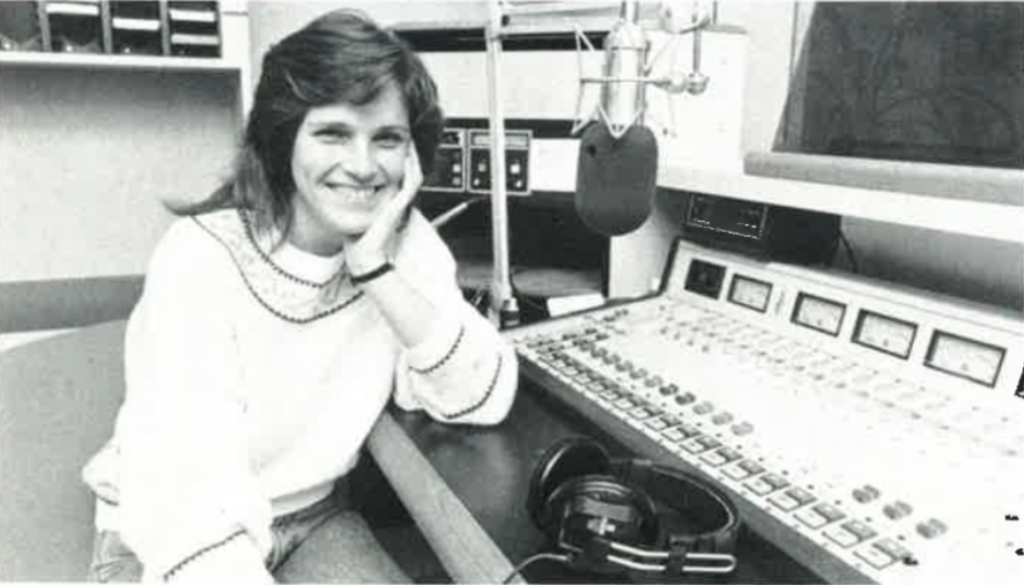
Just hours before winning a Grammy, country singer Kathy Mattea reminisced about her first meeting two years earlier with her current musical hero. “We went to the show and we were doing the whole bit about trying to get backstage. It was such a role reversal.” she said. “I felt like a groupic.” Ms. Mattea, one of the hottest names in Nashville, wasn’t trying to crash the dressing room of a country music great like George Jones or Loretta Lynn. The musician she was so eager 1o meet was an obscure Scottish folk singer named Dougle McLean.
Ms. Mattea described her backstage visit as a musical turning point. She and her husband escorted Mr. McLean around Nashville the next day and the following year paid him a return visit in the Scottish lowlands. Mr. McLean’s quietly passionate Scottish traditionalism permeates her latest album. While downing a club sandwich on the day of the Grammy awards, she pushed aside thoughts of her impending award in her enthusiasm for his music. When they parted company in Nashville, she said, “I burst into tears. There was so much more I wanted to say.” Ms. Mattea isn’t the only one in Nashville who is finding a lot to say to spiritual cousins across the water. Performers who have brought new vigor to American country music by returning to its old-time roots recognize their counterparts in the musical revival sweeping Europe’s “Celtic fringe.” From Scotland’s Outer Hebrides to the Britanny Peninsula in France, young performers are finding an international audience for an eclectic mix of very old tunes and very pop styles.
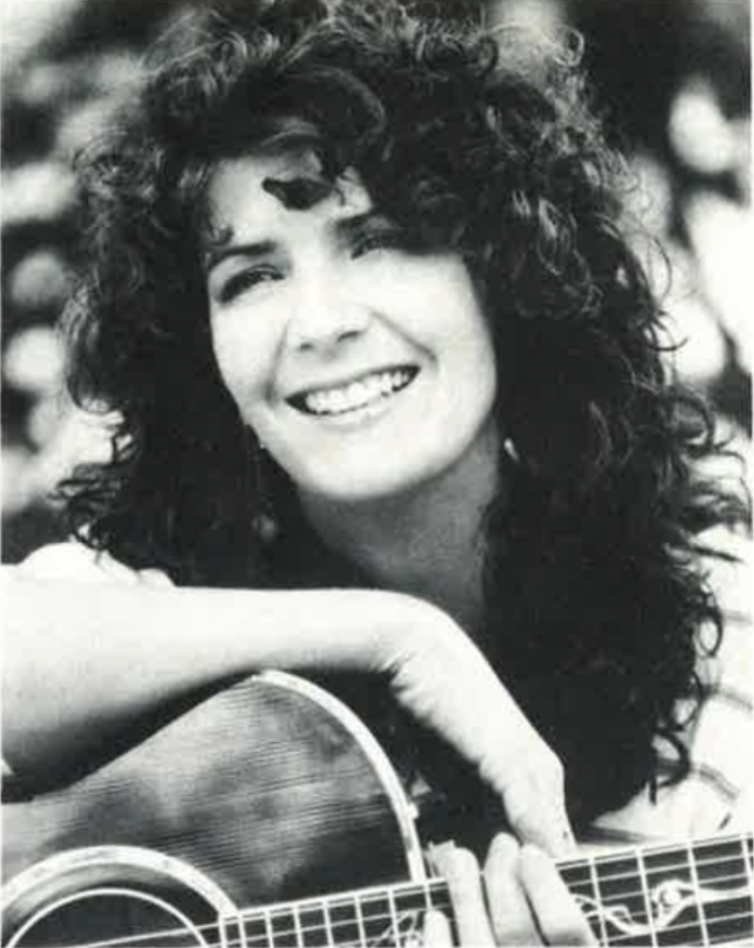
Popular groups such as DeDannan, the Tannahill Weavers and Kornog perform ancient songs in Gaelic, Erse and Breton side by side with original folk and rock-tinged compositions, and their taste in instrumentation is omnivorous. The distinctive combination of hard driving rhythm and aching melody stands a thousand miles closer to the Celtic heart than the “green trash” of the St. Patrick’s Day beer bust.
American country music itself grows out of Scots-Irish roots, so maybe it’s not surprising that the two movements would intersect. What is remarkable is the intense emotion that the contact arouses in some of Nashville’s leading performers.
Ricky Skaggs, a former Country Music Association Entertainer of the Year, has warm memories of a visit to Dublin’s Society to Preserve Irish Folk Music.
“Even the flavor of the food tasted so much like being at home in eastern Kentucky,” he says. “The music was much alike. We didn’t want to leave them.” Folk-influenced country singers such as Emmylou Harris and Nanci Griffith made the Irish pilgrimage in recent years, bringing back material for their albums. Even pop superstar Dolly Parton, a far more richly faceted talent than her marketing would indicate, startled a recent interviewer by confessing to a secret urge to spend a month in Ireland.
The traffic is two-way. On a trip to Erin, the bluegrass banjo star Bela Fleck befriended a soprano from County Clare named Maura O’Connell and helped persuade her to settle in Nashville. With a haunting bluesy voice once featured with the Irish folk-revival group DeDannan, Ms. O’Connell cut two albums with Warner Bros. This year, she received a Grammy nomination in the contemporary folk category. Other Irish singers are following.
Mary Black, another lead vocalist with DeDannan, recently signed with Curb Records. Daniel O’Donnell, who has placed seven albums at once on the U.K. top 20, is Britain and Ireland’s leading native country singer. He has begun recording in Nashville with Ms. Mattea’s producer and starts a major American tour next month.
American country music in general finds its strongest following in the U.K. in the Celtic regions.
Even before they began to migrate, the musicians were learning from each other.
Growing up in a family of Irish fishmongers, Ms. O’Connell was so inundated by traditional music that she got sick of it, and started her career singing Bonnie Raitt blues covers. She says she began to rediscover her roots when she heard Emmylou Harris, the high priestess of American traditionalism, on an Irish tour.
But fans have done even more than the musicians to bring Celtic music to America. Wendy Newton of Weston, Connecticut visited Ireland 16 years ago and was smitten by the fiddle music she heard one afternoon in a pub. Returning home, she started the independent Green Linnet label to distribute Irish records in the U.S. Her roster now includes many of the best known Celtic groups, such as Ireland’s Altan and Scotland’s Tannahill Weavers and Silly Wizard.
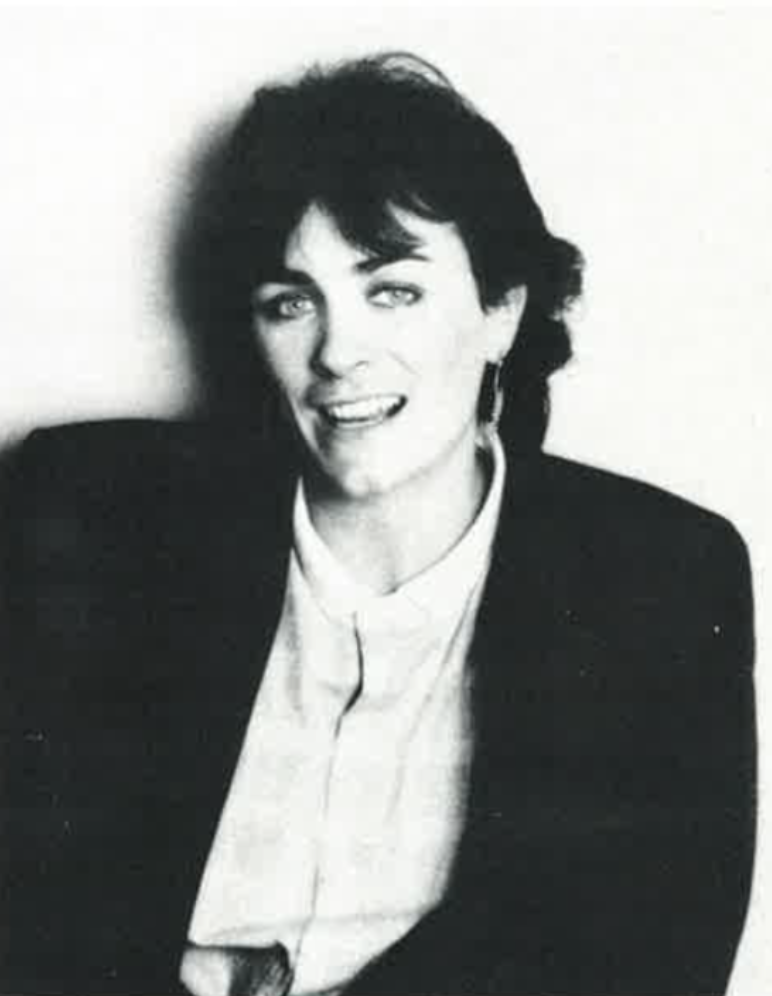
Perhaps no one has spread the Celtic revival further, however, than Fiona Ritchie, originator of the weckly National Public Radio program “Thistle & Shamrock.” Her lilting half-brogue has introduced thousands not only to the Irish and Scottish music of the title, but to the Celtic sounds of Brittany and French Canada. A former exchange student at the University of North Carolina in Charlotte, Ms. Ritchie started the program for the local public radio in 1983. It is now broadcast on 223 stations. Ms. Ritchie also brought Ms. Mattea face to face with her hero, Mr. McLean.
Ms. Mattea fell in love with the music years before when a friend lent her one of Mr. McLean’s hard-to-find tapes. Through a music journalist she met in London, she sent word that if Mr. McLean ever came to the U.S., he’d find a fan in Nashville.
Several months later, Ms. Ritchie called with news that Mr. McLean and fellow performers on his independent Dunkeld Records label were coming to town on a tour organized by “Thistle & Shamrock.” Ms. Mattea not only got to meet Mr. McLean, she and her husband,
Grammy-winning songwriter Jon Vezner, provided tour buses for the last leg of his trip.
Mr. McLean left them with an invitation to visit Scotland, and Ms. Mattea took it up at her first chance. “We had no idea if they were going to think, ‘Oh God, the crazy Americans are coming across the occan, “‘ she said. “But they were just great.” Their collaboration “just sort of happened,” she said, “because we were there.”
Ms. Mattea and her husband found themselves helping Mr. McLean prepare a local music festival called “Event in a Tent.”
“Dougie and Jon were out Iwo days before the festival happened, digging the hole for the loo with a backhoe,” Ms. Mattea recalled.
“In the rain,” added Mr. Vezner.
Ms. Mattea was thoroughly charmed by the simplicity of life in Mr. McLean’s native Perthshire, in the Scottish low-lands. “It was the way people ought to live,” she said. Like other pilgrims to the Celtic lands, she was also deeply impressed by the uncommercial approach to the music. “We’d be talking about some instrument,” she said of a recording session at Dunkeld, “and Dougie would put it in my hands and say, well, go play this. In Nashville, so many times, we would just send for the percussionist.
“It gave me a much more organic kind of involvement with the record,” she said.
“When I got back to Nashville, I found I was much less intimidated. I was able to express my own vision better.”
The influence shines through Ms. Mattea’s remarkable new album, “Time Passes By” (PolyGram). She performs with Mr. McLean on one of his own songs, inspired by his grandfather’s work as a fisherman.
They pull out all the stops on a Celtic setting of Julie Gold’s “From a Distance,” bringing in Highland pipes, bodhran and didgeridoo. (The latter, the root of an Australian gum tree hollowed out by ants, is actually an Aboriginal instrument, but in Mr. McLean’s hands, its “grumbly buzz” melds nicely with the beloved drone of the bagpipe.) Even cuts done in Nashville show the impact of the Scottish sojourn.
They startle the listener with an unadorned passion contrasting sharply with the standard Music Row product.
The album breaks the Nashville mold to the extent that Ms. Mattea at first worried about its reception. But after two weeks it’s No. 27 on Billboard’s country music chart and rising.
Apparently the Celtic fringe is a nice addition to her rhinestone suit.
Editor’s Note: This article was originally published in the June 1991 issue of Irish America. ♦
Leave a Reply