
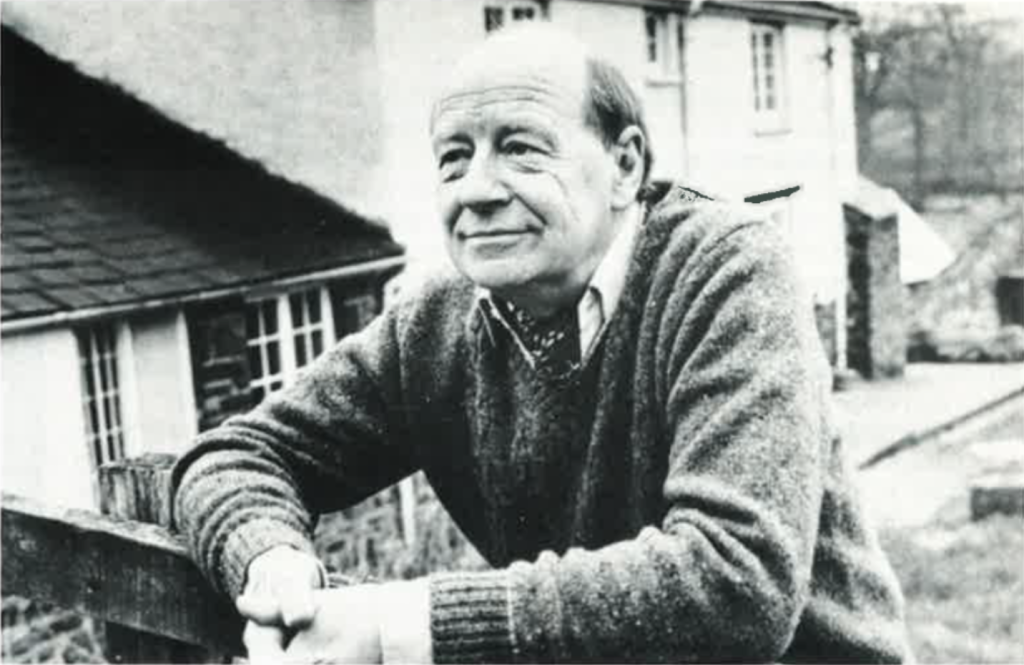
William Trevor is one of the most respected fiction writers of our time. Best known as a short-story writer, he is also the author of ten novels and numerous plays for radio, stage and television. Trevor, who began writing only in his 30’s, is now 61 years of age. He first achieved prominence with the publication of a novel, The Old Boys, in 1964.
He has long been considered a major writer in England and in his native Ireland, but he has also established a growing reputation on this side of the Atlantic, particularly among his peers.
The New York Times Book Review called him one of the “major writers of the English-speaking world,” and New York Newsday said he “possesses that rare gift: the habit of making sorrow lambent.” That gift is at the heart of Trevor’s art. More than anybody else writing today, he makes us aware of the terrible sadness that comes just with being human. He is able to isolate certain moments in his characters’ lives, as though freeze-framed in a movie, and examine them. By doing so he throws into relief the rest of the person’s life in a way that allows the reader to see it clearly.
With deceptive simplicity, Trevor evokes the past, a time of innocence before the terrible event that altered forever awareness— a child’s memory of an upturned butterbox, lost in the grass at the corner of the garden, “that particular shape narrower at the boltom.” By giving us glimpses of people’s lives he shows what might have been, it only…
A member of the small group of Protestants of post-independence, rural Ireland, William Trevor grew up in County Cork. But when he left university in the ’50s, he was forced to emigrate to England. He now has a home in Devon, but spends a good part of the year in Ireland. He and his wife, Jane, also spend much of the year traveling in Italy, and all three places are used as settings for his stories.
His seven volumes of short stories include The Day We Got Drunk on Cake (1968); The Ballroom of Romance (1972); Angel at The Ritz and Other Stories (1976); News from Ireland (1986), and his most recent collection, Family Sins and Other Stories (1990). His novels include The Children of Dynmouth (1977), winner of the Whitbread prize for fiction, Fools of Fortune (1983), and Silence in the Garden (1988).
I met him in the Grand Hotel in Fermoy, a town close to where he grew up in County Cork. A few days before he had been in Dublin for the premiere of “Foots of Fortune”, the movie of his book, but had left for Cork as quickly as he could.
A wedding party was in progress in the banquet hall nearby when he slipped unobtrusively into the lobby, a tall, slender man dressed in a light summer jacket and brown trousers.
In a little room off the lobby, with the sounds of revelry drifting around us, he spoke non-stop for over an hour. Despite his obvious dislike of talking about himself, he courteously answered all my questions, his melancholy face sometimes lighting up with a shy and impish smile.
Irish America: How important for you as a writer was it to grow up as somewhat of an outsider—a Protestant in a largely Catholic Ireland?
Trevor: Being an outsider is essential for a writer. I didn’t feel an outsider growing up. It’s only later, as a writer, I began to use the memory of the Protestant child, in this hugely Catholic community, caught between the Ascendancy class of the past and the new Catholic Ireland, which started in the 1920s. I was able to see things a little more clearly than I would have if I’d belonged to either of those worlds.
I’m a small-town Irish Protestant, and, when I was growing up, poor Protestants in Ireland were just a sliver of people – displaced persons in a way— whichis very similar to what a writer should be. Looking back on it, I can say I was an outsider from the start.
But I think a much more important truth about writers is that they remain outsiders when they become writers. I feel totally not at home in England. I’m always looking in on the English, always on the edge of English society. I would be in the same position in Ireland, and in Italy where I spend a lot of time – as it were, looking in through a window. To that extent the outsider theme is absolutely vital.
Can you see things more clearly from that perspective?
Yes. Take for instance the business of writing about Ireland. I didn’t write about Ireland until I’d left it for quite some time, because I was far too close. If I had remained in Skibbereen all my life I wouldn’t have written anything, I don’t think. You need the other end of the telescope to get it into proportion. Then all of a sudden you see Ireland because you know other countries.
Is that why you left Ireland?
I didn’t leave Ireland until I was in my early twenties, not even to visit the Isle of Man, or anything—my Cork accent was so thick that when I went to school in Dublin they couldn’t understand me-and I left, not for any artistic reasons but because I couldn’t, in the 1950s, get a job.
When I left university, my one wish was to stay in Ireland. I started by emigrating to the North of Ireland, to Armagh, as a teacher, and then I had to go to England, very much against my will. But, like all these things which you hate doing, in the end it’s been useful. I would never really have seen Ireland as clearly as I came to see it afterwards.
Do you think of yourself as being an Irish writer, even though you live in England?
I always call myself an Irish writer.
Since I am an Irishman, I feel I belong to the Irish tradition. But I don’t feel that being Irish is the important thing. What is important is to take Irish provincialism and to make it universal. That is what I do.
Take for instance a story about two girls in a small Irish village. I love being very parochial, but my aim always is to be able to take those two girls and plonk them down in a Russian town, and find they’re the same two girls.
Do you think you write all the time out of the themes of your youth?
No I don’t think so at all. There are lots of themes that I personally haven’t experienced. I believe the worst advice you can give young people is to write only about what they know, which is the great schoolteacher’s jargon. I think that’s nonsense.
You have to use what you know because you are, as a human being, the only yardstick for the pain, humor and everything else: only you can know what it feels like to have a cut in your finger. But that’s the least important part. The vital stuff is the imaginative side— to try and imagine what it’s like for the other person. For instance, the first novel I wrote, The Old Boys, was about elderly people even though I was only in my early thirties.
You write a lot about Catholics and Protestants but more in a social context than a religious one. Are you religious?
I don’t think of myself as religious. I didn’t come from what you’d call a religious background. But Ireland is a religious country, and in those days everyone went to Mass or church. It was all taken for granted. The first school I went to was a convent, and I liked the nuns very much.
I’ve had quite a lot to do with the Catholic Church, although I’ve never been seriously tempted to join it.
Do you go to church?
I only ever go to church in Ireland. I don’t like the Church of England. I always feel that Protestantism in England is very militaristic. The cathedrals are full of military honors. It’s part of an establishment with the armed forces-tombs, rolls of honor, that sort of thing. But the Church of Ireland is a withered little church and I’m more attracted by that.
Sometimes you deal with the political situation in Ireland, in stories like Beyond the Pale, and in your novel Fools of Fortune. How important is it for an Irish writer to do that?
If you are an Irishman, and have lived through this period of Irish history, it’s bound to involve you. You reflect on it a great deal. So it will creep into what you write, whether you like it or not. Sometimes it seems right to let it creep in and sometimes it doesn’t. It is only when you feel, as a writer, that it will make a good story that you use it. You might be involved as a person but that doesn’t necessarily make for good writing. The writer and the person are separate.
What function for you personally does writing perform? Why do you think you write?
I’m a storyteller. I’m nothing more than a storyteller. All I want to do is tell stories. I’d much prefer to be telling you anecdotes now, than having this interview.
People like me write because otherwise we are pretty inarticulate. If I didn’t write, I would just be a boring anecdotal performer of some sort. I love stories.
Did you grow up with them?
Not really. But I think we Irish are a nation of storytellers. If you study the way we argue, you find we sometimes do so by telling a story, we make points by telling stories. They tell far more stories in the Dail than they do in the British House of Commons. I can never explain why stories are natural in Ireland, but they are, and sometimes it’s better to leave it at that, and just say they are.
Where do you get your inspiration?
A lot of it comes from eavesdropping in public places. I do that a lot, particularly in Italy, in cafes and things.
But you’d always find me alone. I’m not at all gregarious. I love sitting in places like this, but I’d be listening.
How do you begin a story? Do you start with an idea and then in your imagination it takes off?
I usually start off with people. Increasingly I say to myself, “I want to write about that person—a particular woman, say, who lived in 1951 in a Tipperary town. So it’s a voyage of curiosity for me.
It’s an exploration of an imaginary woman, who also is a real woman, because she becomes real to me. Bits of her come out of reality and they’re all put together there’s very rarely, in any literature, an exact copy of somebody real. It’s a mosaic of a series of people.
You have an immense variety of characters. How do you manage to keep them all different?
Well they do overlap. Short-story writers in particular are very repetitive and I’m aware that I’m a repetitive writer in that sense. It’s rather like an Early Renaissance painter painting the Annunciation repeatedly, because each time he did it he wasn’t quite happy, so he did it again. I try it from a slightly different angle and get a story which is similar to another story-the setting may be different, but it’s the same obsession. It’s a curiosity about the people. I can’t help it, you know.
Can you go back over your characters and recognize them?
The time you do that is when you’re writing about them. When I’m writing a short story or novel, those people are almost the equivalent of friends. Nobody else knows about them except me: I don’t share them with anyone. The first person that gets to know them is the person who does the typing for me. She gets to know them and I lose a tiny little bit. Then once they’re published, they’re of no interest at all to me. They’re lost. They’re like children who have all been naughty and run away.
But when I’m writing them, they’re immensely real, so real that if I’m out at a party I can get confused and lose interest in the person I’m talking to, because I’m actually, rather naughtily, going on writing the story.
Do you do that all the time-write stories in your head?
It’s said by my family that I do. When my sons were young and we played tennis or something, they’d say, “Look at him; he’s not here,” and I think that is true. I continue to search for the essence of the story, and that doesn’t occur to me until I’ve written quite a lot, because I tend to write a great deal of what I call raw material.
I cut the raw material down, literally cut it, like a film is cited, and out of that comes the story. All I want to take out of it is this little thing. It’s like searching for a tiny little scrap of gold. So I’ve got a lot of stuff which is afterwards torn up and pitched away.
Most of your stories are very pessimistic. Do you think life is that sad or is it just that they’re the things that interest you to write about?
I maintain that I am an optimistic writer, but I’m a pessimistic person. In a lot of my stories people have raw deals, but they somehow manage the raw deals quite well. There is a very tiny little spark of light someplace and that is what they hold on to.
Like the acceptance of what is?
Yes. The very fact that you come to terms with it is hopeful. Like the story Kathleen’s Field. That story seems to be immensely pessimistic, because there is that poor, unfortunate girl absolutely caught, trapped. But there is some hope in the fact that she’s only going to be there for fourteen years, and she’s already said that to herself.
Once you say that to yourself— it’s like a prison sentence—it gets better.
If I went on writing, the story would go in the other direction. It comes to a point of what looks like extreme pessimism, but it would begin to open out again. It would become, I think, sentimental, but there would be considerable hope for her. Because, in truth, there is some hope.
Terrible things have happened to people in my stories, but they’ve come to terms with them, and I don’t consider that pessimistic.
Are you selling these people short, as it were, making a judgement on their lives? You seem to show a very melancholic depressing view of rural Ireland-for example, in a story like The Ballroom of Romance.
I’m not judging their lives. The Ballroom of Romance is a very sad story.
Those kinds of people are there, and that’s all there is to it. But there will be things in Bridie’s life which will not be all bleak and grim. If she marries that man she might make a good fist of it, you know.
There’s a kind of strength in her.
You see, what you have to know when you’re writing short stories is when to stop them. And if you don’t stop them and cause the reader to worry, then its no good. It’s far too glib and you’re actually saying. “This is all right.”
There’s a happy ending. She’ll marry him and have him working like a dog on that farm in no time at all.’ There’s too much of a statement from me in that. I just want to tell the story and then
I want the person who’s reading it to go on thinking about it in his or her imagination. I don’t want to draw that final line. I’m not a writer who can do that. To me the most important thing is the reader. It’s my imagination connecting with the reader’s. It doesn’t really matter what happens in the reader’s imagination, as long as something happens, as long as they start to think and argue about it.
That’s what happens in life.
Is there a “passiveness” about your characters?
I wouldn’t put it like that. Circumstances are usually the villain, I think. There are no heroes in my stories. It’s simply that an awful lot of them get caught up in ordinary everyday circumstances, not huge, big circumstances. You can call that fate if you like. Frank O’ Connor said, “Short stories are about little people,” and I agree.
I’m a realist. That happens in life, much more than some idea of great heroes. I don’t believe in heroes.
The past is very powerful in your stories. Do you think the deeds of the parents come down through the generations, as in a sense happened in Fools of Fortune?
That novel is about vengeance. It’s also about the way in which someone, like that boy, can commit an act like that. I maintain that we ought to understand acts of such violence. We ought to understand terrorism. We must say, “They are in us and we are in them.” That is what that book is saying. He was a very attractive boy, and yet he was capable of that. We’re all capable of that. Most boys pressed as he was, by his mother, might well do it.
You write novels and short stories. Is there a big difference in the writing?
I am a short-story writer who also writes novels. As opposed to the English tradition, which is more of novelists who write occasional short stories. The English attitude to literature of this kind is for the novelist to write the novel, and there may be a few little chippings left which become short stories. Short-story writing is not a tradition in England like it is in Ireland.
I’m the other way round. I write short stories, and if I’ve got any chippings left I turn them into a novel. The short story is my art. I think my novels are recognizably the novels of a short-story writer. I always maintain that if you look at them carefully, they’re just a series of short stories threaded together. Fools of Fortune is one of them. It began as a short story.
There is an existing short story, which is part of Fools of Fortune, which was published in an American magazine. It tells you about the missing bit in it; about the funeral of Josephine, and Willie coming back as an old man. That was a case of my making a mistake and not realizing that I was into a novel and not a short story. I never republished it in any collection or anything, but it has actually appeared.
But another of your stories, The Raising of Elvira Tremlett, has echoes of it also.
That’s what I mean by repetition, and I’m absolutely shameless about this. It doesn’t worry me if people find repetition.
I’m going to do exactly what I want to do.
Do you know before you start whether its going to be a short story or a novel?
Oh, I do now. There are certain themes, certain stories actually, which are too long for a short story. When you’ve been writing short stories as long as I have you know what you’re after. I’m like a miner. I’m mining away there and I know exactly what I want.
Sometimes by accident I come across a whole vein of something and it will not go into a short story and has to become a novel.
It’s very pleasant to do both. A novel is a very long labor. You’re with the same people for ages and ages. To turn round then and write short stories. which are so much more condensed, is a great relief. And the other way round also.
Short stories are very much more intense than novels, I think.
Which did you start with?
With short stories. And I wasn’t aware then of the differences. It’s only looking back that I can say this. I wrote a short story called The Old Boys, which didn’t work as a short story and I was aware that I wasn’t making the most of the idea. It was a vague, instinctive feeling because I wasn’t at all expert in this at the time. So I turned it into a novel.
You have also written plays for radio, stage and television. Is that very different?
Radio is extremely similar to ordinary prose, because the same things happen when the listener listens and the reader reads; a picture is built up in the mind.
Television, film and stage are totally different because the picture is there for you.
I’m very fond of writing for radio because it is so like short stories. With radio you try to create images in the mind of the listener, using the voice. If I want to create a beautiful woman, I will say, “She must have a beautiful voice.” Similarly, you can create a lazy man by giving him a certain kind of voice. All those technical details are very interesting. I’ve been trying them out for years. They sometimes work and they sometimes don’t [laughs].
You don’t like analyzing things?
From my own point of view analyzing is absolutely disastrous. There is a professor of English in one of the American Universities writing a book about my short stories. We have these sessions and I keep saying, “I don’t know the answer to this. I must be honest with you.” I take the view that it’s rather like an athlete analysing how he does it. Any footballer worth his salt is unable to tell you how he does it, because there’s a little bit of magic there. If he could analyze it then he could teach, and everybody else would be able to do it.
Are you affected by reviews?
I never read the critics. I hate them. The academic approach doesn’t interest me. I much prefer to see people reading books rather than studying them. There is such a thing as “great readers.” I love great readers. I was a great reader myself, long before I started to write. It doesn’t matter what you read. I used to read thrillers and detective stories. Those were my influences: the early detective books I read, the thrillers and the Wild West books. To this day I will still write a novel which seems to me to be very reminiscent of the plot of an early detective story which I read as a child of eight or nine.
A lot of your themes, your stories, focus round one event that shapes the lives of the people. Do you think there was one event in your life that shaped you?
I don’t think so. To me that’s just a way of telling the story. You can tell an awful lot about a person that way, especially if we are still talking about short stories rather than novels. The short story is the art of the glimpse. It’s like a train going by, and you glimpse some people in the carriage window, and wonder about them.
That little event should tell you everything you need to know.
How does it do that?
If you take even a couple of minutes, or a little longer, of a person’s life you can— by what you say, and by what the person is thinking go through the entire life of the person, and you’ll know everything about them.
I have to know in a short story every single detail about a character, otherwise, a character isn’t real to me.
So you know much more about your characters then you put down?
Yes. That is the art of the short story.
During the period you’re writing about them you’re getting to know that person rather well— like you get to know a real person, somebody who becomes a friend. You sort of guess exactly what’s what. You can’t put it all down, because it would be very dull.
The writer has to extract certain shreds which tell you about all the other shreds. You’ve got to get the essence of a person, and try to present that. Every word has to work in a short story. In a novel you can ramble. But in a short story you haven’t got that luxury.
On a different subject, how do you feel about living in England as opposed to Ireland?
I have a house in England, and my wife and I spend a lot of time in Italy and in the Italian part of Switzerland. England is a convenient place to have a house because it’s closer to the hub of things. I might have a cottage in Ireland, but I don’t like owning too many things.
It’s a nuisance, having roofs and things to look after, so that’s why I don’t do that. But as I said earlier, I do feel very much outside society, all society. And in a way the slightly uncosy and uncomfortable feeling of not belonging anywhere is good.
Where I belong, in fact, is Ireland. This is where I have that feeling of home. My family would tell you that I apparantly relax much more quickly and easily in Ireland. I think you cease to be a visitor, you see. I feel a visitor in all those other countries, especially in England.
In what way?
Always on your best behaviour; very slow to criticize the country because it’s not your own.
When you come back to Ireland where do you stay?
I mainly come back to the South.
Sometimes I have to go to Dublin, but I tend to come back to Cork. I’m aiso very fond of the Nire Valley near Clonmel, and the mountains round about it
Would you live in Ireland again?
I would live in Ireland permanently. I have several times begun to come back to Ireland but never actually finished it off.
Something, at the last moment, stopped me– a sort of instinct, a writer’s instinct, that perhaps I would find it claustrophobic, the way an English writer would find England claustrophobic.
Because it’s not a question of nationality here. It’s really a question of the profession. We always talk about ourselves-especially our writers– as being a nation of exiles, because we’ve got so many, but if you look at the writers of any country they’re exactly the same.
In America, Hemingway and Fitzgerald were always away someplace else. The same with the English. It’s not often noted that many of the English writers were exiles too. Evelyn Waugh was a very great traveler, very uneasy in England.
The two wars assisted a lot of English. It got them outside the country you see, and that was enough. Then they came back in quite a natural way. But even to this day English writers such as Angus Wilson and Graham Greene continue to live outside England.
Do you think that once you emigrate you do not belong anywhere, either in the country you’ve left, or your adopted country?
Once you leave you never fit in totally again. But you know, I’ve arranged to be buried here in Ireland. That’s the nearest I could get to it.
Editor’s Note: This article was originally published in the February 1991 issue of Irish America. ♦
Leave a Reply